GSAT0217 (GALILEO 21) (43057)

COSPAR: 2017-079C | Alt Name: GalileoSat-21

Image
GSAT0217 (GALILEO 21) Satellite Image
Additional Sources
Launch Details

Launch Date

December 12, 2017

Launch Site

FRGUI

Launch Pad

ELA3

Launch Vehicle

Ariane 5ES

Orbital Elements

NORAD ID

43057

International Designator

2017-079C

Epoch

Sun, 05 Jul 2026 02:59:53 GMT

Apogee

Calculating...

Perigee

Calculating...

Inclination

55.07°

Right Ascension

221.01°

Eccentricity

Calculating...

Argument of Perigee

295.45°

Period

844.70 min

Mean Motion

1.70 rev/day

Latitude

Calculating...

Longitude

Calculating...

Altitude

Calculating...

Velocity

Calculating...

Polar Plot
3D Visualization
Basic Satellite Info

Name

GSAT0217 (GALILEO 21)

Alternative Name

GalileoSat-21

Type

Payload

Status

Operational

Owner

GSAEU

Country

EU

Constellation

N/A

Related Satellites

Major Events

N/A

Latest TLEs
1 43057U 17079C   26186.12492863  .00000075  00000+0  00000+0 0  9991
2 43057  55.0683 221.0105 0003472 295.4550  64.5817 01.70474294 53293

Source: Celestrak

Summary
GSAT0217 (GalileoSat-21), identified by NORAD_CAT_ID 43057 and OBJECT_ID 2017-079C, is a Galileo satellite configured as SmartMEO and manufactured by OHB for the European Union Agency for the Space Programme (GSAEU). Launched on December 12, 2017, from ELA3 launch pad at Kourou, French Guiana, using an Ariane 5ES vehicle, it has a dry mass of 700 kg and a launch mass of 715 kg. Its dimensions are 2.7 meters in length, with a diameter of 1.6 meters and a span of 14.7 meters when solar arrays are deployed. The satellite is equipped with a Galileo Navigation payload and MEO SAR for navigation purposes, powered by two deployable solar arrays and batteries. It has an expected operational lifetime of +12 years and follows a mission focused on providing navigation services.
Physical Characteristics

Length

2.7

Diameter

1.6

Span

14.7

Dry Mass

700

Launch Mass

715

Shape

Box+2 pan

Radar Cross Section

Unknown

Visual Magnitude

Unknown

Color

Unknown

Material Composition

Unknown

Technical Details

Payload

Galileo FOC FM17

Purpose

Navigation

Mission

Navigation

Manufacturer

OHB

Life Expectancy

+12 years

Bus

GalileoSat

Configuration

SmartMEO

Motor

AOCS

Equipment

Galileo Navigation payload, MEO SAR

Power System

2 deployable solar arrays, batteries

ADCS

Unknown

Transmitter Frequency

Unknown

Map
This tool will help you track the satellite's position and predict its upcoming passes over your location. Simply input the coordinates or click the geolocation button to get started.
Next Pass
Azimuth Elevation Time (Local)
Start Azimuth
Max Elevation
Stop Azimuth
Time Until
Pass Duration

Satellite Articles

View All Posts »

Learn more about satellites and other related topics.

When Will SpaceX Go Public?

When Will SpaceX Go Public?

As SpaceX continues to make groundbreaking advancements in the space industry, investors are eagerly anticipating the company's potential IPO. Learn about the factors influencing SpaceX's decision to go public and the estimated timeline for this highly anticipated event.
Space Brief 4 Dec 2024

Space Brief 4 Dec 2024

Today's brief covers significant advancements in materials technology for space applications, a U.S. Navy contract for rocket production facilities, and NATO's upcoming classified cloud system.

Space Brief 21 Aug 2025

Space Brief 21 Aug 2025

Today's brief covers the launch of the X-37B, cutting-edge quantum navigation systems, and the future of space-based military technology. Discover the role of SpaceX and the advancements in inertial navigation.

Blue Origin Targets New Glenn Return Before Year-End After Pad Explosion | KeepTrack Space Brief

Blue Origin Targets New Glenn Return Before Year-End After Pad Explosion | KeepTrack Space Brief

Blue Origin aiming for 2nd New Glenn launch by end of 2026 after LC-36 pad explosion at Cape Canaveral. Repair timeline still unclear; mission critical for national security payloads.

Space Brief 20 Apr 2025

Space Brief 20 Apr 2025

Today's highlights include advances in space tracking technology by the US Space Force, SpaceX's infrastructure expansion, and a spectacular birthday landing on Earth. Additionally, we spotlight a significant exoplanetary discovery and satellite updates.

X Report 19 Jun 2025

X Report 19 Jun 2025

Today's report highlights a catastrophic failure during Starship preparations, significant advancements in Starlink services in Ukraine and India, and the successful launch of 28 Starlink satellites.

Hayabusa | The Crippled Falcon That Carried an Asteroid Home

Hayabusa | The Crippled Falcon That Carried an Asteroid Home

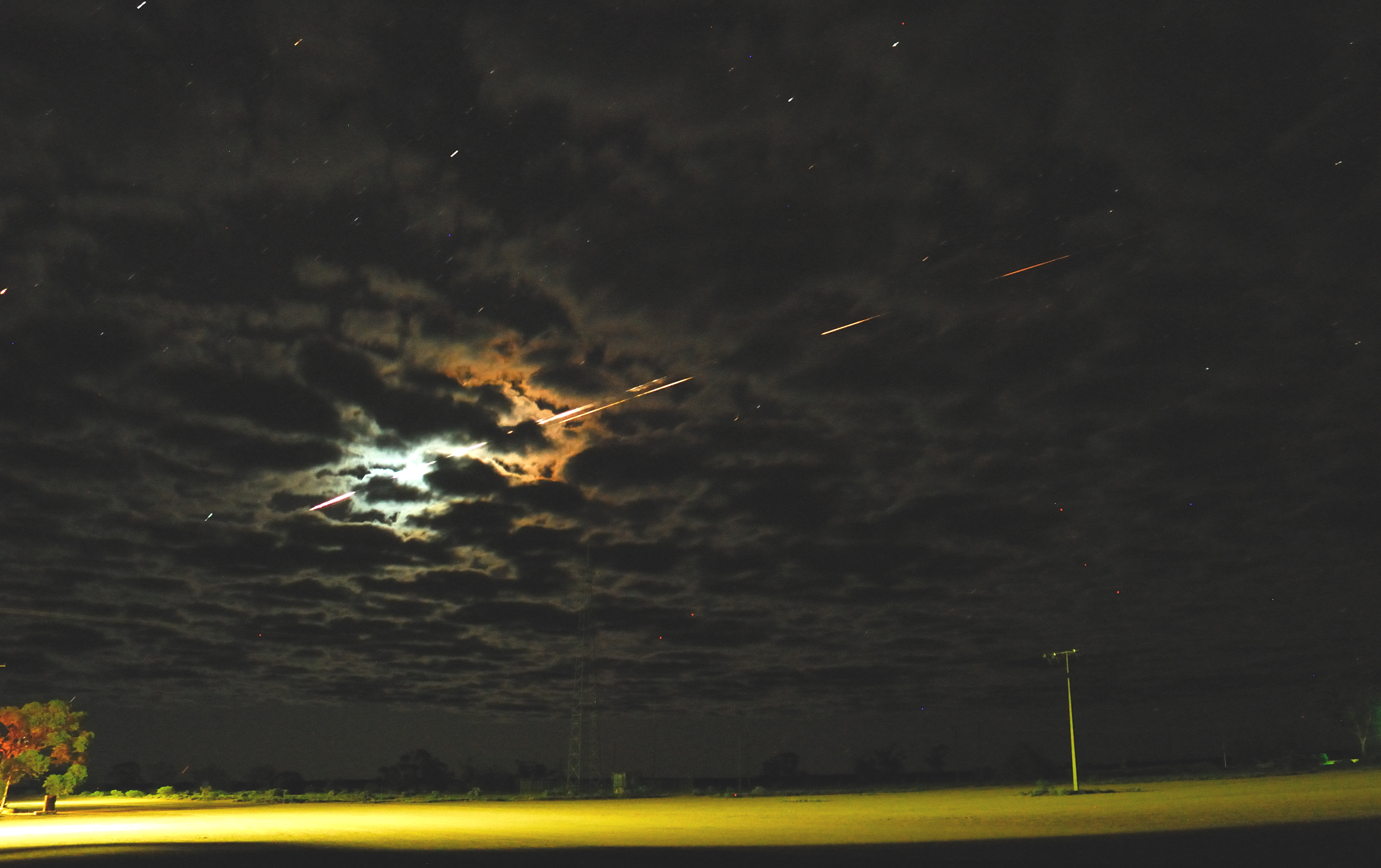
Sixteen years ago today, a fireball tore across the Australian outback. Most of it was a dying Japanese spacecraft burning up after a seven-year ordeal. The bright dot racing ahead of the wreckage was a capsule holding the first grains of an asteroid ever returned to Earth.

X Report 25 Jul 2025

X Report 25 Jul 2025

SpaceX successfully launched NASA's TRACERS mission while Starlink faced a brief global outage, affecting users worldwide.