AEROCUBE 7C (OCSD C) (43043)

COSPAR: 2017-071G | Alt Name: Aerocube 7C
DECAYED

Image
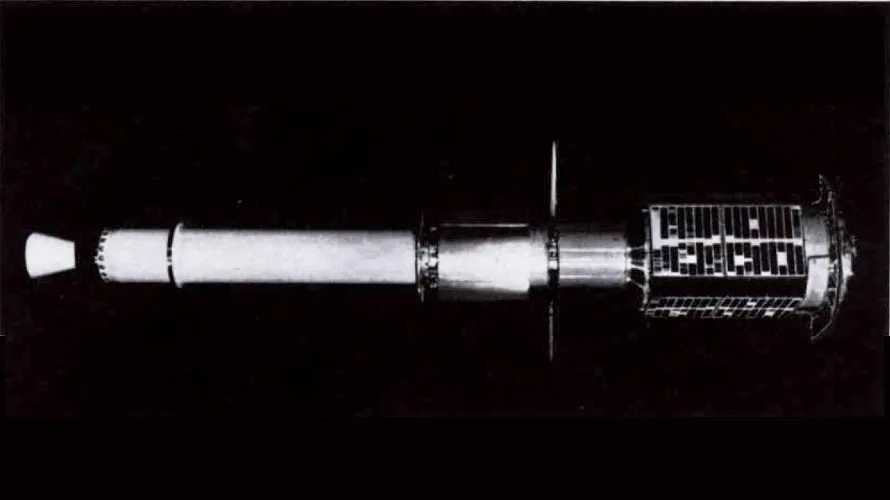
AEROCUBE 7C (OCSD C) Satellite Image
Additional Sources
Launch Details

Launch Date

November 12, 2017

Launch Site

WLPIS

Launch Pad

Pad 0A

Launch Vehicle

Antares 230

Orbital Elements

NORAD ID

43043

International Designator

2017-071G

Decay Date

8/12/2022

Basic Satellite Info

Name

AEROCUBE 7C (OCSD C)

Alternative Name

Aerocube 7C

Type

Payload

Status

Decayed

Owner

AERO

Country

United States

Constellation

N/A

Related Satellites

Major Events

N/A

Summary
AEROCUBE 7C (OCSD C), also known as Aerocube 7C, is a CubeSat (1.5U) satellite launched on November 12, 2017, from the Wallops Flight Facility using an Antares 230 launch vehicle. The satellite was manufactured by AERO and has dimensions of 0.2 meters in length, 0.1 meters in diameter, and a span of 0.2 meters. It has a dry mass of 2 kilograms and a launch mass of 2.3 kilograms. Its mission is for technology purposes, equipped with cold gas propulsion and powered by two deployable fixed solar arrays and batteries. The satellite operates in orbit for approximately two years.
Physical Characteristics

Length

0.2

Diameter

0.1

Span

0.2

Dry Mass

2

Launch Mass

2.3

Shape

Box

Radar Cross Section

Unknown

Visual Magnitude

Unknown

Color

Unknown

Material Composition

Unknown

Technical Details

Payload

AC-7C

Purpose

Technology

Mission

Technology

Manufacturer

AERO

Life Expectancy

2 years

Bus

Cubesat 1.5U

Configuration

CubeSat (1.5U)

Motor

Cold gas

Equipment

Unknown

Power System

2 deployable fixed solar arrays, batteries

ADCS

Unknown

Transmitter Frequency

Unknown

Satellite Articles

View All Posts »

Learn more about satellites and other related topics.

The Satellite That Found 22 Photons and Changed Astronomy

The Satellite That Found 22 Photons and Changed Astronomy

On April 27, 1961, a Scout rocket lifted a 37-kilogram NASA satellite into orbit from Wallops Island carrying the first serious instrument for detecting cosmic gamma rays. Explorer 11 operated for seven months before its tape recorder failed. In that time it registered 22 gamma-ray photons - a pitiful number by modern standards, but enough to launch an entire branch of astronomy.


Space Brief 4 Aug 2025

Space Brief 4 Aug 2025

Key developments in space today include significant satellite launches, advancements in space technology, and an exciting crewed suborbital flight. Highlights cover China's satellite internet progress, a promising innovation for solar cells, and recent SpaceX and Blue Origin activities.

Space Brief 20 Aug 2024

Space Brief 20 Aug 2024

Polaris Dawn's upcoming commercial spacewalk, successful lunar orbit by Chinese spacecraft, and more space news including SpaceX's Starlink mission, RFA's static-fire failure, and advances in satellite technology.

SpaceX Launches 13th NRO Proliferated Architecture Mission | KeepTrack Space Brief

SpaceX Launches 13th NRO Proliferated Architecture Mission | KeepTrack Space Brief

Falcon 9 successfully deployed NROL-72 for National Reconnaissance Office's 13th proliferated architecture mission. Low-Earth orbit intelligence constellation expanding since 2021.

Space Brief 3 Dec 2025

Space Brief 3 Dec 2025

Today's brief covers the integration of commercial and military space capabilities, a notable change in Crew 12 mission, advancements in digital training for space operations, and more.

X Report 18 Sep 2025

X Report 18 Sep 2025

SpaceX gears up for a busy week with new Starship testing and enhanced Starlink capabilities on the horizon.

Space Brief 15 Jun 2025

Space Brief 15 Jun 2025

Today’s highlights focus on the launch preparations for the Dragoon Mission, China’s seismo-electromagnetic satellite launch, NASA budget cut impacts, and a major expansion by American Pacific Corporation.

X Report 5 Dec 2024

X Report 5 Dec 2024

SpaceX achieves new milestones with Starlink launches, and Elon Musk's influence is a point of discussion. Telesat makes strides amid Starlink's growing dominance.