COSMOS 1461 DEB (42448)

COSPAR: 1983-044GJ | Alt Name: deb Kosmos-1461
DECAYED

Image
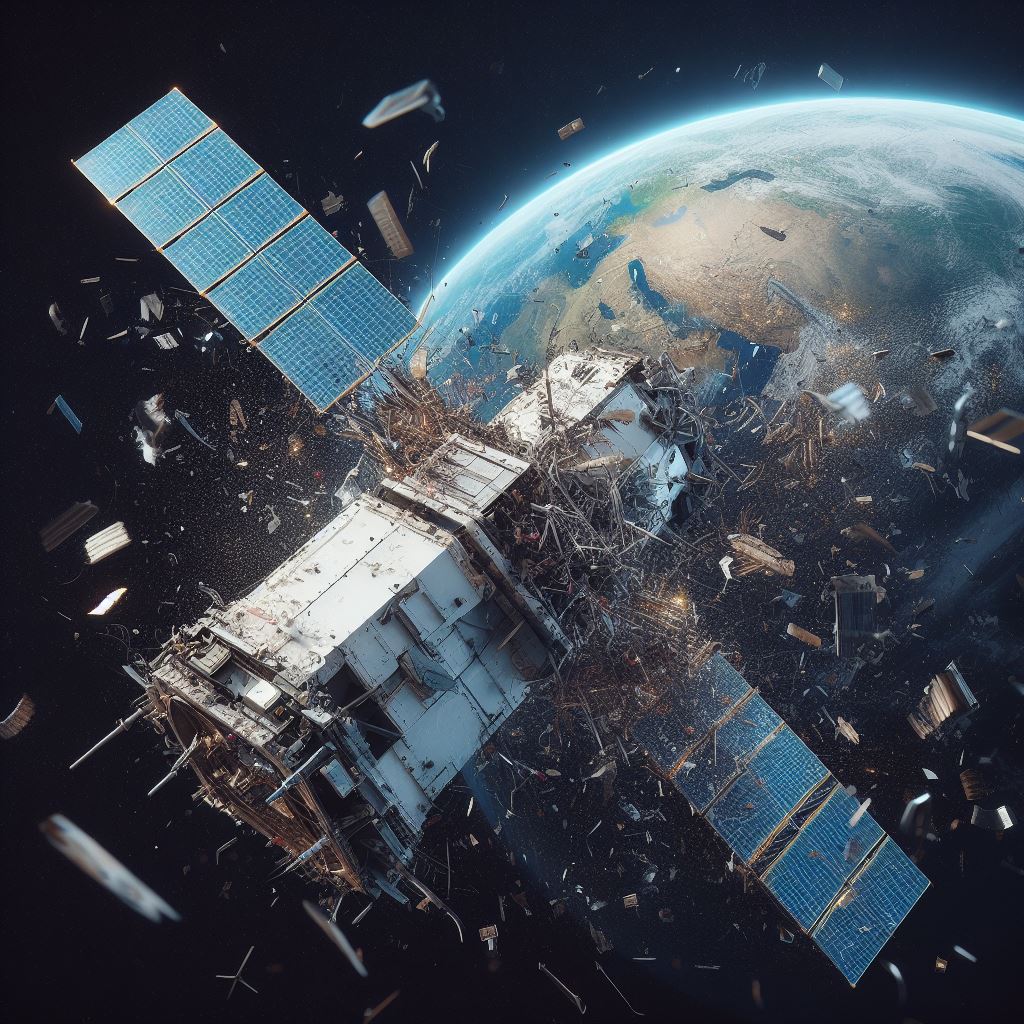
COSMOS 1461 DEB Satellite Image
Additional Sources
Launch Details

Launch Date

May 7, 1983

Launch Pad

LC90

Launch Vehicle

Tsiklon-2

Orbital Elements

NORAD ID

42448

International Designator

1983-044GJ

Decay Date

10/12/2018

Basic Satellite Info

Name

COSMOS 1461 DEB

Alternative Name

deb Kosmos-1461

Type

Debris

Status

Space Junk

Owner

VVKOV

Country

Russia

Constellation

N/A

Related Satellites

Major Events

N/A

Summary
Space debris, also known as space junk, encompasses all non-functional objects orbiting Earth such as defunct satellites, spent rocket stages, and fragments from collisions or disintegrations. Over time, this debris can accumulate and create an increasingly hazardous environment in orbit. Even tiny fragments, traveling at extremely high velocities, can inflict significant damage on operational satellites and spacecraft. If left unmanaged, the density of debris raises the risk of catastrophic collisions and further fragmentation, compounding the problem and threatening the safety and sustainability of space activities.
Physical Characteristics

Length

0

Diameter

0

Span

0

Dry Mass

0

Launch Mass

0

Shape

N/A

Radar Cross Section

0.0013

Visual Magnitude

Unknown

Color

Unknown

Material Composition

Unknown

Technical Details

Payload

Unknown

Purpose

Unknown

Mission

Unknown

Manufacturer

Unknown

Life Expectancy

Unknown

Bus

Unknown

Configuration

Unknown

Motor

Unknown

Equipment

Unknown

Power System

Unknown

ADCS

Unknown

Transmitter Frequency

Unknown

Satellite Articles

View All Posts »

Learn more about satellites and other related topics.

Space Brief 11 Jun 2025

Space Brief 11 Jun 2025

Today's Space Brief covers a major partnership in space tech distribution, China's orbital refueling preparations under U.S. scrutiny, recent U.S. defense budget reveals, and an exciting hyperspectral imagery release from Xplore.

The Satellite That Found 22 Photons and Changed Astronomy

The Satellite That Found 22 Photons and Changed Astronomy

On April 27, 1961, a Scout rocket lifted a 37-kilogram NASA satellite into orbit from Wallops Island carrying the first serious instrument for detecting cosmic gamma rays. Explorer 11 operated for seven months before its tape recorder failed. In that time it registered 22 gamma-ray photons - a pitiful number by modern standards, but enough to launch an entire branch of astronomy.

The Day Electric Propulsion Changed Spaceflight Forever

The Day Electric Propulsion Changed Spaceflight Forever

Fifty-five years ago, a revolutionary spacecraft launched from California carrying technology that would transform how we explore the solar system

Space Brief 11 Dec 2025

Space Brief 11 Dec 2025

Today's brief highlights key developments in space technology, military space activities, and satellite refueling initiatives. Discover the latest on GEO satellite refueling, Blue Origin's New Glenn, and more.

Sandhoo Takes Dual SDA Director, Missile Warning Role | KeepTrack Space Brief

Sandhoo Takes Dual SDA Director, Missile Warning Role | KeepTrack Space Brief

Brig. Gen. Gursharan Sandhoo double-hatted as SDA director and Space Force missile warning PAE head as Pentagon consolidates LEO satellite programs under new acquisition structure.

GAO Warns Space Force Satellite Costs Rising, Workforce Cuts Add Risk | KeepTrack Space Brief

GAO Warns Space Force Satellite Costs Rising, Workforce Cuts Add Risk | KeepTrack Space Brief

GAO flags growing cost problems across Space Force satellite portfolio with workforce reductions compounding risks to missile-warning constellations like NGG and SWAT.

Space Brief 20 Nov 2025

Space Brief 20 Nov 2025

Today's briefing covers a DARPA award for Redwire's innovative satellite project, Ursa Major's expansion in defense engines, a Rocket Lab military test flight, and more.

Space Force Plans to Double Active-Duty Force by 2030 | KeepTrack Space Brief

Space Force Plans to Double Active-Duty Force by 2030 | KeepTrack Space Brief

Space Force confirms plan to double active-duty Guardians by 2030, targeting faster response to satellite anomalies and adversary maneuvers in space domain awareness operations.