


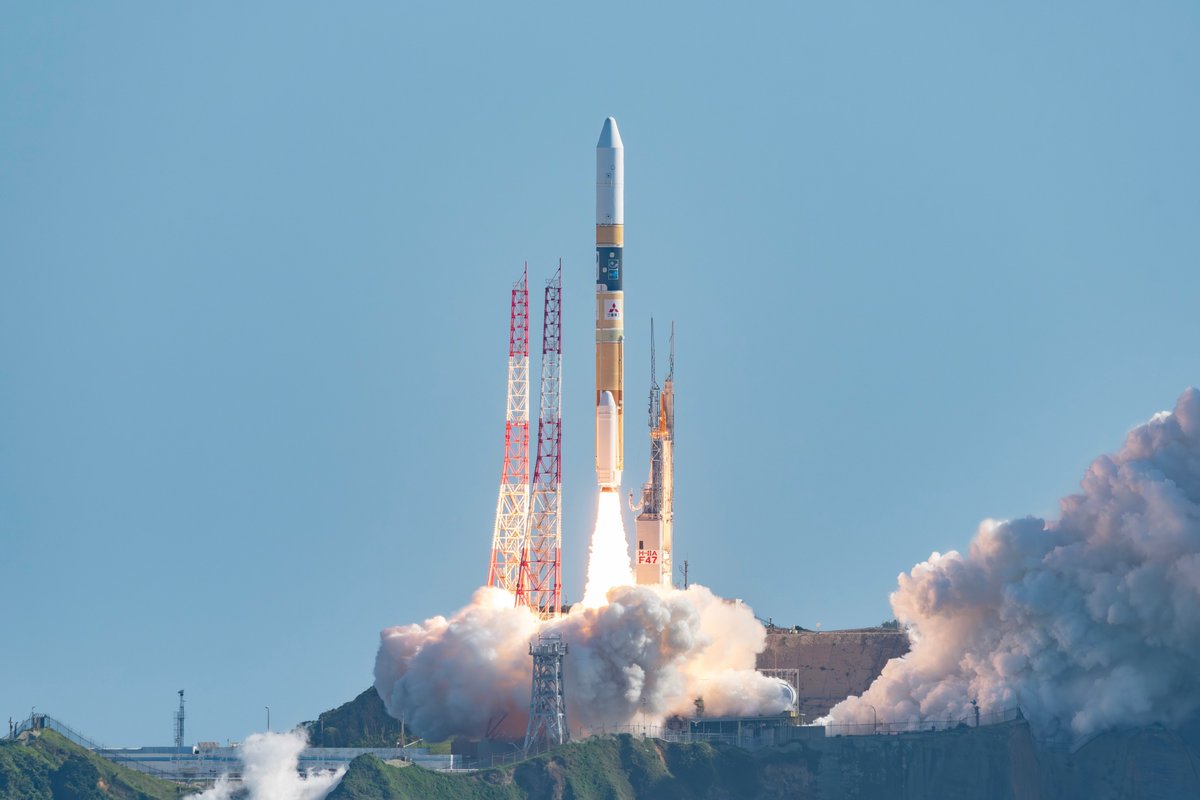
Space Brief 2 Jun 2025
Today's edition covers SpaceX's Starlink launch delay, a breakthrough in ceramic manufacturing for space, and Momentus's orbital tech demo, among other headlines.


Launch Date
December 15, 2016
Launch Site
ERAS
Launch Pad
RW13
Launch Vehicle
Pegasus XL
NORAD ID
41890
International Designator
2016-078G
Epoch
Sat, 04 Jul 2026 04:00:49 GMT
Apogee
Calculating...
Perigee
Calculating...
Inclination
34.94°
Right Ascension
116.45°
Eccentricity
Calculating...
Argument of Perigee
334.04°
Period
92.25 min
Mean Motion
15.61 rev/day
Latitude
Calculating...
Longitude
Calculating...
Altitude
Calculating...
Velocity
Calculating...
Name
CYGFM07
Alternative Name
CYGNSS FM07
Type
Status
Owner
LARCN/SWRIB
Country
United States
Constellation
N/A
Related Satellites
Major Events
N/A
1 41890U 16078G 26185.16723535 .00037722 00000-0 43199-3 0 9998
2 41890 34.9444 116.4548 0006664 334.0410 25.9981 15.61020115531654
Source: Celestrak
Length
0.27
Diameter
0.64
Span
1.7
Dry Mass
29
Launch Mass
29
Shape
Trunc prism+2 pan
Radar Cross Section
0.3239
Visual Magnitude
Unknown
Color
Unknown
Material Composition
Unknown
Payload
CYGNSS G
Purpose
Earth sciences
Mission
Earth sciences
Manufacturer
SSTUS
Life Expectancy
+ 2 years
Bus
CYGNSS
Configuration
SwSP-35 bus
Motor
Unknown
Equipment
GPS receivers
Power System
2 deployable, fixed solar arrays, solar cells, batteries
ADCS
Unknown
Transmitter Frequency
Unknown
Learn more about satellites and other related topics.
Today's edition covers SpaceX's Starlink launch delay, a breakthrough in ceramic manufacturing for space, and Momentus's orbital tech demo, among other headlines.
NASA's SLS and Orion spacecraft rolled back to Launch Complex 39B, targeting April 1 for first crewed lunar flyby with four astronauts aboard.
Elon Musk controls 79% of SpaceX's votes with just 42% of the equity - and the company just merged with his AI startup at a $1.25 trillion valuation. Here's who actually owns what, how the money works, and what a $1.75 trillion IPO means for investors.

Experts warn falling space debris risk to aircraft is increasing. North Korea tests advanced hypersonic missiles. Space Force seeks launch providers for Cape Canaveral and Vandenberg pads.

SpaceX advances pre-launch tests amid Starlink deployment surge and strategic expansions in Texas.

Today's highlights include Rocket Lab's record year, setbacks in Japanese space endeavors, secure communication advancements in orbit, and more updates on martian expeditions.

SpaceX successfully launched 24 Starlink satellites into polar orbit, enhancing global coverage. Meanwhile, NASA's Crew-11 is now in quarantine ahead of their upcoming ISS mission.

NASA confirms first-ever ISS medical evacuation for January 14 via Crew Dragon. SpaceX launches 29 Starlink satellites in third mission of 2026. Artemis 2 moon mission timeline unaffected.