NOAA 16 DEB (41247)

COSPAR: 2000-055EX | Alt Name: deb NOAA 16
DECAYED

Image
NOAA 16 DEB Satellite Image
Additional Sources
Launch Details

Launch Date

September 21, 2000

Launch Site

AFWTR

Launch Pad

SLC4W

Launch Vehicle

Titan II SLV

Orbital Elements

NORAD ID

41247

International Designator

2000-055EX

Decay Date

9/9/2024

Basic Satellite Info

Name

NOAA 16 DEB

Alternative Name

deb NOAA 16

Type

Debris

Status

Space Junk

Owner

NOAA

Country

United States

Constellation

N/A

Related Satellites

Major Events

N/A

Summary
Space debris, also known as space junk, encompasses all non-functional objects orbiting Earth such as defunct satellites, spent rocket stages, and fragments from collisions or disintegrations. Over time, this debris can accumulate and create an increasingly hazardous environment in orbit. Even tiny fragments, traveling at extremely high velocities, can inflict significant damage on operational satellites and spacecraft. If left unmanaged, the density of debris raises the risk of catastrophic collisions and further fragmentation, compounding the problem and threatening the safety and sustainability of space activities.
Physical Characteristics

Length

0

Diameter

0

Span

0

Dry Mass

0

Launch Mass

0

Shape

N/A

Radar Cross Section

0.0197

Visual Magnitude

Unknown

Color

Unknown

Material Composition

Unknown

Technical Details

Payload

Unknown

Purpose

Unknown

Mission

Unknown

Manufacturer

Unknown

Life Expectancy

Unknown

Bus

Unknown

Configuration

Unknown

Motor

Unknown

Equipment

Unknown

Power System

Unknown

ADCS

Unknown

Transmitter Frequency

Unknown

Satellite Articles

View All Posts »

Learn more about satellites and other related topics.

Trump Seeks Starlink for Iran Internet, China Plans 200,000-Satellite Constellation | KeepTrack Space Brief

Trump Seeks Starlink for Iran Internet, China Plans 200,000-Satellite Constellation | KeepTrack Space Brief

Trump seeks Musk's help to restore internet in Iran via Starlink. China files for 200,000-satellite constellation. Sweden allocates $1.6B for air defense and $140M for space capabilities.

Space Brief 21 Oct 2024

Space Brief 21 Oct 2024

Today's Space Brief covers SpaceX's recent launch for OneWeb, advances in remote-control robots for lunar missions, the power loss of Intelsat 33e, and developments in inflatable space habitats.

Air Force Selects General Atomics, Anduril for CCA Wingmen | KeepTrack Space Brief

Air Force Selects General Atomics, Anduril for CCA Wingmen | KeepTrack Space Brief

Air Force awards CCA contracts to General Atomics and Anduril for autonomous fighter wingmen. Autonomy layer split across Anduril, Shield AI, and Collins Aerospace.

All 33 Raptor V3 Engines Ignite in Super Heavy Static Fire | KeepTrack X Report

All 33 Raptor V3 Engines Ignite in Super Heavy Static Fire | KeepTrack X Report

SpaceX ignited all 33 next-gen Raptor V3 engines on the Super Heavy booster at Starbase, Texas, marking a critical milestone toward the next Starship flight.

SpaceX S-1 Sinks Tesla 5%, Merger Talk Grows, X Report 2 Jun 2026

SpaceX S-1 Sinks Tesla 5%, Merger Talk Grows, X Report 2 Jun 2026

SpaceX IPO paperwork stokes Tesla merger predictions: the amended S-1 sank Tesla stock 5% in a day. Starlink stands at 10,492 working satellites.

Space Brief 27 Apr 2025

Space Brief 27 Apr 2025

Today's highlights include SpaceX's dual Starlink launches, NASA's progress on the Dragonfly mission to Titan, and delays in Starlink's Indian market entry.

New Glenn Explodes at LC-36, Grounded Over 1 Year | KeepTrack Space Brief

New Glenn Explodes at LC-36, Grounded Over 1 Year | KeepTrack Space Brief

Blue Origin's New Glenn rocket exploded at Cape Canaveral's LC-36, causing visible pad damage and a year-plus grounding. NASA lunar plans affected.

The Rocket That Refused to Sink

The Rocket That Refused to Sink

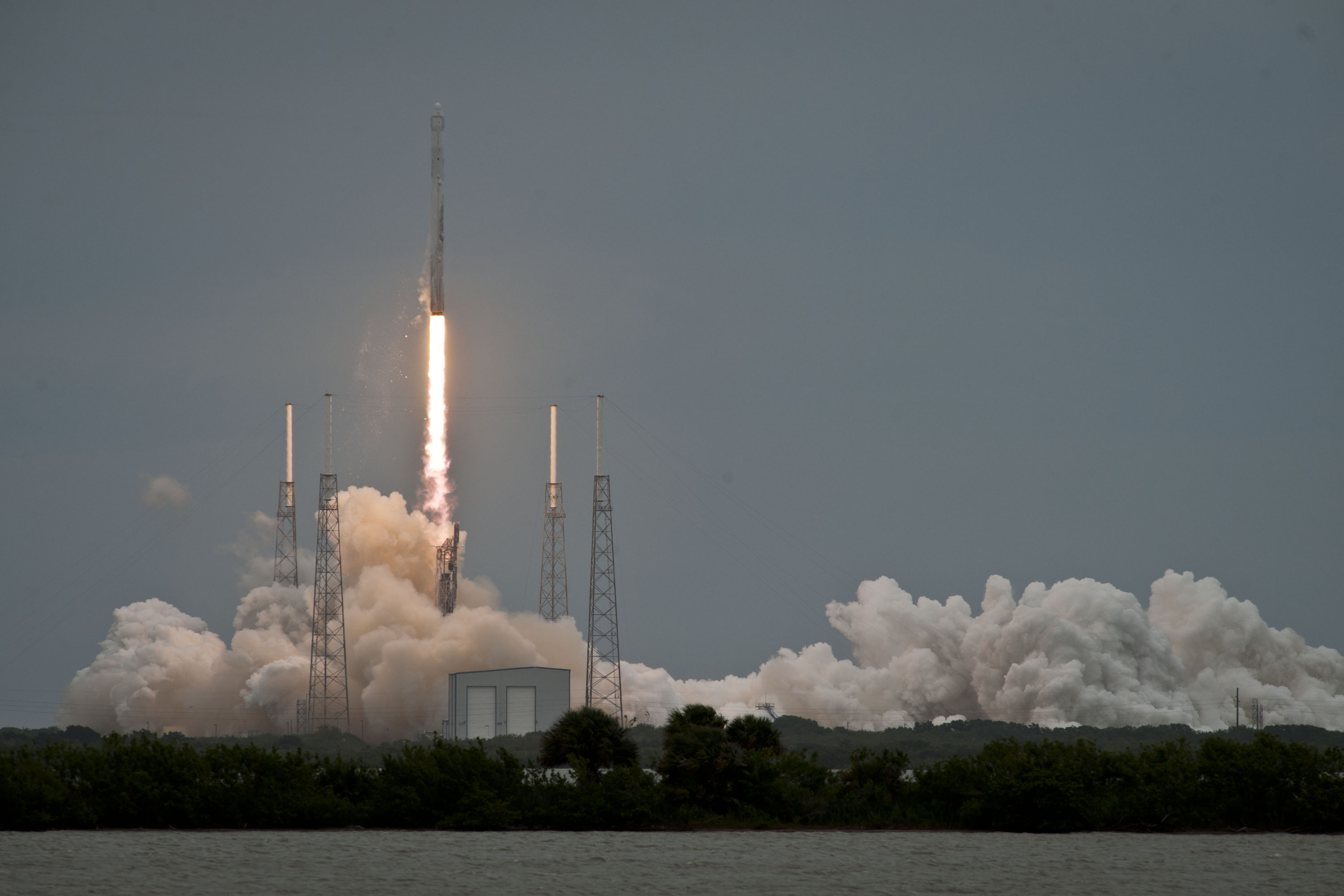
On April 18, 2014, a Falcon 9 first stage did something no orbital rocket had ever done before. It fired its engines on the way down, steered itself through the atmosphere using grid fins that did not yet exist, and touched the Atlantic Ocean softly enough to survive the impact. Nobody recovered it. The data was the whole point.