


Space Brief 9 Nov 2025
Today's top stories include SpaceX's latest Starlink launch, Blue Origin's FAA exemption request, and major acquisitions by Intuitive Machines and Firefly Aerospace shaping the defense and space landscape.


Launch Date
December 15, 2014
Launch Site
Launch Pad
LC81/24
Launch Vehicle
Proton-M/Briz-M
NORAD ID
40345
International Designator
2014-082A
Epoch
Fri, 03 Jul 2026 04:05:37 GMT
Apogee
Calculating...
Perigee
Calculating...
Inclination
0.01°
Right Ascension
14.56°
Eccentricity
Calculating...
Argument of Perigee
72.60°
Period
1436.11 min
Mean Motion
1.00 rev/day
Latitude
Calculating...
Longitude
Calculating...
Altitude
Calculating...
Velocity
Calculating...
Name
YAMAL 401
Alternative Name
Yamal-401
Type
Status
Owner
GAZS
Country
Russia
Constellation
N/A
Related Satellites
Major Events
N/A
1 40345U 14082A 26184.17057297 .00000000 00000-0 00000-0 0 9990
2 40345 0.0134 14.5574 0000508 72.5966 345.4007 1.00271125 42075
Source: Celestrak
Length
5
Diameter
2
Span
35
Dry Mass
2500
Launch Mass
2976
Shape
Box+2 cruci panels
Radar Cross Section
59.7633
Visual Magnitude
Unknown
Color
Unknown
Material Composition
Unknown
Payload
Yamal-401 No. P001
Purpose
Communication
Mission
Communication
Manufacturer
RESH
Life Expectancy
15 years
Bus
Ekspress-2000
Configuration
Ekspress-2000A
Motor
AOCS
Equipment
36 Ku-band and 17 C-band transponders
Power System
2 deployable solar arrays, batteries
ADCS
Unknown
Transmitter Frequency
Unknown
Learn more about satellites and other related topics.
Today's top stories include SpaceX's latest Starlink launch, Blue Origin's FAA exemption request, and major acquisitions by Intuitive Machines and Firefly Aerospace shaping the defense and space landscape.

Space debris poses a mounting threat to both satellites and space missions. As we send more objects into orbit, the likelihood of collisions and subsequent breakups producing dangerous space debris increases. Recognizing the major events that have generated this dangerous space junk is pivotal in ensuring the safety of future space missions.

SpaceX is preparing for significant infrastructure expansion in Texas and Florida to support Starship, launches its third NRO mission in a week, and faces regulatory scrutiny from the Bahamas.

Scientists use earthquake sensors to track space debris reentry via sonic boom detection. SpaceX launches 25 Starlink satellites in seventh mission of 2026. NASA and DOE partner for lunar nuclear power.

The Kessler Syndrome threatens humanity's future in space as cascading satellite collisions create exponential debris growth. With 36,000+ tracked objects and recent incidents accelerating risks, we face a critical juncture: implement solutions now or potentially lose access to low Earth orbit forever.
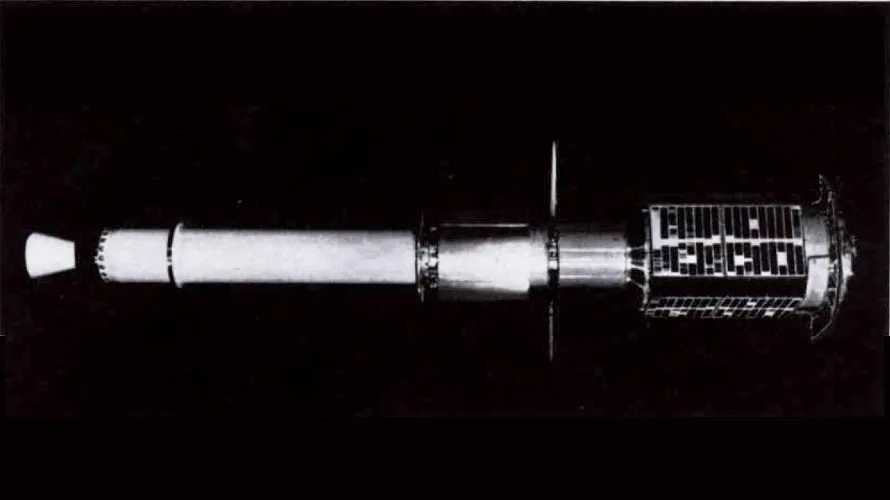
On April 27, 1961, a Scout rocket lifted a 37-kilogram NASA satellite into orbit from Wallops Island carrying the first serious instrument for detecting cosmic gamma rays. Explorer 11 operated for seven months before its tape recorder failed. In that time it registered 22 gamma-ray photons - a pitiful number by modern standards, but enough to launch an entire branch of astronomy.
SpaceX debuts Starlink's first-ever Super Bowl ad to millions of viewers. Artemis II reaches Kennedy launch pad for first crewed lunar flyby since Apollo era.
Today's Space Brief focuses on multi-billion dollar contracts for missile-tracking satellites, developments in optical nuclear clock research, and innovative drone projects for military collaboration.