DELTA 4 DEB (40003)

COSPAR: 2014-026K | Alt Name: deb Delta 4
DECAYED

Image
DELTA 4 DEB Satellite Image
Additional Sources
Launch Details

Launch Date

May 17, 2014

Launch Pad

SLC37B

Launch Vehicle

Delta 4M+(4,2)

Orbital Elements

NORAD ID

40003

International Designator

2014-026K

Decay Date

6/11/2014

Basic Satellite Info

Name

DELTA 4 DEB

Alternative Name

deb Delta 4

Type

Debris

Status

Space Junk

Owner

AFSMC

Country

United States

Constellation

N/A

Related Satellites

Major Events

N/A

Summary
Space debris, also known as space junk, encompasses all non-functional objects orbiting Earth such as defunct satellites, spent rocket stages, and fragments from collisions or disintegrations. Over time, this debris can accumulate and create an increasingly hazardous environment in orbit. Even tiny fragments, traveling at extremely high velocities, can inflict significant damage on operational satellites and spacecraft. If left unmanaged, the density of debris raises the risk of catastrophic collisions and further fragmentation, compounding the problem and threatening the safety and sustainability of space activities.
Physical Characteristics

Length

0

Diameter

0

Span

0

Dry Mass

0

Launch Mass

0

Shape

N/A

Radar Cross Section

Unknown

Visual Magnitude

Unknown

Color

Unknown

Material Composition

Unknown

Technical Details

Payload

Unknown

Purpose

Unknown

Mission

Unknown

Manufacturer

Unknown

Life Expectancy

Unknown

Bus

Unknown

Configuration

Unknown

Motor

Unknown

Equipment

Unknown

Power System

Unknown

ADCS

Unknown

Transmitter Frequency

Unknown

Satellite Articles

View All Posts »

Learn more about satellites and other related topics.

The Civilian Space Traffic System America Almost Didn't Build

The Civilian Space Traffic System America Almost Didn't Build

For nearly two decades, the U.S. Air Force and Space Force have been the world's unofficial civilian space traffic control system. The Department of Commerce's Traffic Coordination System for Space (TraCSS) is now taking over that job for commercial satellite operators - in stages, against persistent congressional pressure to kill the program, and with Department of Defense advocates pushing to make it happen before it is too late.
The Pentagon's Mystery Spaceplane Takes Off

The Pentagon's Mystery Spaceplane Takes Off

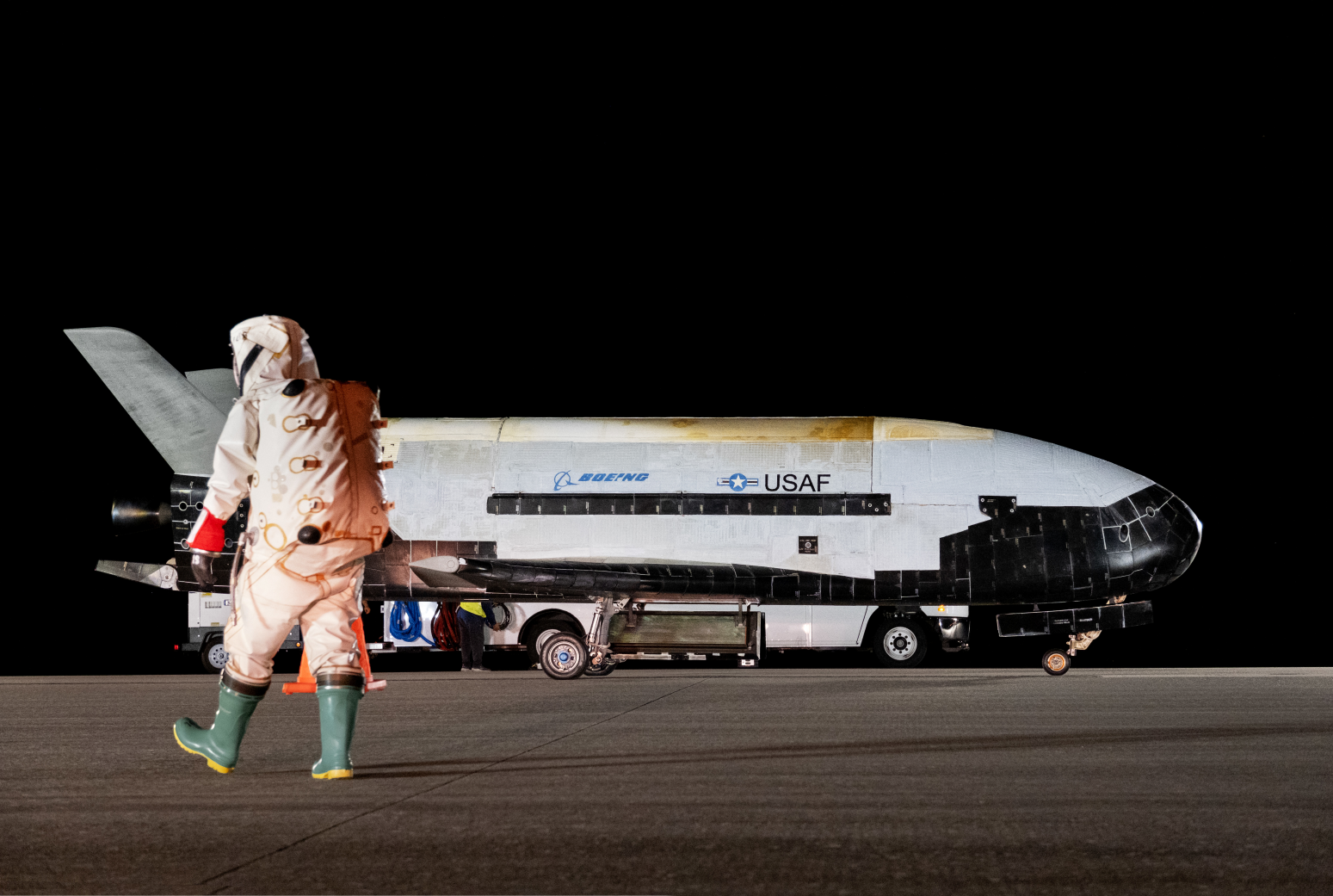
On April 22, 2010, an Atlas V lifted off from Cape Canaveral carrying a reusable robotic spaceplane so secret that the Air Force would not even confirm its mission duration. It came back 224 days later, lighter, quieter, and more operational than anyone outside Washington had expected. Fifteen years later, the X-37B is still flying, and the military still will not say what it does.

Starlink Installed on Presidential Air Force One | KeepTrack X Report

Starlink Installed on Presidential Air Force One | KeepTrack X Report

SpaceX Starlink connectivity equips Trump's $400M interim Air Force One as Falcon 9 prepares to orbit 24 more satellites on mission 17-28.

X Report 31 Jul 2025

X Report 31 Jul 2025

Today's highlights include the ongoing Crew-11 mission launch and Starship preparations for its upcoming test flight.

Space Brief 28 Nov 2024

Space Brief 28 Nov 2024

Today's briefing covers China's announcement of the Beidou system upgrade, launch updates for Vega C, challenges to global GPS reliability, and delays in the VERITAS Venus mission.

Space Brief 6 Mar 2025

Space Brief 6 Mar 2025

Today's brief covers secret Space Force payloads monitoring China's satellites, collaborations reducing satellite tracking delays, and new AI projects for military operations.

Space Brief 22 Dec 2025

Space Brief 22 Dec 2025

Today's highlights include Rocket Lab's record year, setbacks in Japanese space endeavors, secure communication advancements in orbit, and more updates on martian expeditions.

Atlas 5 Retires After Final 551 Flight to Amazon Kuiper | KeepTrack Space Brief

Atlas 5 Retires After Final 551 Flight to Amazon Kuiper | KeepTrack Space Brief

ULA launches the final Atlas 5 551 configuration—its heaviest variant with 5 solid boosters—carrying Amazon's Project Kuiper satellite to low Earth orbit from Cape Canaveral.