UNIBRITE (39092)

COSPAR: 2013-009G | Alt Name: UniBRITE

Image
UNIBRITE Satellite Image
Additional Sources
Launch Details

Launch Date

February 25, 2013

Launch Site

SRILR

Launch Pad

FLP

Launch Vehicle

PSLV

Orbital Elements

NORAD ID

39092

International Designator

2013-009G

Epoch

Sat, 04 Jul 2026 05:12:23 GMT

Apogee

Calculating...

Perigee

Calculating...

Inclination

98.40°

Right Ascension

4.35°

Eccentricity

Calculating...

Argument of Perigee

178.27°

Period

100.25 min

Mean Motion

14.36 rev/day

Latitude

Calculating...

Longitude

Calculating...

Altitude

Calculating...

Velocity

Calculating...

Polar Plot
3D Visualization
Basic Satellite Info

Name

UNIBRITE

Alternative Name

UniBRITE

Type

Payload

Status

Non-operational

Owner

UVIE/UTIAS

Country

Austria

Constellation

N/A

Related Satellites

Major Events

N/A

Latest TLEs
1 39092U 13009G   26185.21693823  .00000204  00000-0  84096-4 0  9999
2 39092  98.4041   4.3468 0009077 178.2744 181.8476 14.36420299699438

Source: Celestrak

Summary
The UNIBRITE satellite, also known as UniBRITE, is an astronomy and technology satellite with the OBJECT_ID 2013-009G and NORAD_CAT_ID 39092. It was launched on February 25, 2013, from the SRILR launch site using a PSLV launch vehicle. The satellite uses the Gryphon Bus (GNB) configuration and is owned by UVIE/UTIAS. Its primary payload is BRITE-U, and it utilizes solar cells and batteries for power. UNIBRITE has dimensions of 0.2 meters in length, diameter, and span, with a dry mass of 7 kg, which is also its launch mass. The satellite's shape is box-like and was manufactured by UTIAS. It does not have any equipment listed or a specified motor system.
Physical Characteristics

Length

0.2

Diameter

0.2

Span

0.2

Dry Mass

7

Launch Mass

7

Shape

Box

Radar Cross Section

0.101

Visual Magnitude

Unknown

Color

Unknown

Material Composition

Unknown

Technical Details

Payload

BRITE-U

Purpose

Astronomy / Technology

Mission

Astronomy / Technology

Manufacturer

UTIAS

Life Expectancy

Unknown

Bus

GNB

Configuration

Gryphon Bus (GNB)

Motor

None

Equipment

Unknown

Power System

Solar cells, batteries

ADCS

Unknown

Transmitter Frequency

Unknown

Map
This tool will help you track the satellite's position and predict its upcoming passes over your location. Simply input the coordinates or click the geolocation button to get started.
Next Pass
Azimuth Elevation Time (Local)
Start Azimuth
Max Elevation
Stop Azimuth
Time Until
Pass Duration

Satellite Articles

View All Posts »

Learn more about satellites and other related topics.

SpaceX Launches GPS Satellite Tonight, Starship V3 Targets Mid-March | KeepTrack X Report

SpaceX Launches GPS Satellite Tonight, Starship V3 Targets Mid-March | KeepTrack X Report

SpaceX to launch GPS III SV09 satellite for Space Force at 11:38 p.m. EST from Cape Canaveral. Musk confirms Starship V3 with Raptor V3 engines targets mid-March first flight.

X Report 13 May 2025

X Report 13 May 2025

SpaceX continues to expand its Starlink network with multiple launches and gains momentum in international markets, while revisiting launch tariffs and new regulations.

Space Brief 12 Jun 2025

Space Brief 12 Jun 2025

Today's Space Brief covers major developments including the public debut of Voyager Technologies, advancements in defense by Sierra Space, and Pentagon's mega-constellation challenges. Also featured are new software selections by the Space Force and legislative actions on acquisition pilots.

The Day Soviet Women Reached for the Stars

The Day Soviet Women Reached for the Stars

Sixty-three years ago, the Soviet Union selected the world's first female cosmonaut training group, launching a new era in human spaceflight that would transform our understanding of gender equality in space exploration

Space Brief 19 Jun 2025

Space Brief 19 Jun 2025

Discover key developments in space defense and military operations, including new leadership for Space Force's 'Golden Dome,' SpaceX's contract for a military SATCOM network, and increased Israeli-Iranian missile activity.

The Day Two Satellites Hit Each Other at 26,000 MPH

The Day Two Satellites Hit Each Other at 26,000 MPH

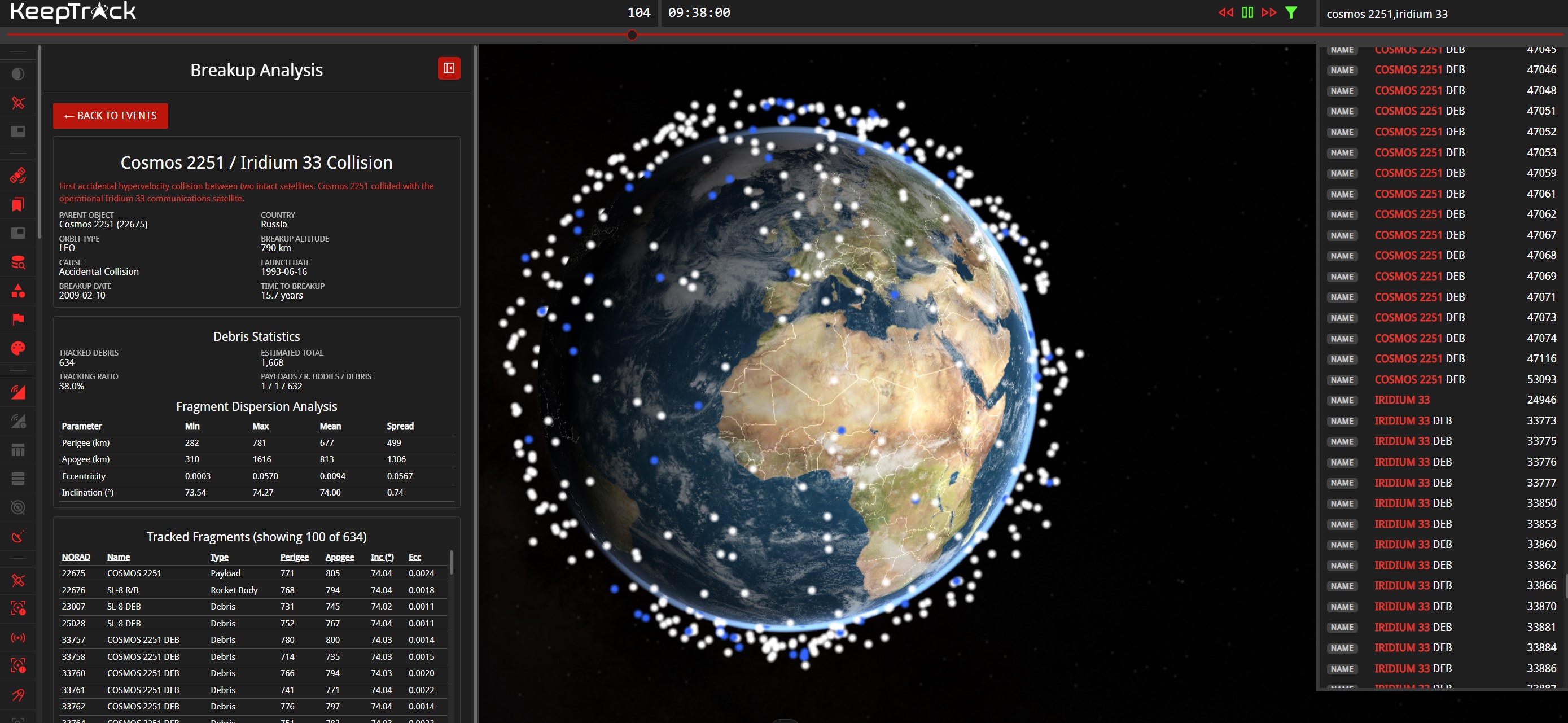
On February 10, 2009, an active Iridium communications satellite and a derelict Soviet military spacecraft slammed into each other 789 kilometers above Siberia. The collision produced more than 2,300 pieces of trackable debris that are still up there. Seventeen years later, the Iridium-Cosmos collision remains the event that made space debris a policy problem the world could no longer ignore.

Intel Partners on Musk's Terafab AI Chip Fab | KeepTrack X Report

Intel Partners on Musk's Terafab AI Chip Fab | KeepTrack X Report

Intel joins Terafab, Elon Musk's Austin AI chip complex, to supply SpaceX and Tesla as Falcon 9 prepares a Cygnus ISS run.

New Glenn Explodes at LC-36, Grounded Over 1 Year | KeepTrack Space Brief

New Glenn Explodes at LC-36, Grounded Over 1 Year | KeepTrack Space Brief

Blue Origin's New Glenn rocket exploded at Cape Canaveral's LC-36, causing visible pad damage and a year-plus grounding. NASA lunar plans affected.