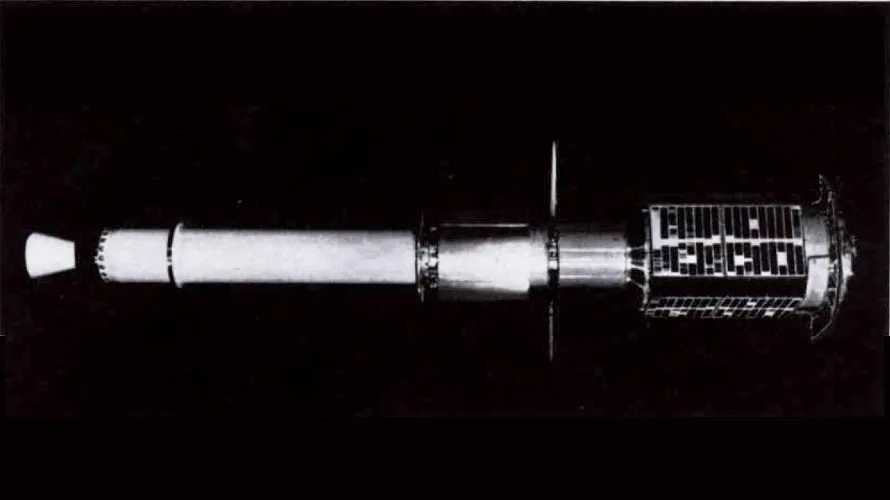
CZ-3C R/B (37738)

COSPAR: 2011-032B | Alt Name: CZ-3C Y8 Stage 3
DECAYED

Image
CZ-3C R/B Satellite Image
Additional Sources
Launch Details

Launch Date

July 11, 2011

Launch Site

XICLF

Launch Pad

LC2

Launch Vehicle

Chang Zheng 3C

Orbital Elements

NORAD ID

37738

International Designator

2011-032B

Decay Date

10/26/2011

Basic Satellite Info

Name

CZ-3C R/B

Alternative Name

CZ-3C Y8 Stage 3

Type

Rocket Body

Status

Space Junk

Owner

CASC

Country

China

Constellation

N/A

Related Satellites

Major Events

N/A

Summary
A rocket body, also commonly referred to as an upper stage or spent rocket stage, is the structural shell left behind after a rocket has delivered its payload to orbit. These large and often heavy pieces of space hardware can remain in orbit for years, posing significant collision hazards as part of the growing space debris problem. If left uncontrolled, rocket bodies have the potential to reenter Earth's atmosphere unpredictably, which can lead to falling debris in populated areas. Additionally, they risk colliding with operational satellites or the International Space Station, creating more debris and putting human life at risk.
Physical Characteristics

Length

12.4

Diameter

3

Span

12.4

Dry Mass

2800

Launch Mass

8400

Shape

Cyl

Radar Cross Section

5.0119

Visual Magnitude

Unknown

Color

Unknown

Material Composition

Unknown

Technical Details

Payload

CZ-3C Stage 3

Purpose

Unknown

Mission

Unknown

Manufacturer

CALT

Life Expectancy

Unknown

Bus

CZ-3A Stage 3

Configuration

Unknown

Motor

Unknown

Equipment

Unknown

Power System

Unknown

ADCS

Unknown

Transmitter Frequency

Unknown

Satellite Articles

View All Posts »

Learn more about satellites and other related topics.

The Satellite That Found 22 Photons and Changed Astronomy

The Satellite That Found 22 Photons and Changed Astronomy

On April 27, 1961, a Scout rocket lifted a 37-kilogram NASA satellite into orbit from Wallops Island carrying the first serious instrument for detecting cosmic gamma rays. Explorer 11 operated for seven months before its tape recorder failed. In that time it registered 22 gamma-ray photons - a pitiful number by modern standards, but enough to launch an entire branch of astronomy.


Six Missions Worth Watching After Artemis II

Six Missions Worth Watching After Artemis II

Artemis II grabbed the headlines, but six other missions are quietly approaching milestones that could reshape what we know about Mercury, Mars, asteroids, exoplanets, and the Moon's south pole. Here is what is actually happening with each of them.

Space Brief 11 Dec 2025

Space Brief 11 Dec 2025

Today's brief highlights key developments in space technology, military space activities, and satellite refueling initiatives. Discover the latest on GEO satellite refueling, Blue Origin's New Glenn, and more.

SpaceX IPO Surges 20% on First Day of Trading | KeepTrack X Report

SpaceX IPO Surges 20% on First Day of Trading | KeepTrack X Report

SpaceX shares jumped nearly 20% in its historic public debut, valuing the company partly on Starlink's AI infrastructure potential with 10,636 satellites working.

U.S. GSSAP Executes GEO Handoff to Track China's Shijian-29 | KeepTrack Space Brief

U.S. GSSAP Executes GEO Handoff to Track China's Shijian-29 | KeepTrack Space Brief

U.S. GSSAP satellites execute coordinated GEO maneuvers for continuous surveillance of Chinese Shijian-29 spacecraft. Handoff approach maintains coverage with zero gaps.

X Report 7 Feb 2025

X Report 7 Feb 2025

DIU explores SpaceX Starship's in-space refueling; Investors advise startups against competing or emulating SpaceX.

Cygnus NG-24 Carries 11,000 lbs to ISS | KeepTrack X Report

Cygnus NG-24 Carries 11,000 lbs to ISS | KeepTrack X Report

SpaceX's Falcon 9 lofts 11,000 lbs aboard Cygnus NG-24 to the ISS as Amazon pushes Leo's commercial debut to mid-2026.

The Day Japan Joined the Geostationary Club

The Day Japan Joined the Geostationary Club

Forty-eight years ago, a pioneering satellite named Kiku 2 propelled Japan into the exclusive group of nations capable of operating satellites in geostationary orbit