SOYUZ-TMA 17 (36129)

COSPAR: 2009-074A | Alt Name: Soyuz TMA-17
DECAYED

Image
SOYUZ-TMA 17 Satellite Image
Additional Sources
Launch Details

Launch Date

December 20, 2009

Launch Pad

LC1

Launch Vehicle

Soyuz-FG

Orbital Elements

NORAD ID

36129

International Designator

2009-074A

Decay Date

6/2/2010

Basic Satellite Info

Name

SOYUZ-TMA 17

Alternative Name

Soyuz TMA-17

Type

Payload

Status

Decayed

Owner

RKKE

Country

Russia

Constellation

N/A

Related Satellites

Major Events

N/A

Summary
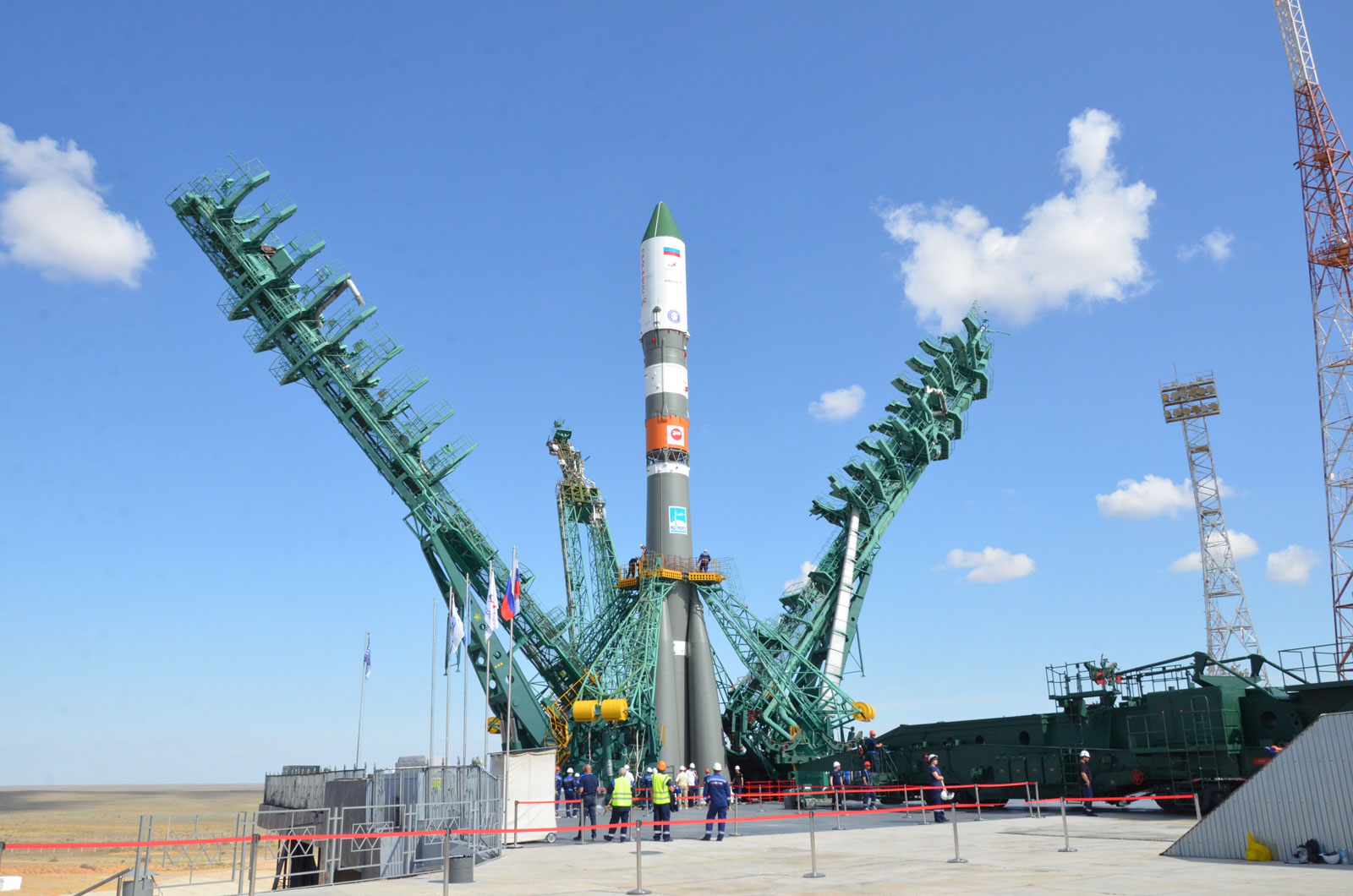
SOYUZ-TMA 17 (also known as Soyuz TMA-17) is a crewed spacecraft launched on December 20, 2009, from the Tyuratam Space Center using a Soyuz-FG launch vehicle. Manufactured by RKKE, this spacecraft has a configuration of Cyl + Cone + Sphere + 2 Pan with dimensions: length of 7.9 meters, diameter of 2.7 meters, and span of 10.6 meters. It had a dry mass of 2850 kg and was launched at a mass of 2892 kg. The spacecraft is equipped with two deployable fixed solar arrays and batteries for power generation. Its mission purpose was to serve as a crewed transportation vehicle, and it was the first Soyuz spacecraft to fly using a modified digital Kurs rendezvous system.
Physical Characteristics

Length

7.9

Diameter

2.7

Span

10.6

Dry Mass

2850

Launch Mass

2892

Shape

Cyl + Cone + Sphere + 2 Pan

Radar Cross Section

4.0742

Visual Magnitude

Unknown

Color

Unknown

Material Composition

Unknown

Technical Details

Payload

Soyuz 11F732A17 No. 227

Purpose

Crewed spacecraft

Mission

Crewed spacecraft

Manufacturer

RKKE

Life Expectancy

Unknown

Bus

7K-STMA

Configuration

Unknown

Motor

SA

Equipment

Unknown

Power System

2 deployable fixed solar arrays, batteries

ADCS

Unknown

Transmitter Frequency

Unknown

Satellite Articles

View All Posts »

Learn more about satellites and other related topics.

Hayabusa | The Crippled Falcon That Carried an Asteroid Home

Hayabusa | The Crippled Falcon That Carried an Asteroid Home

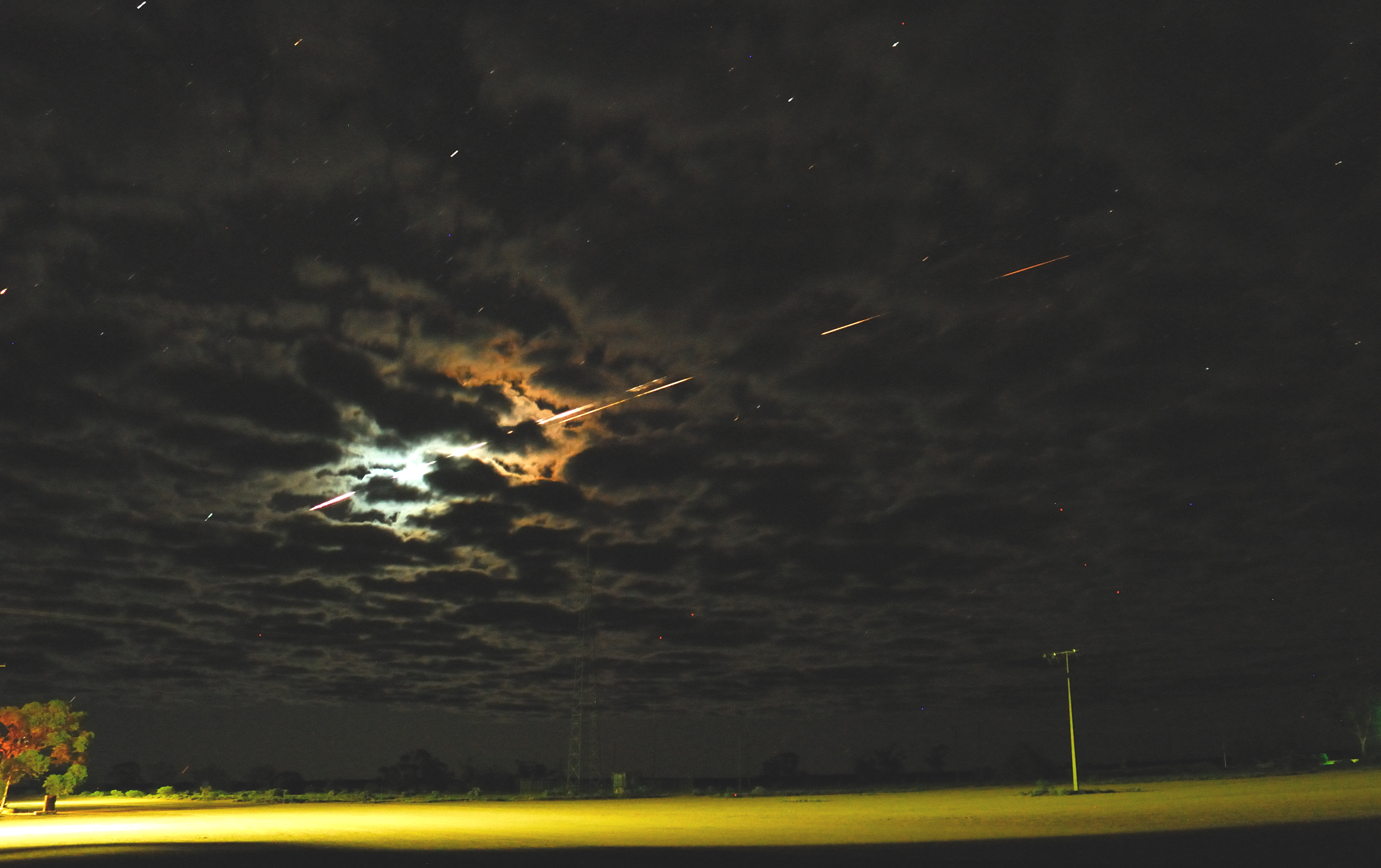
Sixteen years ago today, a fireball tore across the Australian outback. Most of it was a dying Japanese spacecraft burning up after a seven-year ordeal. The bright dot racing ahead of the wreckage was a capsule holding the first grains of an asteroid ever returned to Earth.

Space Brief 9 Feb 2025

Space Brief 9 Feb 2025

Today's highlights include Rocket Lab's successful 2025 kick-off launch, SpaceX's upcoming Starlink deployment, and a significant military satellite contract competition.

Space Brief 17 Aug 2025

Space Brief 17 Aug 2025

Today's space news features major US Space Force satellite launches, regulatory changes supporting private space initiatives, and updates on SpaceX's Starship advances.

X Report 24 Aug 2025

X Report 24 Aug 2025

SpaceX successfully launched its CRS-33 Dragon cargo mission to the ISS, while preparations for the upcoming Starship Flight 10 continue, highlighting significant advancements in both cargo operations and test flight reliability.

Space Brief 14 Dec 2024

Space Brief 14 Dec 2024

Today’s Space Brief covers significant developments such as SpaceX’s latest Starlink launch, the US Space Force testing modular satellite technology, and key long-range missile tests by the Pentagon.

The 300,000 Swerves Keeping Low Earth Orbit From Crashing

The 300,000 Swerves Keeping Low Earth Orbit From Crashing

Starlink satellites fired their thrusters to dodge a collision roughly 300,000 times in 2025, about 822 times a day. Behind that number is a fragile, half-automated system of warnings, probabilities, and judgment calls that decides which close approaches are worth a maneuver and which are just noise.

Crew-11 Emergency Evacuation Raises Space Rescue Alarm | KeepTrack X Report

Crew-11 Emergency Evacuation Raises Space Rescue Alarm | KeepTrack X Report

SpaceX Crew-11 made an emergency return from the ISS on Jan. 15 after a medical crisis, spotlighting gaps in space rescue infrastructure.

Space Brief 11 Feb 2025

Space Brief 11 Feb 2025

Today's highlights include the debut of a new Chinese rocket, a successful Starlink launch, and concerns about Artemis 3. We also cover DoD developments and a notable SpaceX milestone.