SOYUZ-TMA 15 (35010)

COSPAR: 2009-030A | Alt Name: Soyuz TMA-15
DECAYED

Image
SOYUZ-TMA 15 Satellite Image
Additional Sources
Launch Details

Launch Date

May 27, 2009

Launch Pad

LC1

Launch Vehicle

Soyuz-FG

Orbital Elements

NORAD ID

35010

International Designator

2009-030A

Decay Date

12/1/2009

Basic Satellite Info

Name

SOYUZ-TMA 15

Alternative Name

Soyuz TMA-15

Type

Payload

Status

Decayed

Owner

RKKE

Country

Russia

Constellation

N/A

Related Satellites

Major Events

N/A

Summary
SOYUZ-TMA 15 (also known as Soyuz TMA-15) is a crewed spacecraft launched on May 27, 2009, from the Tyuratam Space Center in Kazakhstan using a Soyuz-FG launch vehicle. Manufactured by RKKE, this spacecraft measures 7.9 meters in length and has a diameter of 2.7 meters with a span of 10.6 meters. It had a dry mass of 2850 kilograms and was launched with a total mass of 2886 kilograms. The spacecraft is equipped with two deployable fixed solar arrays for power generation, along with batteries. Its design includes a cylindrical body combined with cone, sphere, and two panels (Cyl + Cone + Sphere + 2 Pan). The mission purpose was to transport crew members to the International Space Station as part of its 17S Expedition.
Physical Characteristics

Length

7.9

Diameter

2.7

Span

10.6

Dry Mass

2850

Launch Mass

2886

Shape

Cyl + Cone + Sphere + 2 Pan

Radar Cross Section

8.014

Visual Magnitude

Unknown

Color

Unknown

Material Composition

Unknown

Technical Details

Payload

Soyuz 11F732A17 No. 225

Purpose

Crewed spacecraft

Mission

Crewed spacecraft

Manufacturer

RKKE

Life Expectancy

Unknown

Bus

7K-STMA

Configuration

Unknown

Motor

SA

Equipment

Unknown

Power System

2 deployable fixed solar arrays, batteries

ADCS

Unknown

Transmitter Frequency

Unknown

Satellite Articles

View All Posts »

Learn more about satellites and other related topics.

X Report 1 Jun 2025

X Report 1 Jun 2025

SpaceX successfully launched 27 Starlink satellites, marking another milestone for its broadband internet service. Meanwhile, the latest GPS III satellite was also launched for the U.S. military, showcasing SpaceX's multifaceted capabilities.

Space Brief 4 Sep 2024

Space Brief 4 Sep 2024

Today's brief highlights SpaceX's Starlink launch, the sale of Telesat's remote communications services, advancements in hypersonic missile tracking, and more on satellite imagery from the NGA.

GOES-19, the Last Weather Sentinel

GOES-19, the Last Weather Sentinel

The final satellite in a multi-billion-dollar program that learned its hardest lesson from a clogged pipe. GOES-19 is now NOAA's eyes on every Atlantic hurricane - and it's already found dozens of comets no one was looking for.

Transporter 16 Carries 119 Payloads to SSO, X Report 29 Mar 2026

Transporter 16 Carries 119 Payloads to SSO, X Report 29 Mar 2026

Transporter 16 carries 119 payloads: SpaceX's rideshare mission targets Sun-synchronous orbit from Vandenberg, one of its densest manifests yet.

Space Brief 5 Apr 2025

Space Brief 5 Apr 2025

Today's brief covers the new Space Force operations doctrine, international defense collaborations by the UAE, and satellite tracking technology innovations.

The Day That Humans Discovered Rocket Fuel

The Day That Humans Discovered Rocket Fuel

On February 2, 1909, Robert Goddard made a revolutionary breakthrough in his notebook: liquid oxygen and liquid hydrogen could achieve 50% efficiency in converting heat energy to kinetic energy for rocket propulsion

X Report 10 Mar 2025

X Report 10 Mar 2025

SpaceX plans first Starship launch from Florida, and prepares for NASA’s SPHEREx and PUNCH missions from Vandenberg.

The Day Humanity First Used a Planet to Navigate the Solar System

The Day Humanity First Used a Planet to Navigate the Solar System

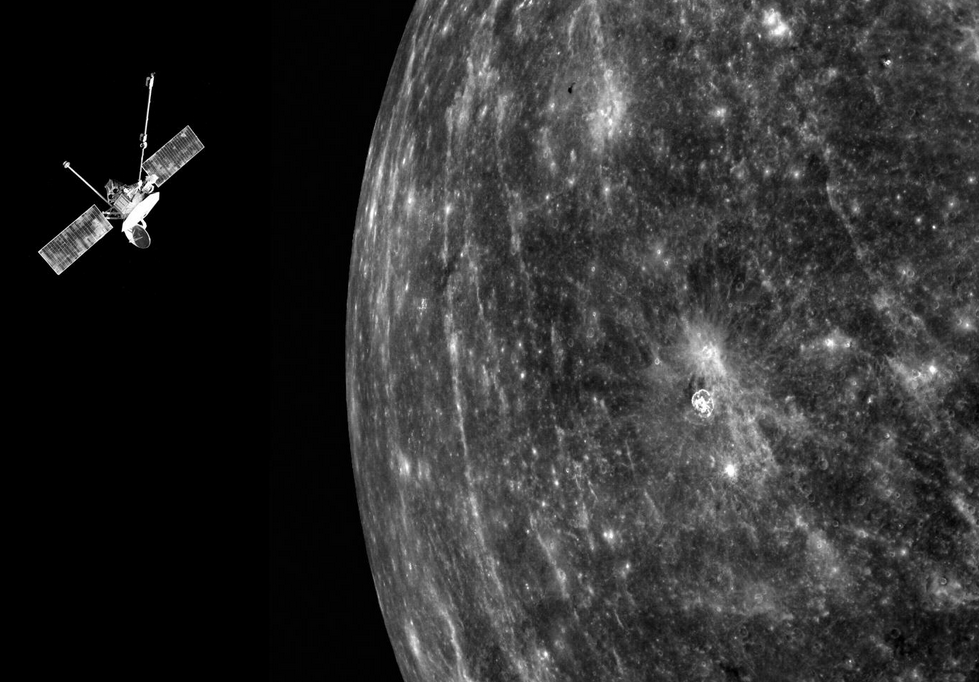
Fifty-one years ago, Mariner 10 revolutionized space exploration by executing the first-ever planetary gravity assist at Venus, pioneering a technique that would transform how we explore the solar system