FENGYUN 1C DEB (31823)

COSPAR: 1999-025CHM | Alt Name: deb FY-1C

Image
FENGYUN 1C DEB Satellite Image
Additional Sources
Launch Details

Launch Date

May 10, 1999

Launch Site

TAISC

Launch Pad

LC7

Launch Vehicle

Chang Zheng 4B

Orbital Elements

NORAD ID

31823

International Designator

1999-025CHM

Epoch

Sat, 04 Jul 2026 14:34:19 GMT

Apogee

Calculating...

Perigee

Calculating...

Inclination

99.51°

Right Ascension

309.60°

Eccentricity

Calculating...

Argument of Perigee

314.02°

Period

97.95 min

Mean Motion

14.70 rev/day

Latitude

Calculating...

Longitude

Calculating...

Altitude

Calculating...

Velocity

Calculating...

Polar Plot
3D Visualization
Basic Satellite Info

Name

FENGYUN 1C DEB

Alternative Name

deb FY-1C

Type

Debris

Status

Space Junk

Owner

CASC

Country

China

Constellation

N/A

Related Satellites

Major Events

N/A

Latest TLEs
1 31823U 99025CHM 26185.60716927  .00026288  00000+0  43260-2 0  9994
2 31823  99.5149 309.6021 0034384 314.0151  45.8218 14.70128260997097

Source: Celestrak

Summary
Space debris, also known as space junk, encompasses all non-functional objects orbiting Earth such as defunct satellites, spent rocket stages, and fragments from collisions or disintegrations. Over time, this debris can accumulate and create an increasingly hazardous environment in orbit. Even tiny fragments, traveling at extremely high velocities, can inflict significant damage on operational satellites and spacecraft. If left unmanaged, the density of debris raises the risk of catastrophic collisions and further fragmentation, compounding the problem and threatening the safety and sustainability of space activities.
Physical Characteristics

Length

0

Diameter

0

Span

0

Dry Mass

0

Launch Mass

0

Shape

N/A

Radar Cross Section

0.0023

Visual Magnitude

Unknown

Color

Unknown

Material Composition

Unknown

Technical Details

Payload

Unknown

Purpose

Unknown

Mission

Unknown

Manufacturer

Unknown

Life Expectancy

Unknown

Bus

Unknown

Configuration

Unknown

Motor

Unknown

Equipment

Unknown

Power System

Unknown

ADCS

Unknown

Transmitter Frequency

Unknown

Map
This tool will help you track the satellite's position and predict its upcoming passes over your location. Simply input the coordinates or click the geolocation button to get started.
Next Pass
Azimuth Elevation Time (Local)
Start Azimuth
Max Elevation
Stop Azimuth
Time Until
Pass Duration

Satellite Articles

View All Posts »

Learn more about satellites and other related topics.

Three Chinese Rocket Bodies Exploded, Generating Decades of LEO Debris | KeepTrack Space Brief

Three Chinese Rocket Bodies Exploded, Generating Decades of LEO Debris | KeepTrack Space Brief

Three Chinese rocket bodies have exploded over four years, creating debris clouds that will linger for decades to centuries, according to LeoLabs analysis. Fragmentation events threaten commercial and military operators.
€140M ESA Launcher Funding at Risk of Lapse | KeepTrack Space Brief

€140M ESA Launcher Funding at Risk of Lapse | KeepTrack Space Brief

Nearly €140 million in ESA launcher development funds faces forfeiture with no replacement mechanism. Europe's independent launch capacity under pressure as Arianespace struggles.

Space Brief 27 Nov 2025

Space Brief 27 Nov 2025

Today's highlights include new space-based interceptor developments, a UK space tracking partnership, a strategic satellite imagery alliance, and more.

X Report 20 Mar 2025

X Report 20 Mar 2025

SpaceX successfully rotates Crew-9 and Crew-10 on the ISS and launches new Starlink satellites with direct-to-cell capability.

Kulasekarapattinam SSLV Launch Complex

Kulasekarapattinam SSLV Launch Complex

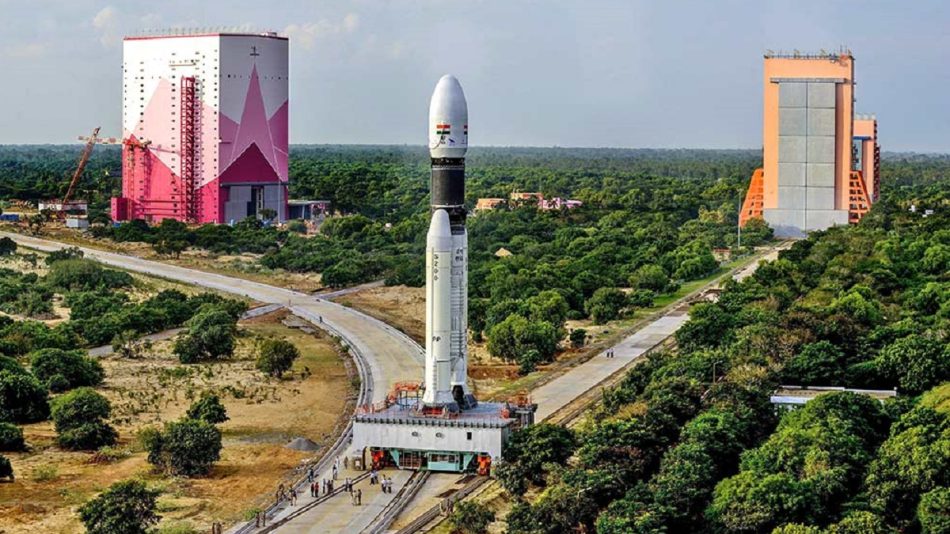
India's second spaceport solves a geometry problem. How ISRO is building a dedicated small satellite facility that eliminates the costly dogleg maneuvers plaguing polar launches from Sriharikota.

Space Brief 20 Mar 2025

Space Brief 20 Mar 2025

Today's brief highlights critical discussions in military space readiness, potential satellite 'dogfighting' scenarios, international defense collaborations, and a notable communications satellite launch.

U.S. GSSAP Executes GEO Handoff to Track China's Shijian-29 | KeepTrack Space Brief

U.S. GSSAP Executes GEO Handoff to Track China's Shijian-29 | KeepTrack Space Brief

U.S. GSSAP satellites execute coordinated GEO maneuvers for continuous surveillance of Chinese Shijian-29 spacecraft. Handoff approach maintains coverage with zero gaps.

Falcon Heavy Returns After 18-Month Hiatus | KeepTrack X Report

Falcon Heavy Returns After 18-Month Hiatus | KeepTrack X Report

SpaceX's Falcon Heavy flew for the first time in 18 months on April 29, while Starlink hit 51 Falcon 9 launches in 2026 with 10,280 satellites working.