FENGYUN 1C DEB (31344)

COSPAR: 1999-025BQY | Alt Name: deb FY-1C
DECAYED

Image
FENGYUN 1C DEB Satellite Image
Additional Sources
Launch Details

Launch Date

May 10, 1999

Launch Site

TAISC

Launch Pad

LC7

Launch Vehicle

Chang Zheng 4B

Orbital Elements

NORAD ID

31344

International Designator

1999-025BQY

Decay Date

5/18/2019

Basic Satellite Info

Name

FENGYUN 1C DEB

Alternative Name

deb FY-1C

Type

Debris

Status

Space Junk

Owner

CASC

Country

China

Constellation

N/A

Related Satellites

Major Events

N/A

Summary
Space debris, also known as space junk, encompasses all non-functional objects orbiting Earth such as defunct satellites, spent rocket stages, and fragments from collisions or disintegrations. Over time, this debris can accumulate and create an increasingly hazardous environment in orbit. Even tiny fragments, traveling at extremely high velocities, can inflict significant damage on operational satellites and spacecraft. If left unmanaged, the density of debris raises the risk of catastrophic collisions and further fragmentation, compounding the problem and threatening the safety and sustainability of space activities.
Physical Characteristics

Length

0

Diameter

0

Span

0

Dry Mass

0

Launch Mass

0

Shape

N/A

Radar Cross Section

0.0122

Visual Magnitude

Unknown

Color

Unknown

Material Composition

Unknown

Technical Details

Payload

Unknown

Purpose

Unknown

Mission

Unknown

Manufacturer

Unknown

Life Expectancy

Unknown

Bus

Unknown

Configuration

Unknown

Motor

Unknown

Equipment

Unknown

Power System

Unknown

ADCS

Unknown

Transmitter Frequency

Unknown

Satellite Articles

View All Posts »

Learn more about satellites and other related topics.

Starlink Restrictions Disrupt Russian Battlefield Communications | KeepTrack Space Brief

Starlink Restrictions Disrupt Russian Battlefield Communications | KeepTrack Space Brief

Starlink restrictions reportedly hit Moscow's drone coordination and frontline comms. SpaceX and xAI enter Pentagon's $100M drone contest. Sentinel ICBM to clear key review this year.

The Day Superpowers Shared Space

The Day Superpowers Shared Space

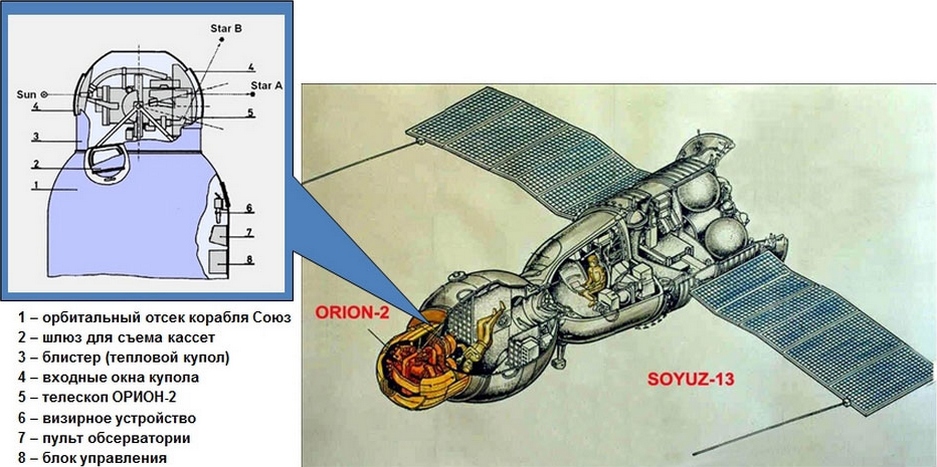
Exactly 52 years ago today, the Soviet Union launched Soyuz 13 - a scientific mission that marked the first time American astronauts and Soviet cosmonauts orbited Earth simultaneously. Armed with a revolutionary ultraviolet telescope, Pyotr Klimuk and Valentin Lebedev would discover elements never before seen in distant nebulae.

Space Brief 26 Mar 2025

Space Brief 26 Mar 2025

Today's briefing covers the US Space Force's pivotal journeys, emerging hypersonic weaponry, and innovative drone technologies, with a special satellite update featuring Jackal X-1L-001.

Vulcan Grounding Threatens WGS-11 and OPIR Launches | KeepTrack Space Brief

Vulcan Grounding Threatens WGS-11 and OPIR Launches | KeepTrack Space Brief

ULA's Vulcan rocket grounded, imperiling Space Force WGS-11 communications satellite and Next-Gen OPIR missile warning payload. Both missions lack backup launch options.

Rocket Lab to Acquire Iridium for $8B, X Report 30 Jun 2026

Rocket Lab to Acquire Iridium for $8B, X Report 30 Jun 2026

Rocket Lab will acquire Iridium for $8B to challenge SpaceX, whose Starlink constellation holds 10,706 working satellites of 12,390 launched.

Starlink Constellation Size Hits 9,931, X Report 7 Mar 2026

Starlink Constellation Size Hits 9,931, X Report 7 Mar 2026

Starlink constellation size in 2026: 9,931 satellites in orbit, 9,920 working from 11,463 launched. Starlink 17-18 adds 25 more from Vandenberg.

X Report 19 Aug 2025

X Report 19 Aug 2025

SpaceX receives FAA clearance for Starship Flight 10 and celebrates its 100th Falcon 9 launch of the year, successfully deploying 24 Starlink satellites.

Golden Dome Missile Shield Costs Up to $1.2T Over 20 Years | KeepTrack Space Brief

Golden Dome Missile Shield Costs Up to $1.2T Over 20 Years | KeepTrack Space Brief

CBO estimates Golden Dome national missile shield at $1.2 trillion over 20 years. Space-based intercept layer could add thousands of satellites to tracked orbital regimes.