DELTA 4 DEB (29575)

COSPAR: 2006-050AR | Alt Name: deb Delta 320
DECAYED

Image
DELTA 4 DEB Satellite Image
Additional Sources
Launch Details

Launch Date

November 4, 2006

Launch Site

AFWTR

Launch Pad

SLC6

Launch Vehicle

Delta 4M

Orbital Elements

NORAD ID

29575

International Designator

2006-050AR

Decay Date

3/13/2010

Basic Satellite Info

Name

DELTA 4 DEB

Alternative Name

deb Delta 320

Type

Debris

Status

Space Junk

Owner

AFSMC

Country

United States

Constellation

N/A

Related Satellites

Major Events

N/A

Summary
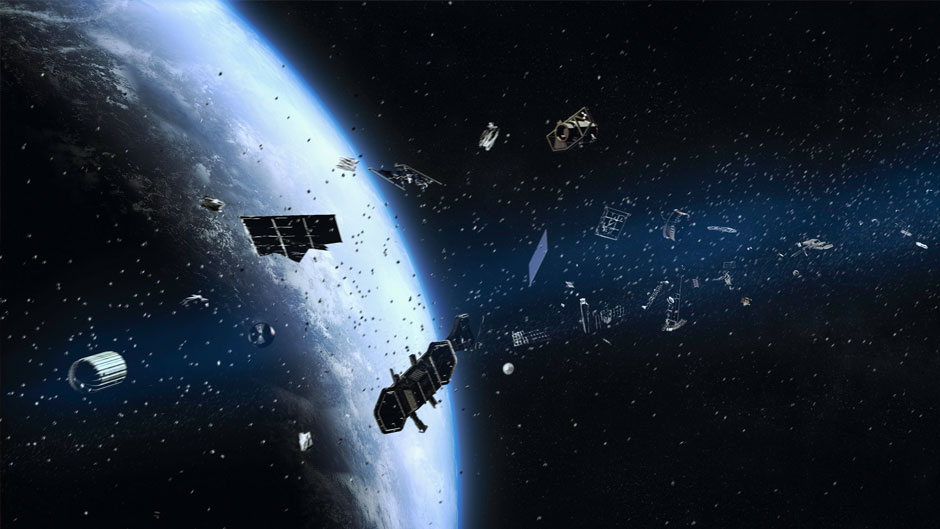
Space debris, also known as space junk, encompasses all non-functional objects orbiting Earth such as defunct satellites, spent rocket stages, and fragments from collisions or disintegrations. Over time, this debris can accumulate and create an increasingly hazardous environment in orbit. Even tiny fragments, traveling at extremely high velocities, can inflict significant damage on operational satellites and spacecraft. If left unmanaged, the density of debris raises the risk of catastrophic collisions and further fragmentation, compounding the problem and threatening the safety and sustainability of space activities.
Physical Characteristics

Length

0

Diameter

0

Span

0

Dry Mass

0

Launch Mass

0

Shape

N/A

Radar Cross Section

0.0516

Visual Magnitude

Unknown

Color

Unknown

Material Composition

Unknown

Technical Details

Payload

deb DCSS-4 F06

Purpose

Unknown

Mission

Unknown

Manufacturer

ULAD

Life Expectancy

Unknown

Bus

Unknown

Configuration

Unknown

Motor

Unknown

Equipment

Unknown

Power System

Unknown

ADCS

Unknown

Transmitter Frequency

Unknown

Satellite Articles

View All Posts »

Learn more about satellites and other related topics.

Space Force Opens Secret Tracking Data to Commercial Firms | KeepTrack Space Brief

Space Force Opens Secret Tracking Data to Commercial Firms | KeepTrack Space Brief

Space Force shares classified tracking data with commercial firms. Falcon 9 reentry linked to upper-atmosphere lithium plume. SpaceX launches 54 Starlink sats in one day.

Atlas 5 Retires After Final 551 Flight to Amazon Kuiper | KeepTrack Space Brief

Atlas 5 Retires After Final 551 Flight to Amazon Kuiper | KeepTrack Space Brief

ULA launches the final Atlas 5 551 configuration—its heaviest variant with 5 solid boosters—carrying Amazon's Project Kuiper satellite to low Earth orbit from Cape Canaveral.

New Glenn Damaged in Hotfire Anomaly at LC-36 | KeepTrack Space Brief

New Glenn Damaged in Hotfire Anomaly at LC-36 | KeepTrack Space Brief

Blue Origin's New Glenn suffered a damaging anomaly during hotfire testing at Launch Complex 36, grounding the heavy-lift rocket indefinitely with no return-to-flight timeline announced.

Artemis II Crew Sets Human Distance Record at Moon | KeepTrack Space Brief

Artemis II Crew Sets Human Distance Record at Moon | KeepTrack Space Brief

Artemis II crew surpassed Apollo 13's distance record during April 6 lunar flyby. Orion carried 4 astronauts—including Canadian Jeremy Hansen—farther from Earth than any humans.

New Glenn Upper Stage Fails, BlueBird 7 Lost, Space Brief 20 Apr 2026

New Glenn Upper Stage Fails, BlueBird 7 Lost, Space Brief 20 Apr 2026

New Glenn's upper stage malfunctioned April 19, stranding AST SpaceMobile's BlueBird 7; the satellite is lost. Vulcan may fly without solid boosters.

SpaceX Eyes $60B Cursor AI Acquisition Ahead of IPO | KeepTrack X Report

SpaceX Eyes $60B Cursor AI Acquisition Ahead of IPO | KeepTrack X Report

SpaceX secured a $60B option to acquire Cursor AI while launching its 40th Falcon 9 mission of 2026, deploying 24 more Starlink satellites from Vandenberg.

The Telescope That Needed Glasses

The Telescope That Needed Glasses

On April 25, 1990, the Space Shuttle Discovery's robotic arm lifted a 11,110-kilogram barrel of mirrors and instruments out of the payload bay and released it into orbit. Six weeks later, the first images came back badly out of focus. The Hubble Space Telescope had been ground to the wrong prescription, and America had just spent $2.5 billion on what the press was calling a 'technoturkey.'

The $30 Million Toilet That Keeps Breaking on the Way to the Moon

The $30 Million Toilet That Keeps Breaking on the Way to the Moon

Sixty years of space toilet engineering, a decade of development, and a $30 million contract - and the Artemis II crew still had to pee in bags on Day 1.