ARIANE 44L R/B (27514)

COSPAR: 2002-041B | Alt Name: Ariane H10-3 V154
DECAYED

Image
ARIANE 44L R/B Satellite Image
Additional Sources
Launch Details

Launch Date

September 6, 2002

Launch Site

FRGUI

Launch Pad

ELA2

Launch Vehicle

Ariane 44L

Orbital Elements

NORAD ID

27514

International Designator

2002-041B

Decay Date

12/4/2002

Basic Satellite Info

Name

ARIANE 44L R/B

Alternative Name

Ariane H10-3 V154

Type

Rocket Body

Status

Space Junk

Owner

AE

Country

France

Constellation

N/A

Related Satellites

Major Events

N/A

Summary
A rocket body, also commonly referred to as an upper stage or spent rocket stage, is the structural shell left behind after a rocket has delivered its payload to orbit. These large and often heavy pieces of space hardware can remain in orbit for years, posing significant collision hazards as part of the growing space debris problem. If left uncontrolled, rocket bodies have the potential to reenter Earth's atmosphere unpredictably, which can lead to falling debris in populated areas. Additionally, they risk colliding with operational satellites or the International Space Station, creating more debris and putting human life at risk.
Physical Characteristics

Length

12.1

Diameter

2.6

Span

12.1

Dry Mass

1820

Launch Mass

2000

Shape

Cyl

Radar Cross Section

6.3095

Visual Magnitude

Unknown

Color

Unknown

Material Composition

Unknown

Technical Details

Payload

Ariane H10-3 S/N T4114

Purpose

Unknown

Mission

Unknown

Manufacturer

EADSL

Life Expectancy

Unknown

Bus

Ariane H10-3

Configuration

Unknown

Motor

HM-7B

Equipment

Unknown

Power System

Unknown

ADCS

Unknown

Transmitter Frequency

Unknown

Satellite Articles

View All Posts »

Learn more about satellites and other related topics.

DAF Space Restructure Announced Within Days, PAE Leaders Named | KeepTrack Space Brief

DAF Space Restructure Announced Within Days, PAE Leaders Named | KeepTrack Space Brief

Department of Air Force announces finalized Program Acquisition Executive structure within days, reshaping oversight of GPS, SBIRS, and Protected Tactical Satcom systems.

SpaceX Launches GPS Satellite Tonight, Starship V3 Targets Mid-March | KeepTrack X Report

SpaceX Launches GPS Satellite Tonight, Starship V3 Targets Mid-March | KeepTrack X Report

SpaceX to launch GPS III SV09 satellite for Space Force at 11:38 p.m. EST from Cape Canaveral. Musk confirms Starship V3 with Raptor V3 engines targets mid-March first flight.

The Day Two Satellites Hit Each Other at 26,000 MPH

The Day Two Satellites Hit Each Other at 26,000 MPH

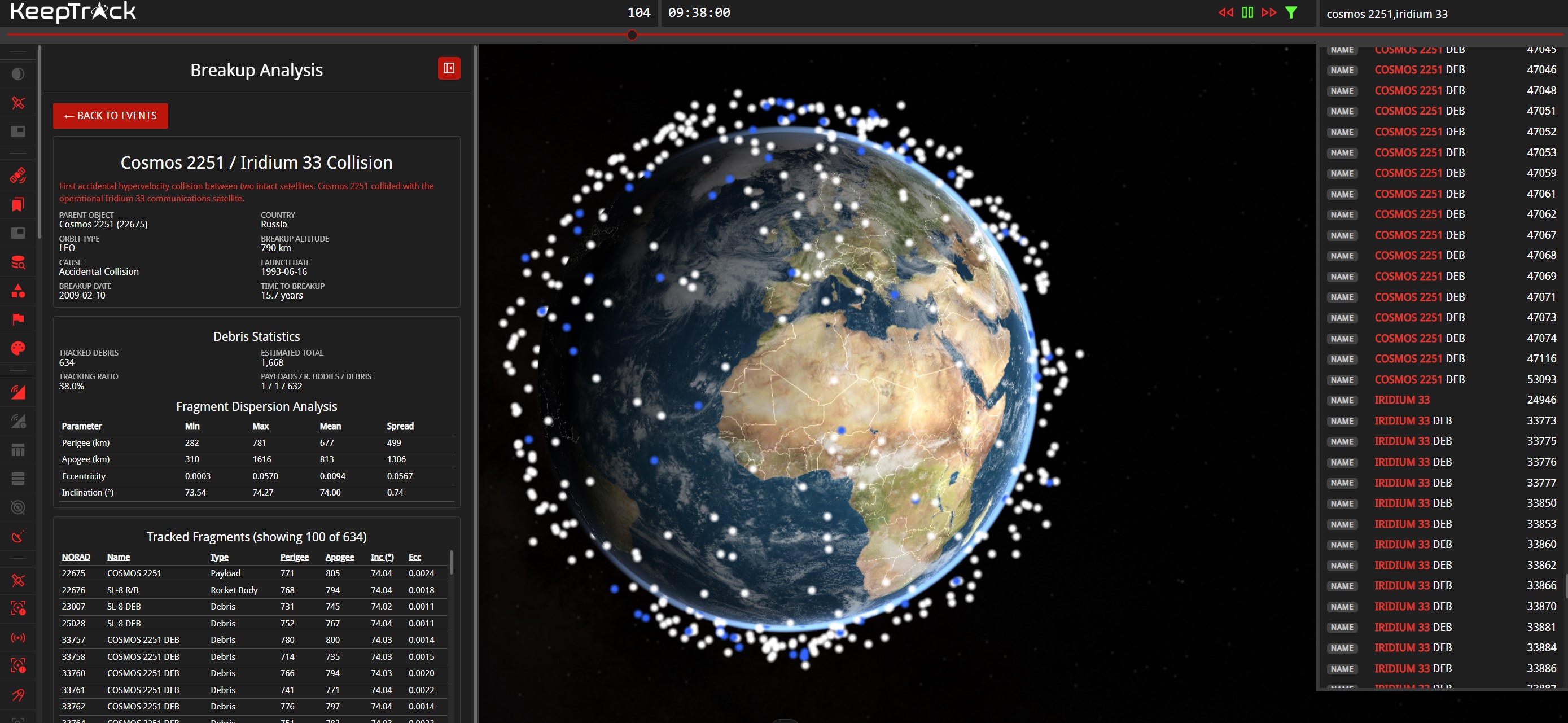
On February 10, 2009, an active Iridium communications satellite and a derelict Soviet military spacecraft slammed into each other 789 kilometers above Siberia. The collision produced more than 2,300 pieces of trackable debris that are still up there. Seventeen years later, the Iridium-Cosmos collision remains the event that made space debris a policy problem the world could no longer ignore.

X Report 9 Apr 2025

X Report 9 Apr 2025

SpaceX makes strides with new GPS and Starlink launches while securing major U.S. government contracts.

Space Brief 1 Feb 2025

Space Brief 1 Feb 2025

Today's brief covers advances in satellite docking technology, challenges faced by space companies with government navigation, and China's leap in space autonomy through AI developments.

Space Brief 11 Mar 2025

Space Brief 11 Mar 2025

Today's Space Brief highlights pivotal defense budget evaluations, Lithuania's growing defense connections, the first CubeSat for ESA's Ramses mission, and the one-year milestone of the Aries satellite in orbit.

X Report 10 Jun 2025

X Report 10 Jun 2025

Exciting advancements from SpaceX include the debut of a new Dragon capsule for Axiom Space, continued Starlink deployments, and significant shifts in U.S. rural broadband funding that could benefit Starlink.

SpaceX Hits 10,000 Starlink Satellites in Orbit | KeepTrack Space Brief

SpaceX Hits 10,000 Starlink Satellites in Orbit | KeepTrack Space Brief

SpaceX surpassed 10,000 simultaneous Starlink satellites in orbit after Starlink 17-24 deployed 25 satellites from California. Milestone reached in under 7 years.