USA 158 (26770)

COSPAR: 2001-020A | Alt Name: GeoLITE
DECAYED

Image
USA 158 Satellite Image
Additional Sources
Launch Details

Launch Date

May 18, 2001

Launch Pad

SLC17B

Launch Vehicle

Delta 7925-9.5

Orbital Elements

NORAD ID

26770

International Designator

2001-020A

Decay Date

Unknown

Basic Satellite Info

Name

USA 158

Alternative Name

GeoLITE

Type

Payload

Status

Non-operational

Owner

NROC

Country

United States

Constellation

N/A

Related Satellites

Major Events

N/A

Summary
USA 158, also known as GeoLITE, is a US communication (experimental) satellite launched on May 18, 2001, from the Cape Canaveral Air Force Station, Launch Pad SLC-17B, using a Delta 7925-9.5 launch vehicle. The spacecraft has dimensions of 3 meters in length and 1.8 meters in diameter with an 8.8 meter span, featuring a box shape with two panels and a dish. It has a dry mass of 929 kilograms and was launched with a total mass of 1870 kilograms. GeoLITE is equipped with GLT, GLOM, IBS-S equipment and powered by two deployable solar arrays and batteries. The satellite's mission lasted for approximately nine years, designed to conduct experimental communication operations. Manufactured by TRW for the National Reconnaissance Office (NROC), it utilized a TR-500 motor and has an unspecified RCS and ADCS system.
Physical Characteristics

Length

3

Diameter

1.8

Span

8.8

Dry Mass

929

Launch Mass

1870

Shape

Box + 2 Pan + Dish

Radar Cross Section

Unknown

Visual Magnitude

Unknown

Color

Unknown

Material Composition

Unknown

Technical Details

Payload

GeoLITE

Purpose

Communication (Experimental)

Mission

Communication (Experimental)

Manufacturer

TRW

Life Expectancy

9 years

Bus

T-310

Configuration

T310

Motor

TR-500

Equipment

GLT, GLOM, IBS-S

Power System

2 deployable solar arrays, batteries

ADCS

Unknown

Transmitter Frequency

Unknown

Satellite Articles

View All Posts »

Learn more about satellites and other related topics.

X Report 1 Aug 2025

X Report 1 Aug 2025

SpaceX successfully launched 19 Starlink satellites from California amidst a weather-related scrub of the Crew-11 mission to the ISS, showcasing the company’s focus on expanding its satellite constellation while overcoming operational challenges.

X Report 18 Jan 2025

X Report 18 Jan 2025

SpaceX faces setbacks with Starship Flight 7 as FAA launches an investigation, while future transportation policies might impact SpaceX operations. Meanwhile, the Starlink constellation continues strong.

Space Brief 25 Jun 2025

Space Brief 25 Jun 2025

Today's highlights include the launch of a U.S. military satellite via SpaceX, a new French defense agreement for satellite services, and the Missile Defense Agency's successful ICBM target tracking with long-range radar.

X Report 5 Oct 2025

X Report 5 Oct 2025

SpaceX secures major contracts for U.S. national security launches, including multiple Falcon Heavy missions. Significant updates on Starlink deployments and the ongoing evolution of the company highlight a productive day in the space sector.

Space Brief 9 Sep 2025

Space Brief 9 Sep 2025

Explore the latest advancements in satellite technology, military satellite applications, and collaborative efforts in hypersonic vehicle tracking. Discover the transformative power of new deals shaping global communication networks.

Space Brief 18 Dec 2025

Space Brief 18 Dec 2025

Today's updates cover Rocket Lab's launch for the U.S. Space Force, Digantara's major funding round, and discussions on national security in space.

The Korean Optical Wide-field patroL-Network (OWL-Net)

The Korean Optical Wide-field patroL-Network (OWL-Net)

South Korea's sophisticated network of robotic telescopes provides critical space situational awareness while strengthening the nation's position in space security amid regional tensions

The Day a Giant Space Balloon United the Cold War

The Day a Giant Space Balloon United the Cold War

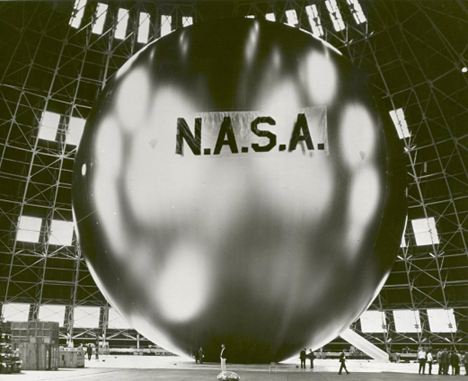
When a 135-foot inflatable mirror bounced a radio signal from England to Russia, it became the first joint US-Soviet space venture - and changed how we think about satellite communication.