IRIDIUM 7 (24793)

COSPAR: 1997-020B | Alt Name: Iridium 7

Image
IRIDIUM 7 Satellite Image
Additional Sources
Launch Details

Launch Date

May 5, 1997

Launch Site

AFWTR

Launch Pad

SLC2W

Launch Vehicle

Delta 7920-10C

Orbital Elements

NORAD ID

24793

International Designator

1997-020B

Epoch

Fri, 03 Jul 2026 19:08:41 GMT

Apogee

Calculating...

Perigee

Calculating...

Inclination

86.40°

Right Ascension

16.89°

Eccentricity

Calculating...

Argument of Perigee

82.54°

Period

100.26 min

Mean Motion

14.36 rev/day

Latitude

Calculating...

Longitude

Calculating...

Altitude

Calculating...

Velocity

Calculating...

Polar Plot
3D Visualization
Basic Satellite Info

Name

IRIDIUM 7

Alternative Name

Iridium 7

Type

Payload

Status

Non-operational

Owner

IRID

Country

United States

Constellation

N/A

Related Satellites

Major Events

N/A

Latest TLEs
1 24793U 97020B   26184.79770091  .00000340  00000-0  10988-3 0  9990
2 24793  86.3953  16.8869 0001905  82.5381 277.6032 14.36256017526668

Source: Celestrak

Summary
IRIDIUM 7 is a communication satellite with the NORAD catalog ID 24793 and object identifier 1997-020B. Launched on May 5, 1997, from AFWTR (SLC2W) using a Delta 7920-10C launch vehicle, it is part of the LM-700A configuration built by MOTO/LMMS for the US. The satellite measures 3.5 meters in length with a diameter of 1 meter and spans 5 meters when its solar arrays are deployed. It has a dry mass of 556 kg and weighed 662 kg at launch. Equipped with two deployable solar arrays and batteries, IRIDIUM 7 was designed for an eight-year operational lifetime. Its shape is characterized as a box with two panels, and it serves a communication purpose within the constellation managed by Iridium.
Physical Characteristics

Length

3.5

Diameter

1

Span

5

Dry Mass

556

Launch Mass

662

Shape

Box + 2 Pan

Radar Cross Section

3.3209

Visual Magnitude

Unknown

Color

Unknown

Material Composition

Unknown

Technical Details

Payload

Iridium SV007

Purpose

Communication

Mission

Communication

Manufacturer

MOTO/LMMS

Life Expectancy

8 years

Bus

LM700

Configuration

LM-700A

Motor

?

Equipment

?

Power System

2 deployable solar arrays, batteries

ADCS

Unknown

Transmitter Frequency

Unknown

Map
This tool will help you track the satellite's position and predict its upcoming passes over your location. Simply input the coordinates or click the geolocation button to get started.
Next Pass
Azimuth Elevation Time (Local)
Start Azimuth
Max Elevation
Stop Azimuth
Time Until
Pass Duration

Satellite Articles

View All Posts »

Learn more about satellites and other related topics.

Pentagon Allocates $8B for Space-Based Moving Target Tracking | KeepTrack Space Brief

Pentagon Allocates $8B for Space-Based Moving Target Tracking | KeepTrack Space Brief

Pentagon requests $8 billion for space-based moving target tracking constellation in FY2027 budget. New NORAD IDs expected as Space Force expands orbital ISR capabilities.

Space Brief 15 Jun 2025

Space Brief 15 Jun 2025

Today’s highlights focus on the launch preparations for the Dragoon Mission, China’s seismo-electromagnetic satellite launch, NASA budget cut impacts, and a major expansion by American Pacific Corporation.

Space Brief 10 Nov 2025

Space Brief 10 Nov 2025

Today's brief covers China's record-breaking launch year, SpaceX's continued Starlink deployments, Blue Origin's launch challenges, and innovations in satellite maneuverability.

X Report 15 Jun 2025

X Report 15 Jun 2025

SpaceX explores new horizons with Starship's point-to-point travel announcement and reports significant Starlink deployment progress.

Hayabusa | The Crippled Falcon That Carried an Asteroid Home

Hayabusa | The Crippled Falcon That Carried an Asteroid Home

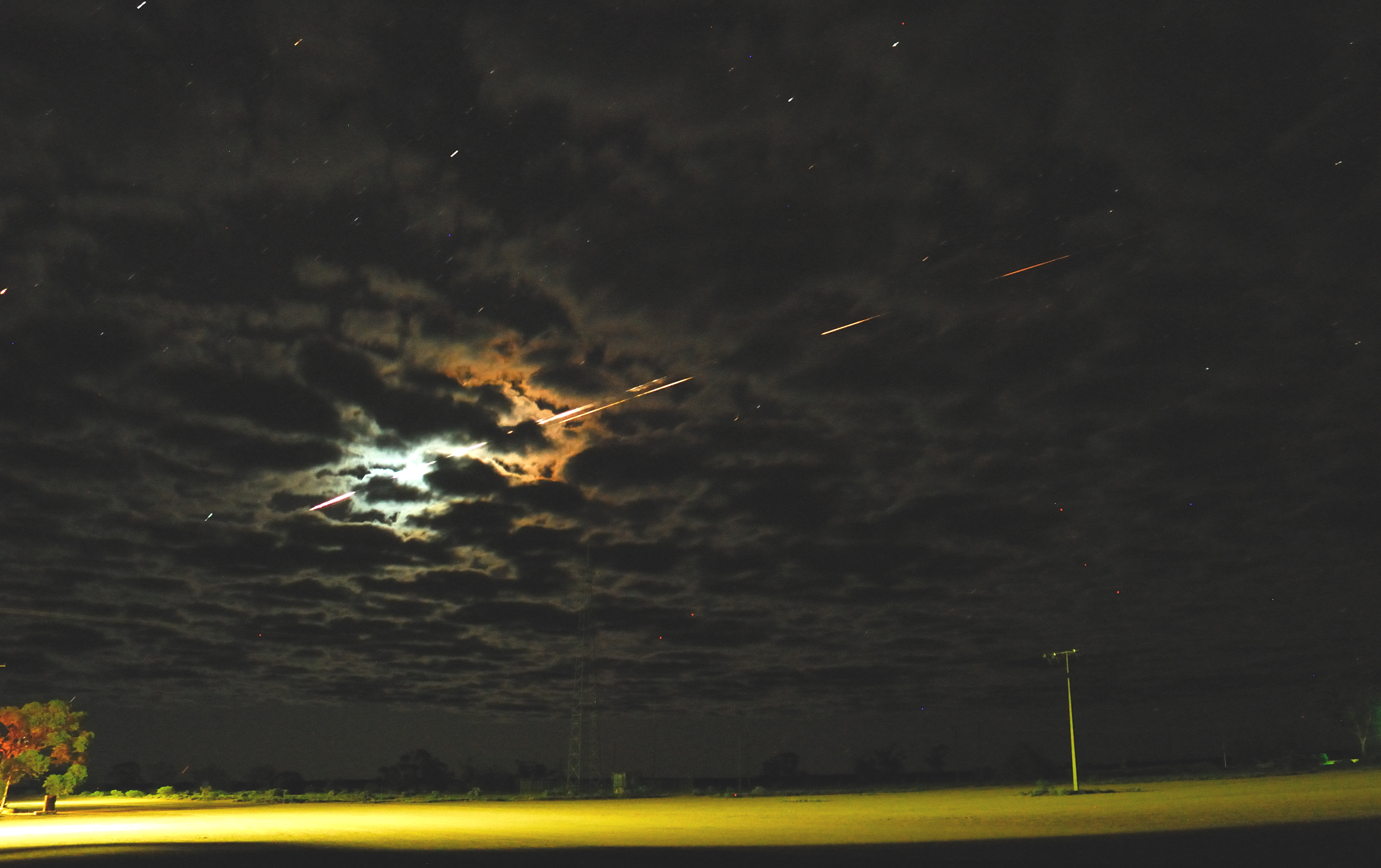
Sixteen years ago today, a fireball tore across the Australian outback. Most of it was a dying Japanese spacecraft burning up after a seven-year ordeal. The bright dot racing ahead of the wreckage was a capsule holding the first grains of an asteroid ever returned to Earth.

Space Brief 17 Mar 2025

Space Brief 17 Mar 2025

Today's highlights include significant data release from NASA's Atmospheric Waves Experiment, SpaceX's dual launches of Crew-10 and Starlink satellites, and intriguing findings from the arctic ice studies.

The Day Humanity Broke Its Last Tether to Earth

The Day Humanity Broke Its Last Tether to Earth

Forty-one years ago, astronaut Bruce McCandless II became the first human to float completely free in space, pushing the boundaries of both technology and human courage

10 Surprising Facts About SpaceX

10 Surprising Facts About SpaceX

Discover lesser-known aspects of SpaceX's history, achievements, and innovations that have shaped the commercial space industry over the past two decades.