PEGASUS DEB (24059)

COSPAR: 1994-029DG | Alt Name: deb HAPS
DECAYED

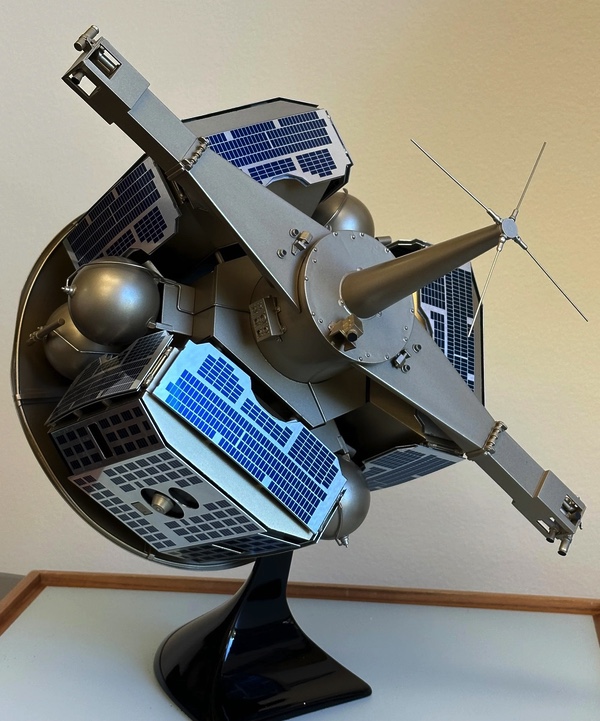
Image
PEGASUS DEB Satellite Image
Additional Sources
Launch Details

Launch Date

May 19, 1994

Launch Site

AFWTR

Launch Pad

RW04/22

Launch Vehicle

Pegasus/HAPS

Orbital Elements

NORAD ID

24059

International Designator

1994-029DG

Decay Date

9/1/1998

Basic Satellite Info

Name

PEGASUS DEB

Alternative Name

deb HAPS

Type

Debris

Status

Space Junk

Owner

OSCC

Country

United States

Constellation

N/A

Related Satellites

Major Events

N/A

Summary
Space debris, also known as space junk, encompasses all non-functional objects orbiting Earth such as defunct satellites, spent rocket stages, and fragments from collisions or disintegrations. Over time, this debris can accumulate and create an increasingly hazardous environment in orbit. Even tiny fragments, traveling at extremely high velocities, can inflict significant damage on operational satellites and spacecraft. If left unmanaged, the density of debris raises the risk of catastrophic collisions and further fragmentation, compounding the problem and threatening the safety and sustainability of space activities.
Physical Characteristics

Length

0

Diameter

0

Span

0

Dry Mass

0

Launch Mass

0

Shape

N/A

Radar Cross Section

0.0327

Visual Magnitude

Unknown

Color

Unknown

Material Composition

Unknown

Technical Details

Payload

Unknown

Purpose

Unknown

Mission

Unknown

Manufacturer

Unknown

Life Expectancy

Unknown

Bus

Unknown

Configuration

Unknown

Motor

Unknown

Equipment

Unknown

Power System

Unknown

ADCS

Unknown

Transmitter Frequency

Unknown

Satellite Articles

View All Posts »

Learn more about satellites and other related topics.

SpaceX and xAI Tapped for Pentagon's $100M Drone Contest | KeepTrack X Report

SpaceX and xAI Tapped for Pentagon's $100M Drone Contest | KeepTrack X Report

Pentagon selects SpaceX and xAI for $100M autonomous drone competition. Two Falcon 9 rockets launch Starlink sats from California and Florida. 11,215 total Starlink satellites launched.

X Report 4 Dec 2025

X Report 4 Dec 2025

SpaceX successfully launched another batch of Starlink satellites and received approval for a new Starship launch site, while facing challenges with crew assignments on upcoming missions.

ESA Buys Dedicated Crew Dragon Mission for 4 Astronauts | KeepTrack X Report

ESA Buys Dedicated Crew Dragon Mission for 4 Astronauts | KeepTrack X Report

ESA is purchasing a dedicated SpaceX Crew Dragon flight to send 4 European astronauts to the ISS ahead of the station's planned retirement.

The Day the Navy's Eyes Reached Orbit

The Day the Navy's Eyes Reached Orbit

Forty-two years ago, an Atlas H rocket climbed into the California sky carrying four objects that would help the U.S. Navy track every Soviet warship on the planet - a mission so secret that even the satellites' true name wasn't declassified until 2023

The Day America Reached Orbit

The Day America Reached Orbit

Sixty-three years ago, John Glenn became the first American to orbit Earth, piloting Friendship 7 through three historic orbits that transformed the Space Race

Space Brief 15 Sep 2025

Space Brief 15 Sep 2025

Discover the latest in satellite tracking with key topics covering the launch of Tranche 1 satellites for the Space Development Agency, a record-setting Transporter-15 mission by Exolaunch, and new defense-focused satellite connectivity solutions by Satlink and Rivada.

Space Brief 28 Oct 2025

Space Brief 28 Oct 2025

Today's brief covers China's Gaofen-14 satellite launch, Europe's advancements in asteroid defense through GomSpace, and Russia's controversial Burevestnik missile test.

GPS III SV10 | The Last of Its Kind, and the First of What Comes Next

GPS III SV10 | The Last of Its Kind, and the First of What Comes Next

On April 21, 2026, the tenth and final GPS Block III satellite reached medium Earth orbit aboard a SpaceX Falcon 9. Named for Hedy Lamarr, the actress whose 1942 frequency-hopping patent underpins modern GPS, SV10 closes a procurement that took eight years to deliver hardware and opens the optical-crosslink era that will define the constellation's next decade.