MIR DEB (23919)

COSPAR: 1986-017LF | Alt Name: EO-21 EVA-6 debris
DECAYED

Image
MIR DEB Satellite Image
Additional Sources
Launch Details

Launch Date

February 19, 1986

Launch Pad

LC1

Launch Vehicle

Soyuz-U

Orbital Elements

NORAD ID

23919

International Designator

1986-017LF

Decay Date

8/4/1996

Basic Satellite Info

Name

MIR DEB

Alternative Name

EO-21 EVA-6 debris

Type

Debris

Status

Space Junk

Owner

RKKE

Country

Russia

Constellation

N/A

Related Satellites

Major Events

N/A

Summary
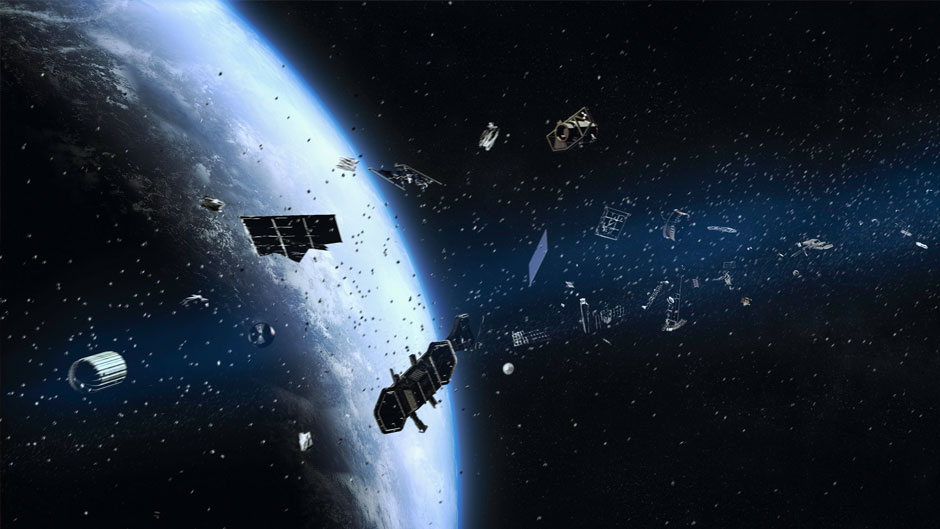
Space debris, also known as space junk, encompasses all non-functional objects orbiting Earth such as defunct satellites, spent rocket stages, and fragments from collisions or disintegrations. Over time, this debris can accumulate and create an increasingly hazardous environment in orbit. Even tiny fragments, traveling at extremely high velocities, can inflict significant damage on operational satellites and spacecraft. If left unmanaged, the density of debris raises the risk of catastrophic collisions and further fragmentation, compounding the problem and threatening the safety and sustainability of space activities.
Physical Characteristics

Length

0

Diameter

0

Span

0

Dry Mass

0

Launch Mass

0

Shape

N/A

Radar Cross Section

0.2103

Visual Magnitude

Unknown

Color

Unknown

Material Composition

Unknown

Technical Details

Payload

Unknown

Purpose

Unknown

Mission

Unknown

Manufacturer

Unknown

Life Expectancy

Unknown

Bus

Unknown

Configuration

Unknown

Motor

Unknown

Equipment

Unknown

Power System

Unknown

ADCS

Unknown

Transmitter Frequency

Unknown

Satellite Articles

View All Posts »

Learn more about satellites and other related topics.

Starbase Pad 2 Preps for Booster 19, Starlink Disrupts Russian Comms | KeepTrack X Report

Starbase Pad 2 Preps for Booster 19, Starlink Disrupts Russian Comms | KeepTrack X Report

Starbase Pad 2 passes water-cooled deck test ahead of Booster 19. Starlink restrictions disrupt Russian battlefield communications. California city weighs banning Musk companies.

The Day Two Satellites Hit Each Other at 26,000 MPH

The Day Two Satellites Hit Each Other at 26,000 MPH

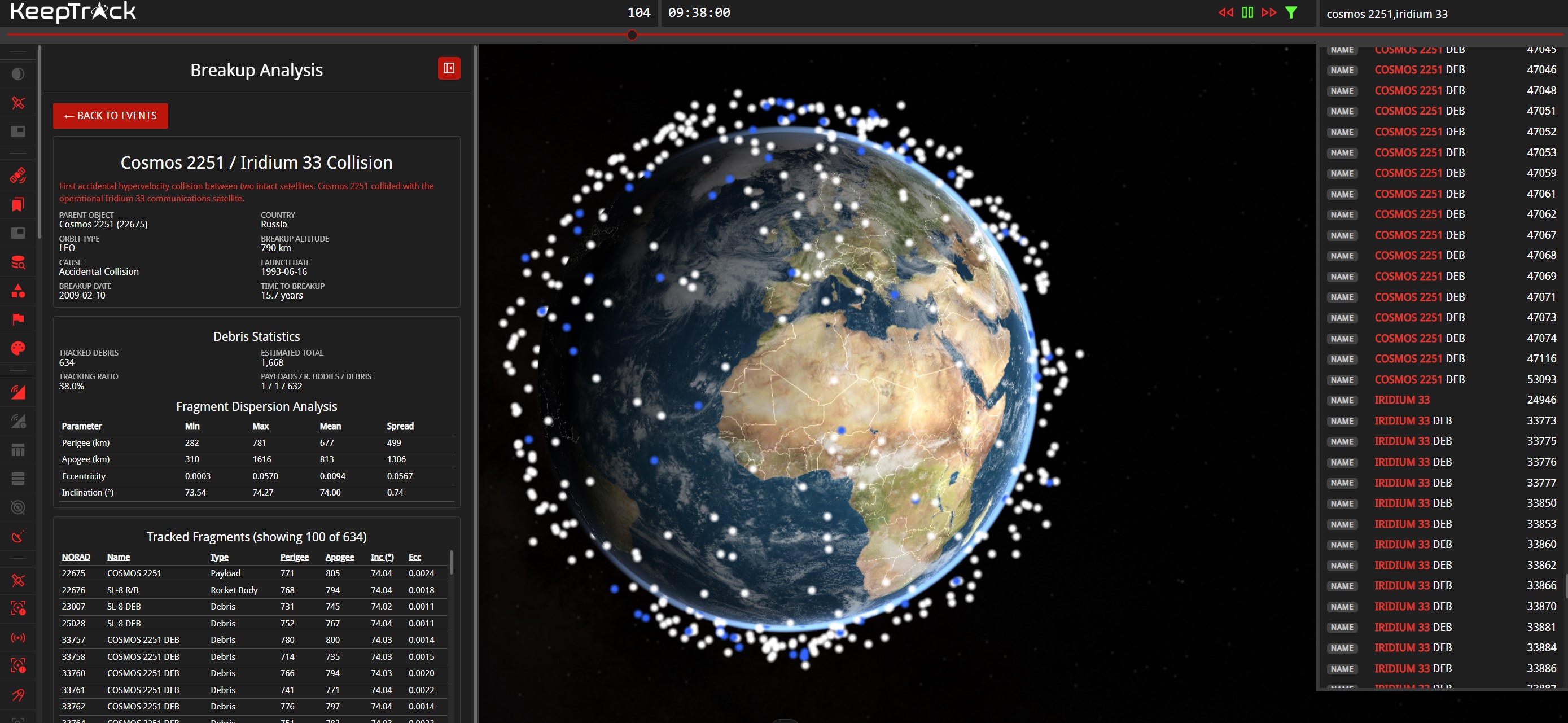
On February 10, 2009, an active Iridium communications satellite and a derelict Soviet military spacecraft slammed into each other 789 kilometers above Siberia. The collision produced more than 2,300 pieces of trackable debris that are still up there. Seventeen years later, the Iridium-Cosmos collision remains the event that made space debris a policy problem the world could no longer ignore.

How does Google Map's Satellite View Feature Work?

How does Google Map's Satellite View Feature Work?

Learn which satellites take photos and why we can't get updates instantly.

X Report 10 Jun 2025

X Report 10 Jun 2025

Exciting advancements from SpaceX include the debut of a new Dragon capsule for Axiom Space, continued Starlink deployments, and significant shifts in U.S. rural broadband funding that could benefit Starlink.

Starship V3 Scrubbed & SpaceX Files $18.7B IPO | KeepTrack X Report

Starship V3 Scrubbed & SpaceX Files $18.7B IPO | KeepTrack X Report

SpaceX scrubbed Starship Flight 12's V3 debut due to a hydraulic pin fault, then filed an $18.7B IPO S-1 targeting Nasdaq under ticker SPCX.

Space Force Requests $1.6B for New LEO Relay Network | KeepTrack Space Brief

Space Force Requests $1.6B for New LEO Relay Network | KeepTrack Space Brief

Space Force scraps SDA transport layer, requests $1.6 billion for proliferated LEO SATCOM constellation. Roger Mason nominated to lead NRO.

X Report 7 Feb 2025

X Report 7 Feb 2025

DIU explores SpaceX Starship's in-space refueling; Investors advise startups against competing or emulating SpaceX.

Rocket Lab to Acquire Iridium for $8B, X Report 30 Jun 2026

Rocket Lab to Acquire Iridium for $8B, X Report 30 Jun 2026

Rocket Lab will acquire Iridium for $8B to challenge SpaceX, whose Starlink constellation holds 10,706 working satellites of 12,390 launched.