COSMOS 2045 (20244)

COSPAR: 1989-076A | Alt Name: Kosmos-2045
DECAYED

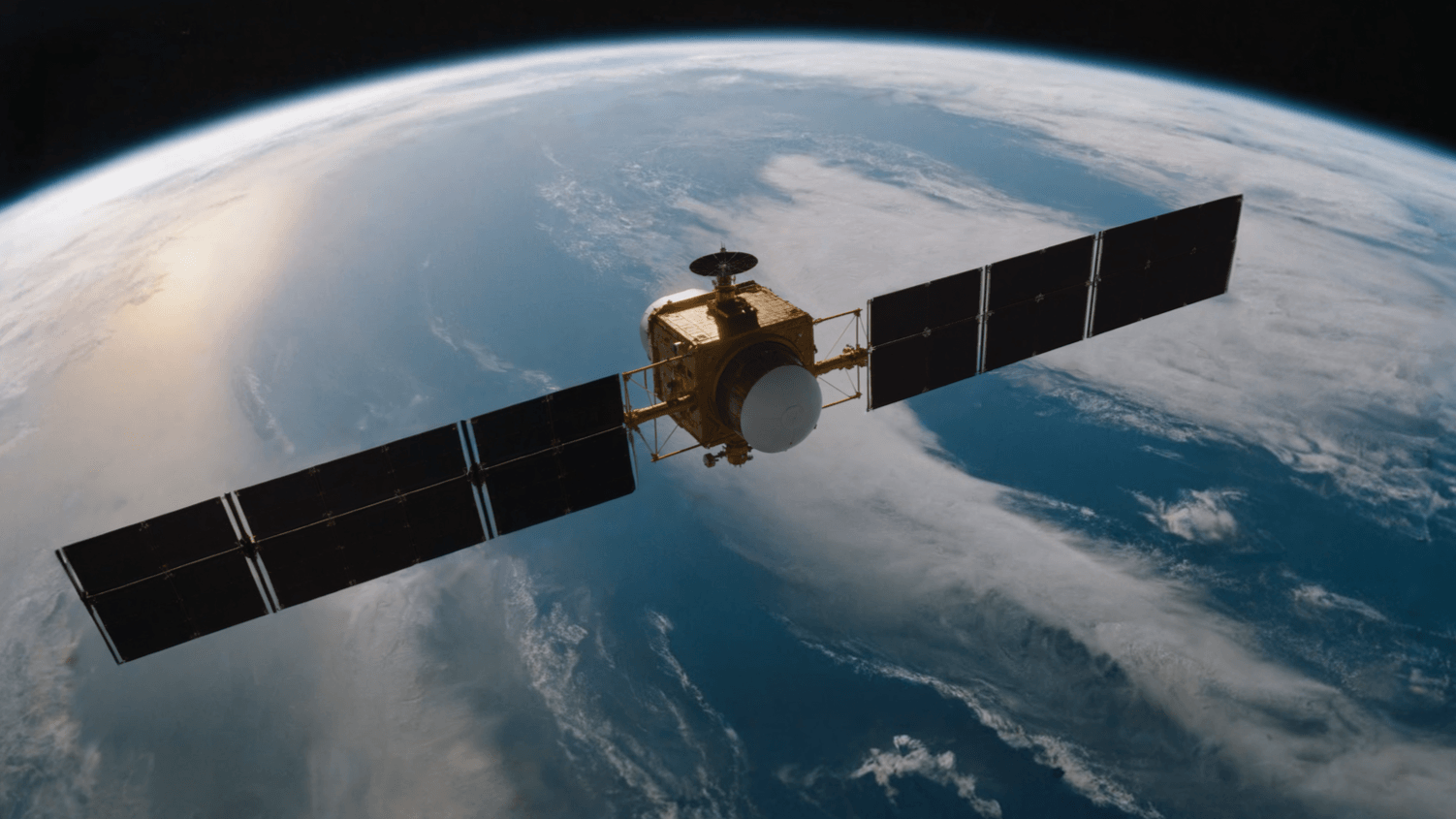
Image
COSMOS 2045 Satellite Image
Additional Sources
Launch Details

Launch Date

September 22, 1989

Launch Pad

LC1

Launch Vehicle

Soyuz-U

Orbital Elements

NORAD ID

20244

International Designator

1989-076A

Decay Date

10/2/1989

Basic Satellite Info

Name

COSMOS 2045

Alternative Name

Kosmos-2045

Type

Payload

Status

Decayed

Owner

UNKS

Country

USSR

Constellation

N/A

Related Satellites

Major Events

N/A

Summary
COSMOS 2045 (also known as Kosmos-2045) is a reconnaissance satellite launched on September 22, 1989, from the TYMSC launch site using Soyuz-U as the launch vehicle. The satellite was manufactured by TSSKB and uses the Zenit bus configuration. It has dimensions of 6 meters in length, 2.2 meters in diameter, and a span of 6 meters. The dry mass and launch mass are both 2655 kg. Equipped with batteries for power, it features the Oblik No. 398 payload designed for photo reconnaissance with film return capability. The satellite has an RCS of 6.99 and its shape is described as a sphere plus a DCone. It was owned by UNKS (Union of Soviet Sovereign States) and launched from LC1 pad.
Physical Characteristics

Length

6

Diameter

2.2

Span

6

Dry Mass

2655

Launch Mass

2655

Shape

Sphere + DCone

Radar Cross Section

6.99

Visual Magnitude

Unknown

Color

Unknown

Material Composition

Unknown

Technical Details

Payload

Oblik No. 398

Purpose

Reconnaissance, photo (film return type)

Mission

Reconnaissance, photo (film return type)

Manufacturer

TSSKB

Life Expectancy

Unknown

Bus

Oblik

Configuration

Zenit bus

Motor

11D82M; S5.120 (maneuver module)

Equipment

Unknown

Power System

Batteries

ADCS

Unknown

Transmitter Frequency

Unknown

Satellite Articles

View All Posts »

Learn more about satellites and other related topics.

Space Force Acquisition Workforce Shortfall Threatens Modernization | KeepTrack Space Brief

Space Force Acquisition Workforce Shortfall Threatens Modernization | KeepTrack Space Brief

Space Force modernization stalls over workforce gaps. Deutsche Telekom targets 2028 for Starlink Mobile V2 across 10 EU nations. Iran ops strain US munition stocks.

Space Force Unveils New Alaska Radar, SDA Awards $3.5B for 72 Tracking Satellites | KeepTrack Space Brief

Space Force Unveils New Alaska Radar, SDA Awards $3.5B for 72 Tracking Satellites | KeepTrack Space Brief

Space Force deploys new radar in Alaska for orbital tracking. SDA awards $3.5B for 72 missile defense satellites. Anysignal raises $24M for autonomous RF sensing technology.

X Report 27 Nov 2024

X Report 27 Nov 2024

SpaceX secures FCC nod for Starlink's direct-to-phone connectivity, lands NASA's Dragonfly mission, and sees new competition with the ZhuQue-2E launch.

The Day Two Satellites Hit Each Other at 26,000 MPH

The Day Two Satellites Hit Each Other at 26,000 MPH

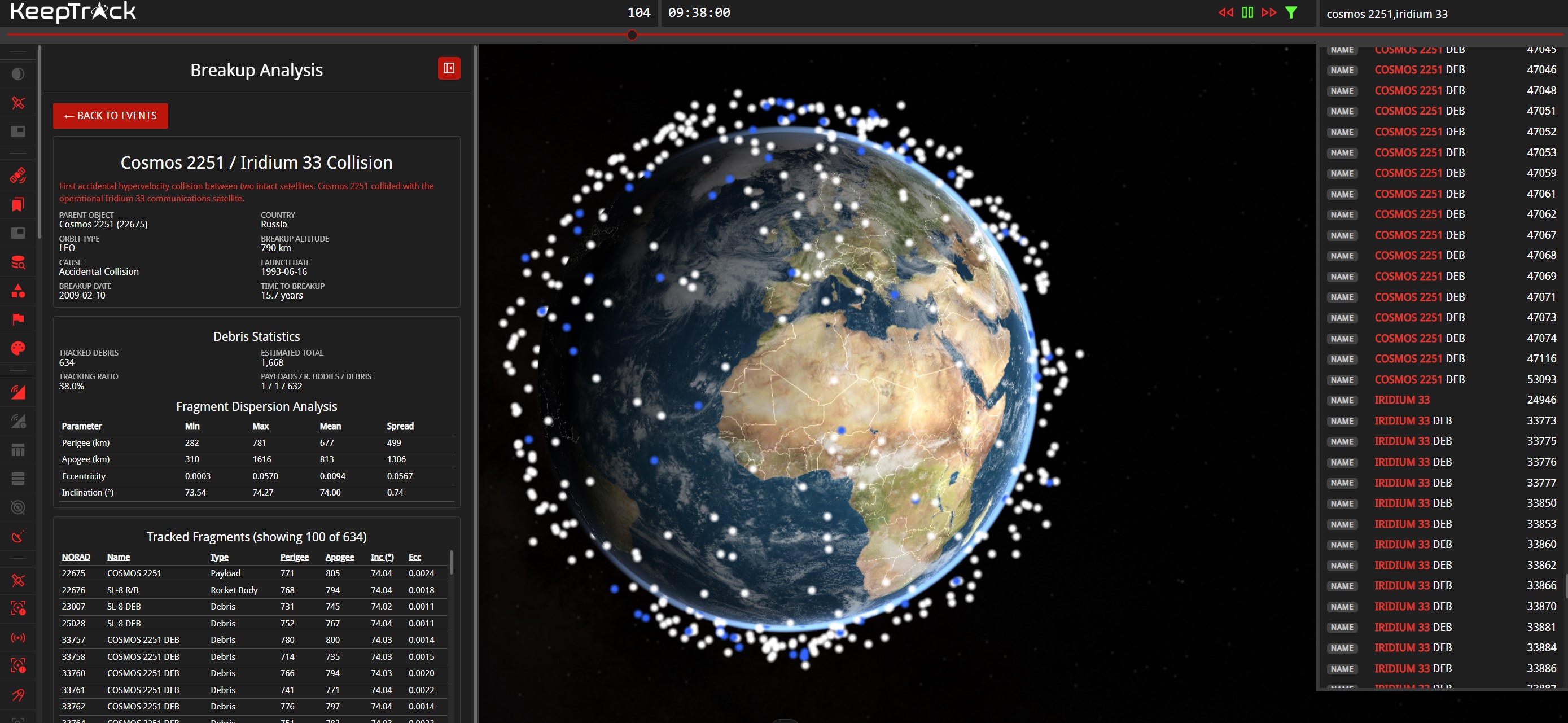
On February 10, 2009, an active Iridium communications satellite and a derelict Soviet military spacecraft slammed into each other 789 kilometers above Siberia. The collision produced more than 2,300 pieces of trackable debris that are still up there. Seventeen years later, the Iridium-Cosmos collision remains the event that made space debris a policy problem the world could no longer ignore.

Space Brief 30 Aug 2024

Space Brief 30 Aug 2024

Today's highlights include General Dynamics' contract extension with SDA, ABL Space Systems layoffs, NASA's Crew-9 mission adjustments, and Galactic Energy's successful satellite launch.

Pentagon Reveals Space & Cyber "First Mover" Role in Iran Operations | KeepTrack Space Brief

Pentagon Reveals Space & Cyber "First Mover" Role in Iran Operations | KeepTrack Space Brief

Space & Cyber Command disrupted Iran ops as US munition stockpiles drop. Space Force shifts to commercial ground stations & faces acquisition workforce gaps.

SpaceX Launches AST SpaceMobile Block 2 BlueBird Satellites | KeepTrack Space Brief

SpaceX Launches AST SpaceMobile Block 2 BlueBird Satellites | KeepTrack Space Brief

SpaceX launched three Block 2 BlueBird satellites for AST SpaceMobile from Cape Canaveral. Block 2 variants are larger with enhanced capacity compared to Block 1 units already in orbit.

The Looming Crisis of Orbital Debris

The Looming Crisis of Orbital Debris

As humanity increasingly relies on satellites, the escalating space junk problem poses a dire threat to our space-based infrastructure. With debris counts reaching alarming levels, urgent action is needed to prevent a cascade of collisions that could make key orbits unusable.