TRANSIT 4B (00202)

COSPAR: 1961-031A | Alt Name: Transit IV-B

Image
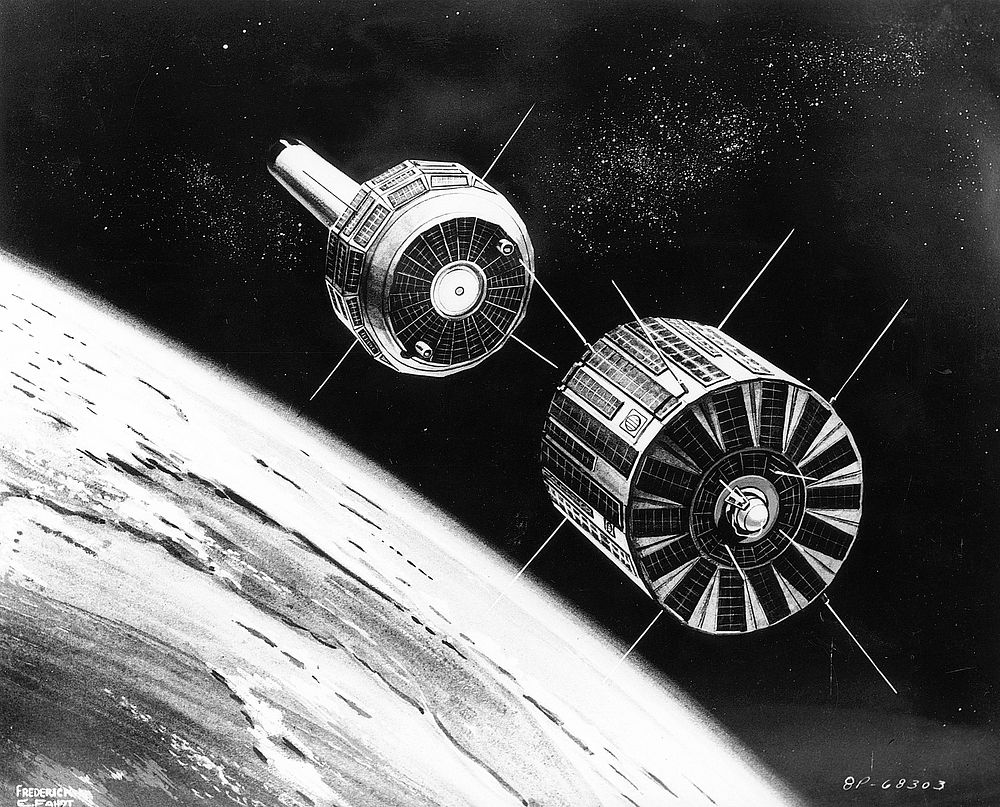
TRANSIT 4B Satellite Image
Launch Details

Launch Date

November 15, 1961

Launch Pad

LC-17B

Launch Vehicle

Thor DM-21 Ablestar

Orbital Elements

NORAD ID

00202

International Designator

1961-031A

Epoch

Sat, 04 Jul 2026 05:33:54 GMT

Apogee

Calculating...

Perigee

Calculating...

Inclination

32.44°

Right Ascension

276.92°

Eccentricity

Calculating...

Argument of Perigee

344.19°

Period

105.59 min

Mean Motion

13.64 rev/day

Latitude

Calculating...

Longitude

Calculating...

Altitude

Calculating...

Velocity

Calculating...

Polar Plot
3D Visualization
Basic Satellite Info

Name

TRANSIT 4B

Alternative Name

Transit IV-B

Type

Payload

Status

Unknown

Owner

U.S. Navy

Country

United States

Constellation

Transit

Related Satellites

Major Events

Ceased operation in 1964 due to radiation damage from the Starfish Prime nuclear test in 1962.

Latest TLEs
1 00202U 61031A   26185.23188491  .00000075  00000-0  63929-4 0  9998
2 00202  32.4377 276.9248 0101226 344.1935  15.5539 13.63794939223325

Source: Celestrak

Summary
The Transit 4B satellite was a cylindrical spacecraft built by the Johns Hopkins University Applied Physics Laboratory for the US Navy. It measured 0.8 meters in length and 1.1 meters in diameter, with a dry mass of approximately 89 kilograms. The satellite was equipped with a SNAP-3 Radioisotope Thermoelectric Generator (RTG) to provide power, as well as radio transmitters operating at 150 MHz and 400 MHz frequencies. The primary mission of Transit 4B was to provide navigation data for the US Navy, which it achieved by transmitting precise location information. The satellite also tested the use of a nuclear power source in space, a pioneering achievement at the time. Unfortunately, its operation was cut short due to radiation damage from the Starfish Prime nuclear test in 1962. Transit 4B ceased operation in 1964 and remained active for approximately three years.
Physical Characteristics

Length

0.8

Diameter

1.1

Span

1.1

Dry Mass

89

Launch Mass

89

Shape

Cylindrical

Radar Cross Section

1.9757

Visual Magnitude

5.5

Color

Silver

Material Composition

Aluminum alloy structure with solar cells.

Technical Details

Payload

Navigation instrumentation and SNAP-3 RTG.

Purpose

Unknown

Mission

To provide navigation data for the U.S. Navy and to test the use of a nuclear power source in space.

Manufacturer

Johns Hopkins University Applied Physics Laboratory (JHU/APL)

Life Expectancy

Operated until 1964, with transmissions ceasing due to radiation damage from the Starfish Prime nuclear test.

Bus

Transit 4

Configuration

Cylindrical

Motor

Unknown

Equipment

SNAP-3 RTG (Radioisotope Thermoelectric Generator), radio transmitters operating at 150 MHz and 400 MHz frequencies.

Power System

Primary power from solar cells; secondary power from the SNAP-3 RTG.

ADCS

Spin-stabilized

Transmitter Frequency

150 MHz, 400 MHz

Map
This tool will help you track the satellite's position and predict its upcoming passes over your location. Simply input the coordinates or click the geolocation button to get started.
Next Pass
Azimuth Elevation Time (Local)
Start Azimuth
Max Elevation
Stop Azimuth
Time Until
Pass Duration

Satellite Articles

View All Posts »

Learn more about satellites and other related topics.

The Day Europe Changed the Game for Small Satellites

The Day Europe Changed the Game for Small Satellites

Thirteen years ago, a new rocket lifted off from the edge of the Amazon rainforest, marking Europe's entry into the small satellite launch market and carrying the dreams of university students across a continent

Space Brief 30 Sep 2025

Space Brief 30 Sep 2025

Today's briefing covers China's rapid satellite launch activities, new Pentagon contracts for rocket motors, the Dream Chaser spaceplane's upcoming flight, and more.

Rheinmetall Weighs Bid for Mynaric Amid Rocket Lab Acquisition | KeepTrack Space Brief

Rheinmetall Weighs Bid for Mynaric Amid Rocket Lab Acquisition | KeepTrack Space Brief

German defense giant Rheinmetall may bid for laser-comm firm Mynaric, challenging Rocket Lab's plans. SpaceX sets Falcon 9 reuse record. Juno reveals Europa ice sheet data.

Earthquake Sensors Repurposed to Track Space Debris Reentry | KeepTrack Space Brief

Earthquake Sensors Repurposed to Track Space Debris Reentry | KeepTrack Space Brief

Scientists use earthquake sensors to track space debris reentry via sonic boom detection. SpaceX launches 25 Starlink satellites in seventh mission of 2026. NASA and DOE partner for lunar nuclear power.

Atlas 5 551 Flies Last Mission for Amazon Kuiper | KeepTrack Space Brief

Atlas 5 551 Flies Last Mission for Amazon Kuiper | KeepTrack Space Brief

ULA launched Atlas 5 551 configuration for final time on July 1, deploying Amazon Kuiper broadband satellites. New Glenn pad rebuild underway at LC-36 after May explosion.

Space Brief 14 Nov 2024

Space Brief 14 Nov 2024

Today's brief covers potential shifts in Space Force's strategy, new milestones in military satellite programs, and advancements in ground systems for missile defense. We'll also highlight Rocket Lab's latest contract win and critical design reviews in drone technology.

X Report 30 Nov 2025

X Report 30 Nov 2025

SpaceX successfully launched the Transporter-15 mission, deploying 140 payloads, while Elon Musk addressed media narratives related to Starlink's humanitarian efforts following recent disasters.

X Report 23 Apr 2025

X Report 23 Apr 2025

SpaceX marks a significant milestone with its Bandwagon-3 mission, while Ukraine explores Starlink alternatives.