COSMOS 1996 (19787)

COSPAR: 1989-009C | Alt Name: Kosmos-1996

Image
COSMOS 1996 Satellite Image
Additional Sources
Launch Details

Launch Date

February 10, 1989

Launch Site

PLMSC

Launch Pad

LC32/1

Launch Vehicle

Tsiklon-3

Orbital Elements

NORAD ID

19787

International Designator

1989-009C

Epoch

Sat, 04 Jul 2026 06:22:45 GMT

Apogee

Calculating...

Perigee

Calculating...

Inclination

82.61°

Right Ascension

355.34°

Eccentricity

Calculating...

Argument of Perigee

20.85°

Period

114.02 min

Mean Motion

12.63 rev/day

Latitude

Calculating...

Longitude

Calculating...

Altitude

Calculating...

Velocity

Calculating...

Polar Plot
3D Visualization
Basic Satellite Info

Name

COSMOS 1996

Alternative Name

Kosmos-1996

Type

Payload

Status

Unknown

Owner

UNKS

Country

USSR

Constellation

N/A

Related Satellites

Major Events

N/A

Latest TLEs
1 19787U 89009C   26185.26580024  .00000021  00000-0  55649-4 0  9993
2 19787  82.6148 355.3401 0006590  20.8458 152.3241 12.62926249723587

Source: Celestrak

Summary
COSMOS 1996, also known as Kosmos-1996, is a military communication satellite launched by the Soviet Union on February 10, 1989, from Plesetsk Cosmodrome LC32/1 using a Tsiklon-3 launch vehicle. The spacecraft has dimensions of 1.6 meters in length and 0.8 meters in diameter with an antenna span of 7 meters. It weighs 225 kilograms both at launch and dry mass. Equipped with solar cells and batteries for power, COSMOS 1996 is part of the Strela-3 series manufactured by NPOPM. Its shape consists of a cylinder with antennas attached. The satellite's reflective surface area (RCS) measures approximately 1.0388 square meters.
Physical Characteristics

Length

1.6

Diameter

0.8

Span

7

Dry Mass

225

Launch Mass

225

Shape

Cyl + Ant

Radar Cross Section

1.0388

Visual Magnitude

Unknown

Color

Unknown

Material Composition

Unknown

Technical Details

Payload

Strela-3

Purpose

Military Communication

Mission

Military Communication

Manufacturer

NPOPM

Life Expectancy

Unknown

Bus

Strela-3

Configuration

Unknown

Motor

Unknown

Equipment

Unknown

Power System

Solar cells, batteries

ADCS

Unknown

Transmitter Frequency

Unknown

Map
This tool will help you track the satellite's position and predict its upcoming passes over your location. Simply input the coordinates or click the geolocation button to get started.
Next Pass
Azimuth Elevation Time (Local)
Start Azimuth
Max Elevation
Stop Azimuth
Time Until
Pass Duration

Satellite Articles

View All Posts »

Learn more about satellites and other related topics.

STS-30 | When Atlantis Sent a Radar to Venus

STS-30 | When Atlantis Sent a Radar to Venus

On May 4, 1989, Space Shuttle Atlantis lifted off from LC-39B carrying Magellan, NASA's first interplanetary mission since 1978. The eleven-year drought ended in a payload bay, and the radar that emerged would map ninety-eight percent of Venus through clouds that no camera could ever see through.
Falcon Heavy Returns After 18-Month Hiatus, Lofts ViaSat-3 F3 | KeepTrack X Report

Falcon Heavy Returns After 18-Month Hiatus, Lofts ViaSat-3 F3 | KeepTrack X Report

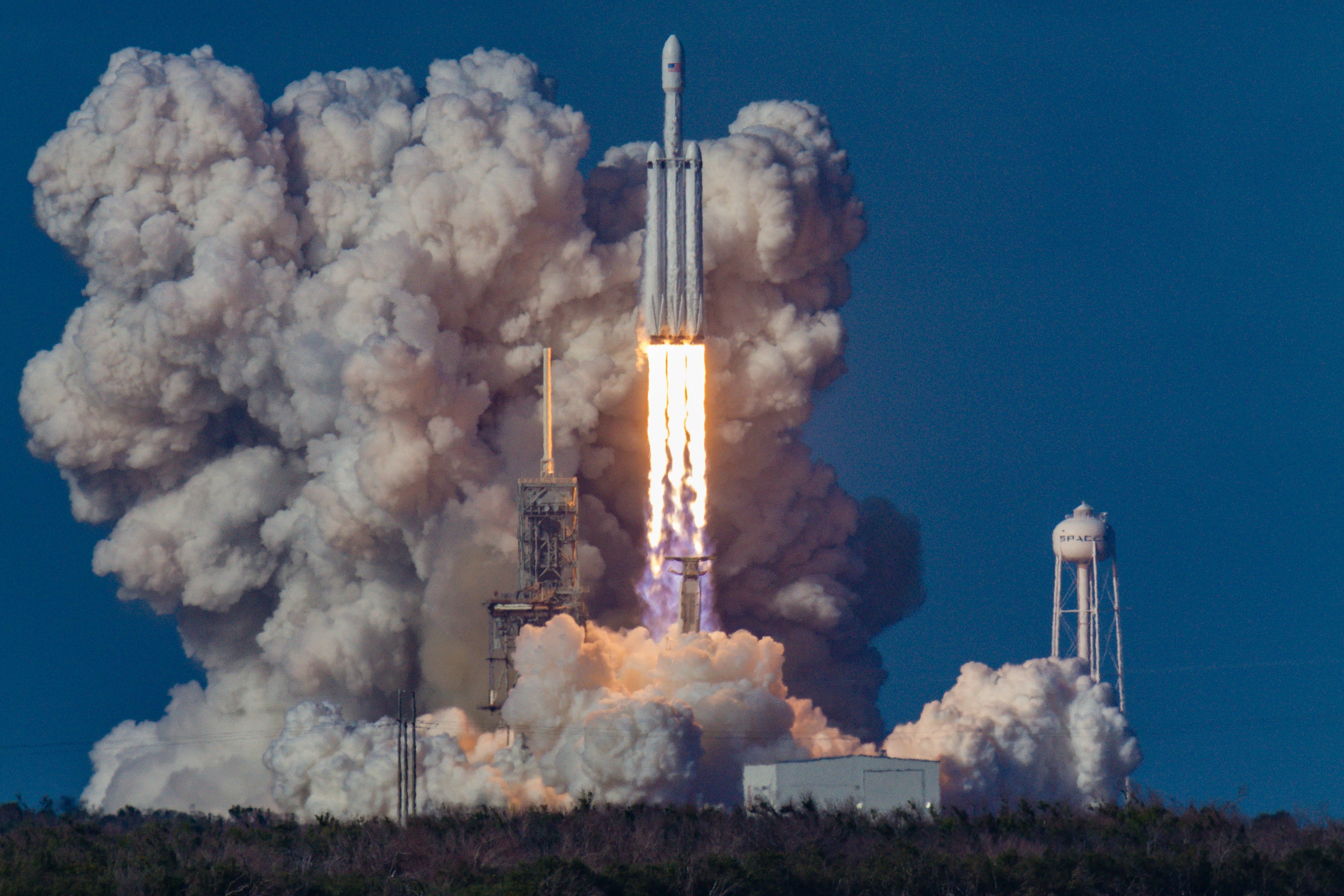
Falcon Heavy completed its 12th flight ever on April 29, ending an 18-month stand-down by lofting the 6-ton ViaSat-3 F3 comsat to GTO.

The Day Two Satellites Hit Each Other at 26,000 MPH

The Day Two Satellites Hit Each Other at 26,000 MPH

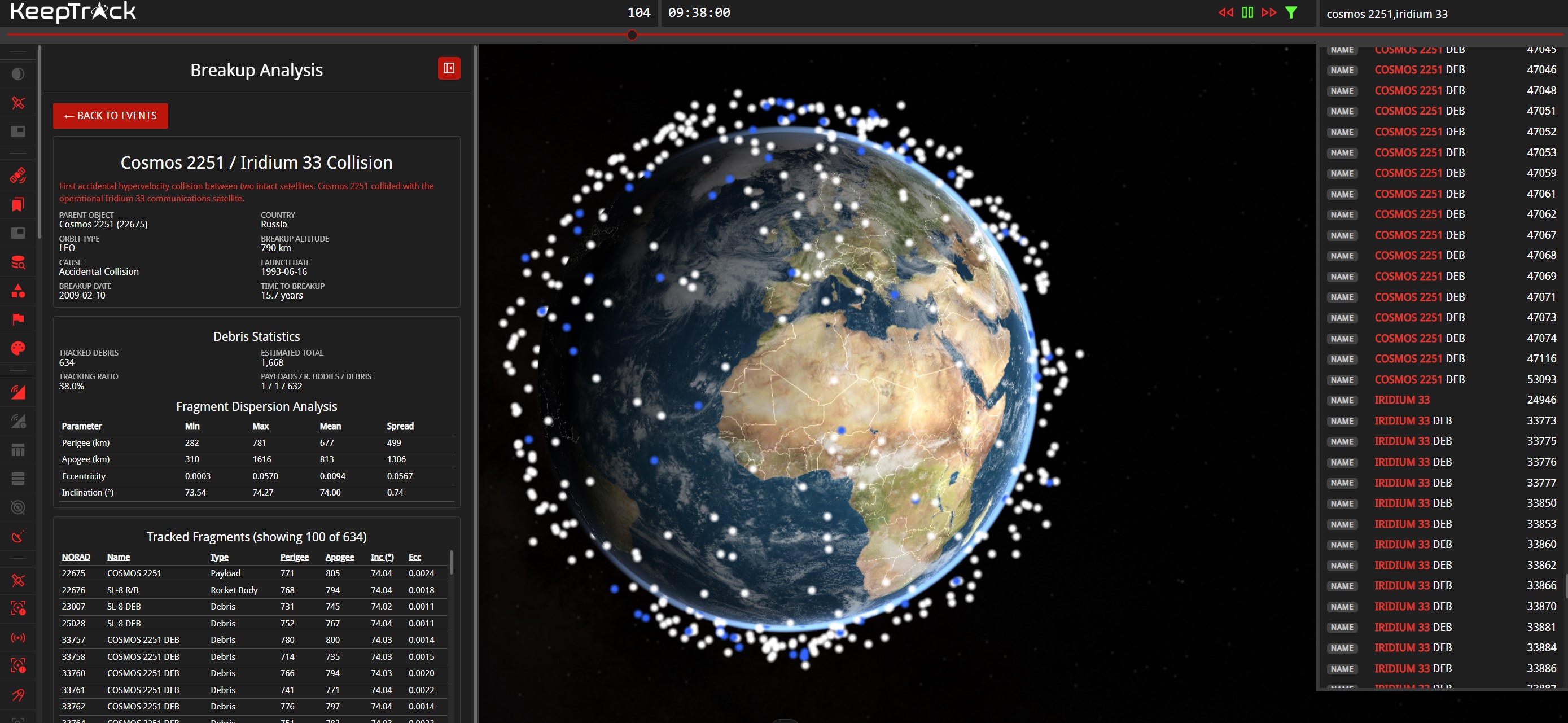
On February 10, 2009, an active Iridium communications satellite and a derelict Soviet military spacecraft slammed into each other 789 kilometers above Siberia. The collision produced more than 2,300 pieces of trackable debris that are still up there. Seventeen years later, the Iridium-Cosmos collision remains the event that made space debris a policy problem the world could no longer ignore.

The 300,000 Swerves Keeping Low Earth Orbit From Crashing

The 300,000 Swerves Keeping Low Earth Orbit From Crashing

Starlink satellites fired their thrusters to dodge a collision roughly 300,000 times in 2025, about 822 times a day. Behind that number is a fragile, half-automated system of warnings, probabilities, and judgment calls that decides which close approaches are worth a maneuver and which are just noise.

Falcon Heavy Launches ViaSat-3 F3, Space Brief 27 Apr 2026

Falcon Heavy Launches ViaSat-3 F3, Space Brief 27 Apr 2026

Falcon Heavy launched ViaSat-3 F3 on April 27, its 12th flight, with the first dual landing zone recovery. Plus Soyuz-5's demo flight nears at Baikonur.

X Report 25 Jun 2025

X Report 25 Jun 2025

SpaceX successfully launched the historic Axiom-4 mission to the ISS, marking a significant milestone in private space travel, while also expanding Starlink's reach into Vietnam's healthcare sector.

Space Brief 15 Dec 2025

Space Brief 15 Dec 2025

Today's highlights include multiple SpaceX Starlink launches, a successful Rocket Lab mission for JAXA, and a scheduled launch update from Kennedy Space Center.

Andøya Spaceport

Andøya Spaceport

Europe's Arctic gateway to orbit. How Norway's Andøya Spaceport is positioning itself as the continent's answer to launch congestion - and what the failed Isar Aerospace test flight means for the road ahead.