COSMOS 1843 DEB (18002)

COSPAR: 1987-039E | Alt Name: KDU
DECAYED

Image
COSMOS 1843 DEB Satellite Image
Additional Sources
Launch Details

Launch Date

May 5, 1987

Launch Pad

LC31

Launch Vehicle

Soyuz-U

Orbital Elements

NORAD ID

18002

International Designator

1987-039E

Decay Date

7/11/1988

Basic Satellite Info

Name

COSMOS 1843 DEB

Alternative Name

KDU

Type

Debris

Status

Space Junk

Owner

UNKS

Country

USSR

Constellation

N/A

Related Satellites

Major Events

N/A

Summary
Space debris, also known as space junk, encompasses all non-functional objects orbiting Earth such as defunct satellites, spent rocket stages, and fragments from collisions or disintegrations. Over time, this debris can accumulate and create an increasingly hazardous environment in orbit. Even tiny fragments, traveling at extremely high velocities, can inflict significant damage on operational satellites and spacecraft. If left unmanaged, the density of debris raises the risk of catastrophic collisions and further fragmentation, compounding the problem and threatening the safety and sustainability of space activities.
Physical Characteristics

Length

1

Diameter

0.4

Span

1

Dry Mass

140

Launch Mass

425

Shape

Frust

Radar Cross Section

1.7288

Visual Magnitude

Unknown

Color

Unknown

Material Composition

Unknown

Technical Details

Payload

KDU

Purpose

Unknown

Mission

Unknown

Manufacturer

TSSKB

Life Expectancy

Unknown

Bus

Zenit KDU

Configuration

Unknown

Motor

Unknown

Equipment

Unknown

Power System

Unknown

ADCS

Unknown

Transmitter Frequency

Unknown

Satellite Articles

View All Posts »

Learn more about satellites and other related topics.

Space Brief 13 May 2025

Space Brief 13 May 2025

China expands its classified satellite series, Space Force advances cloud-based ground station marketplaces, and the Pentagon grows its satellite network partner list. Highlighting new roles for sensor technology in tracking space debris.

The Multi-Orbit Myth? Why One Startup Thinks the Satellite Industry Got It Wrong

The Multi-Orbit Myth? Why One Startup Thinks the Satellite Industry Got It Wrong

The satellite industry's biggest operators are betting on multi-orbit architectures that combine LEO, MEO, and GEO into unified networks. A San Francisco startup called Contrivian thinks they've overcomplicated the problem, and the physics might be on its side.

X Report 10 Feb 2025

X Report 10 Feb 2025

SpaceX prepares for Starship Flight 8 with successful booster static fire; Starlink continues its expansion.

X Report 8 Sep 2025

X Report 8 Sep 2025

The FAA has approved an increase in Falcon 9 launches while reviewing the environmental impacts of Starship launches in Florida, amidst growing community concerns on noise and other issues related to the Starship program.

Starlink V2 Flies on Starship in 2027, X Report 4 Mar 2026

Starlink V2 Flies on Starship in 2027, X Report 4 Mar 2026

Gwynne Shotwell confirms Starlink V2 launches on Starship in 2027. Ship 39 preps Starship Flight 12; Falcon 9 lofts its 600th Starlink of 2026.

The Day Superpowers Shared Space

The Day Superpowers Shared Space

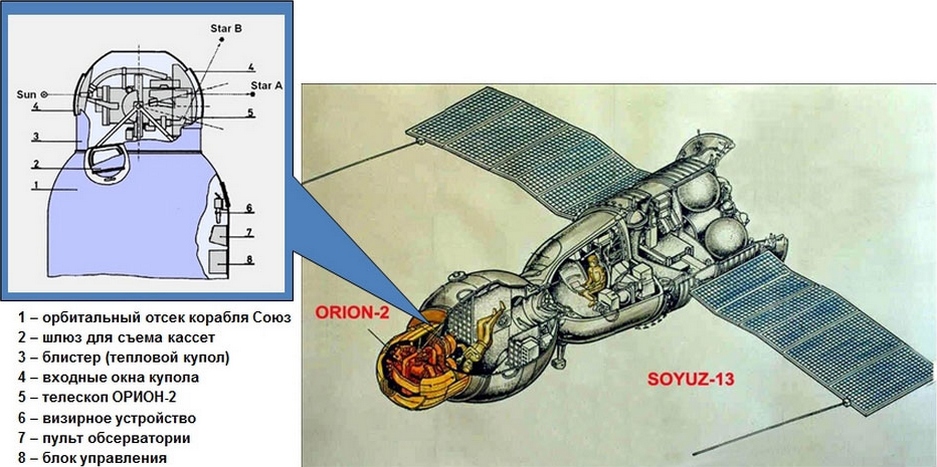
Exactly 52 years ago today, the Soviet Union launched Soyuz 13 - a scientific mission that marked the first time American astronauts and Soviet cosmonauts orbited Earth simultaneously. Armed with a revolutionary ultraviolet telescope, Pyotr Klimuk and Valentin Lebedev would discover elements never before seen in distant nebulae.

X Report 19 Mar 2025

X Report 19 Mar 2025

SpaceX safely returns Crew-9 from ISS, launches new Starlink satellites, and showcases its satellite kit production capabilities.

Space Force Awards $437M to Viasat, SES for Military Satcom | KeepTrack Space Brief

Space Force Awards $437M to Viasat, SES for Military Satcom | KeepTrack Space Brief

Space Force contracts Viasat and SES for $437M Protected Tactical Satcom-Global program. Four new GEO satellites replace vulnerable single-satellite systems.