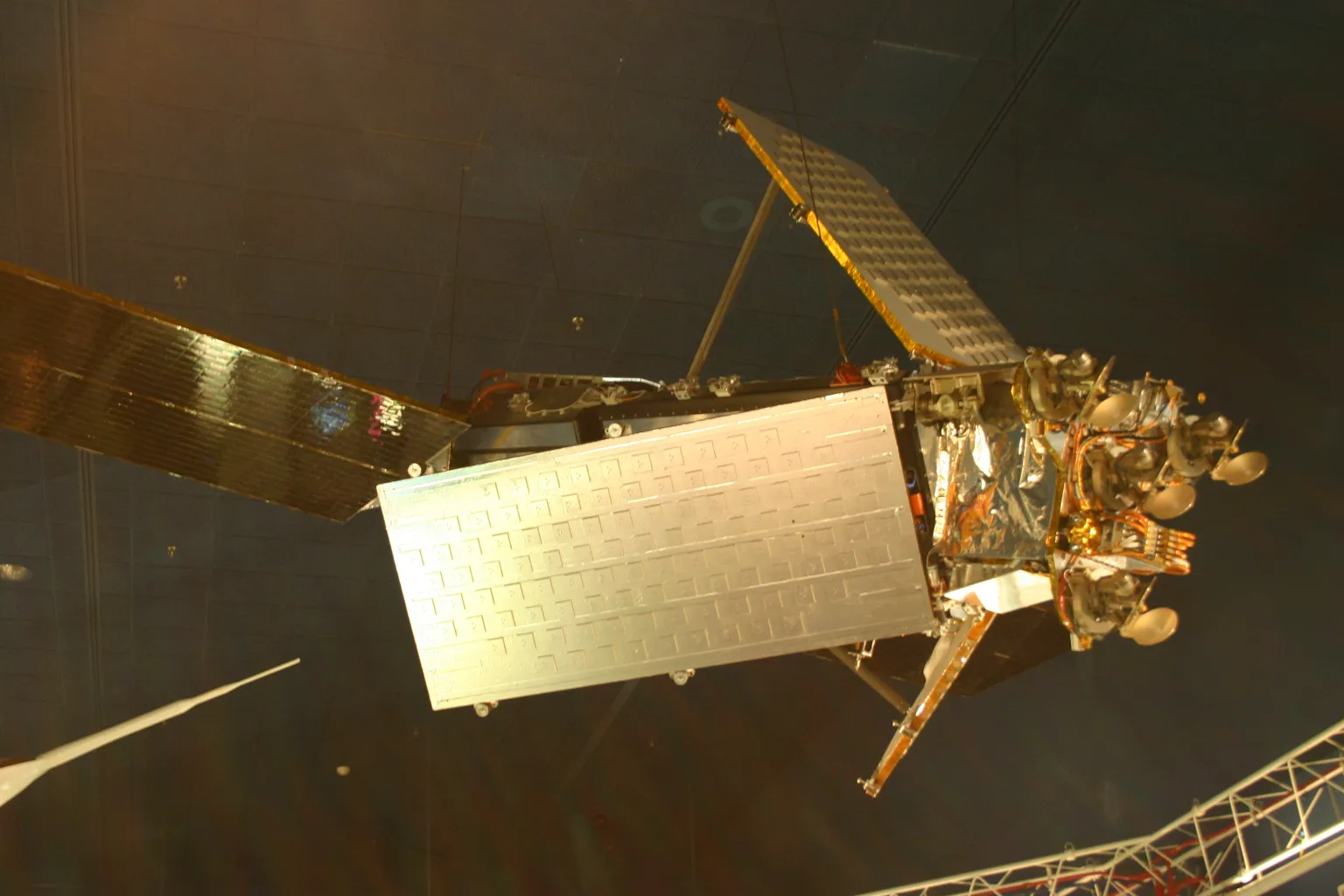
COSMOS 1588 DEB (16672)

COSPAR: 1984-083AD | Alt Name: deb Kosmos-1588
DECAYED

Image
COSMOS 1588 DEB Satellite Image
Additional Sources
Launch Details

Launch Date

August 7, 1984

Launch Pad

LC90

Launch Vehicle

Tsiklon-2

Orbital Elements

NORAD ID

16672

International Designator

1984-083AD

Decay Date

5/31/1986

Basic Satellite Info

Name

COSMOS 1588 DEB

Alternative Name

deb Kosmos-1588

Type

Debris

Status

Space Junk

Owner

VMF

Country

USSR

Constellation

N/A

Related Satellites

Major Events

N/A

Summary
Space debris, also known as space junk, encompasses all non-functional objects orbiting Earth such as defunct satellites, spent rocket stages, and fragments from collisions or disintegrations. Over time, this debris can accumulate and create an increasingly hazardous environment in orbit. Even tiny fragments, traveling at extremely high velocities, can inflict significant damage on operational satellites and spacecraft. If left unmanaged, the density of debris raises the risk of catastrophic collisions and further fragmentation, compounding the problem and threatening the safety and sustainability of space activities.
Physical Characteristics

Length

0

Diameter

0

Span

0

Dry Mass

0

Launch Mass

0

Shape

N/A

Radar Cross Section

0.01

Visual Magnitude

Unknown

Color

Unknown

Material Composition

Unknown

Technical Details

Payload

Unknown

Purpose

Unknown

Mission

Unknown

Manufacturer

Unknown

Life Expectancy

Unknown

Bus

Unknown

Configuration

Unknown

Motor

Unknown

Equipment

Unknown

Power System

Unknown

ADCS

Unknown

Transmitter Frequency

Unknown

Satellite Articles

View All Posts »

Learn more about satellites and other related topics.

STS-30 | When Atlantis Sent a Radar to Venus

STS-30 | When Atlantis Sent a Radar to Venus

On May 4, 1989, Space Shuttle Atlantis lifted off from LC-39B carrying Magellan, NASA's first interplanetary mission since 1978. The eleven-year drought ended in a payload bay, and the radar that emerged would map ninety-eight percent of Venus through clouds that no camera could ever see through.
X Report 19 Jul 2025

X Report 19 Jul 2025

SpaceX successfully launched 24 Starlink satellites from California while investigations begin on a possible Starship salvage operation near Mexico.

Space Brief 30 May 2025

Space Brief 30 May 2025

Today's brief highlights significant advancements in satellite launches, new defense contracts, and technological integrations between major firms in the space sector.

Japan's H3 Returns to Flight With 6 Satellites | KeepTrack Space Brief

Japan's H3 Returns to Flight With 6 Satellites | KeepTrack Space Brief

Japan's H3 rocket successfully launched June 11, deploying 6 smallsats to orbit after December failure. First return-to-flight for JAXA's flagship heavy-lift vehicle.

Space Brief 29 Apr 2025

Space Brief 29 Apr 2025

Today's space brief covers significant advancements in military counter-drone capabilities, workforce challenges in the Navy related to DOGE budget cuts, and highlights Germany's rise in defense spending. We also shine a spotlight on the communications satellite INTELSAT 901.

Space Force Awards $3.2B for Orbital Missile Interceptors | KeepTrack Space Brief

Space Force Awards $3.2B for Orbital Missile Interceptors | KeepTrack Space Brief

Space Force awards $3.2 billion to 12 companies for Golden Dome boost-phase missile interceptor prototypes. Initial operational capability targeted for 2028.

$4.16B Space Force Contract Goes to SpaceX, X Report 30 May 2026

$4.16B Space Force Contract Goes to SpaceX, X Report 30 May 2026

SpaceX wins a $4.16B US Space Force contract for an airborne threat tracking satellite network. Starlink holds 10,413 satellites in orbit, 10,397 working.

The Day Two Satellites Said Hello at 26,000 Miles Per Hour

The Day Two Satellites Said Hello at 26,000 Miles Per Hour

Seventeen years ago today, an operational American communications satellite and a dead Russian military relay crossed paths over Siberia. What happened next created more than 2,000 pieces of trackable debris - and fundamentally changed how the world thinks about space traffic.