COSMOS 1313 (12881)

COSPAR: 1981-099A | Alt Name: Kosmos-1313
DECAYED

Image
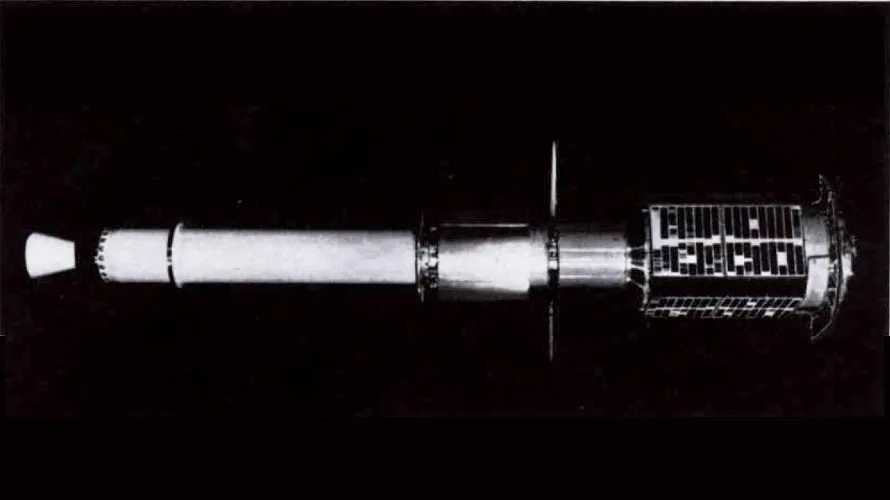
COSMOS 1313 Satellite Image
Additional Sources
Launch Details

Launch Date

October 1, 1981

Launch Pad

LC31

Launch Vehicle

Soyuz-U

Orbital Elements

NORAD ID

12881

International Designator

1981-099A

Decay Date

10/15/1981

Basic Satellite Info

Name

COSMOS 1313

Alternative Name

Kosmos-1313

Type

Payload

Status

Decayed

Owner

GUKOS

Country

USSR

Constellation

N/A

Related Satellites

Major Events

N/A

Summary
COSMOS 1313 (also known as Kosmos-1313) is a reconnaissance satellite launched on October 1, 1981, from the TYMSC launch site using Soyuz-U as the launch vehicle. The spacecraft has a configuration based on the Zenit bus and was manufactured by TSSKB for GUKOS. It measures 6 meters in length with a diameter of 2.2 meters and a span of 6 meters. Its dry mass is 2,655 kilograms, which matches its launch mass. The satellite's mission involves reconnaissance through photographic film return methods. It was equipped with an Argon No. 53L payload for this purpose. The motor types used include the 11D82M and S5.120 (maneuver module). COSMOS 1313 operated for a lifetime of approximately 14 days, powered by batteries throughout its mission. Its shape consists of a sphere with a DCone element.
Physical Characteristics

Length

6

Diameter

2.2

Span

6

Dry Mass

2655

Launch Mass

2655

Shape

Sphere + DCone

Radar Cross Section

Unknown

Visual Magnitude

Unknown

Color

Unknown

Material Composition

Unknown

Technical Details

Payload

Argon No. 53L

Purpose

Reconnaissance, photo (film return type)

Mission

Reconnaissance, photo (film return type)

Manufacturer

TSSKB

Life Expectancy

14 days

Bus

Zenit-6

Configuration

Zenit bus

Motor

11D82M; S5.120 (maneuver module)

Equipment

Unknown

Power System

Batteries

ADCS

Unknown

Transmitter Frequency

Unknown

Satellite Articles

View All Posts »

Learn more about satellites and other related topics.

The Satellite That Found 22 Photons and Changed Astronomy

The Satellite That Found 22 Photons and Changed Astronomy

On April 27, 1961, a Scout rocket lifted a 37-kilogram NASA satellite into orbit from Wallops Island carrying the first serious instrument for detecting cosmic gamma rays. Explorer 11 operated for seven months before its tape recorder failed. In that time it registered 22 gamma-ray photons - a pitiful number by modern standards, but enough to launch an entire branch of astronomy.

Falcon 9 Grounding Threatens ISS Crew Rotation Schedule | KeepTrack X Report

Falcon 9 Grounding Threatens ISS Crew Rotation Schedule | KeepTrack X Report

Falcon 9 stand-down may impact next ISS crew rotation as NASA monitors the situation. Musk merges xAI into SpaceX to build space data centers. 9,633 Starlink sats on orbit.

Space Brief 10 Jun 2025

Space Brief 10 Jun 2025

Today's brief covers increased Space Force funding, a renewed focus on nuclear power in space, a proposed US missile defense system, new defense budget revelations, and NATO's call for increased air defenses.

Space Brief 9 Sep 2024

Space Brief 9 Sep 2024

Today's Space Brief explores new satellite launches, significant reentries, funding milestones, and critical policy updates.

Space Brief 25 Apr 2025

Space Brief 25 Apr 2025

Today's briefing covers the largest-ever spectrum sharing demo planned by the Pentagon, innovative strategies for drone deployment in the Air Force, and significant military procurement developments.

X Report 15 Jun 2025

X Report 15 Jun 2025

SpaceX explores new horizons with Starship's point-to-point travel announcement and reports significant Starlink deployment progress.

X Report 2 Jul 2025

X Report 2 Jul 2025

SpaceX achieved significant milestones with the launch of its 500th Falcon 9 rocket and the deployment of a European weather satellite, showcasing its ongoing impact in space exploration and satellite technology.

X Report 15 Jul 2025

X Report 15 Jul 2025

Crew-11 launch preparations ramp up, Starship propellant production begins, and a global launch roundup highlights upcoming missions.