COSMOS 1191 (11871)

COSPAR: 1980-057A | Alt Name: Kosmos-1191

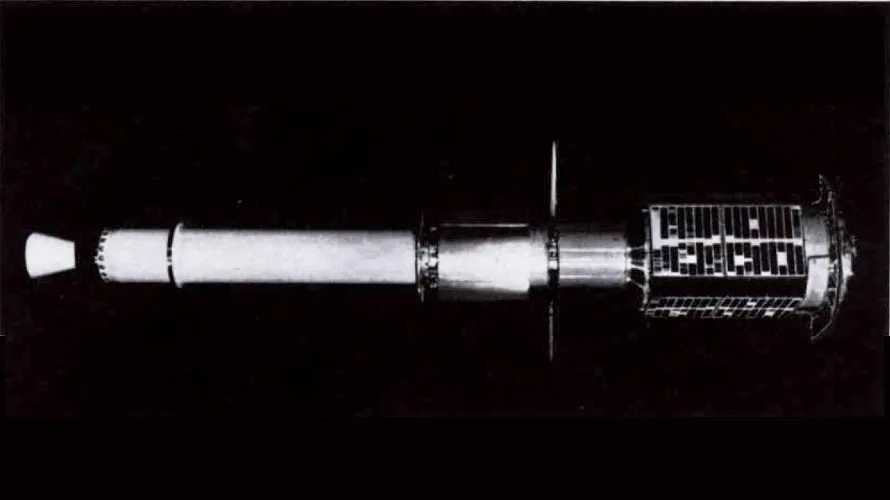
Image
COSMOS 1191 Satellite Image
Additional Sources
Launch Details

Launch Date

July 2, 1980

Launch Site

PLMSC

Launch Pad

LC41/1

Launch Vehicle

Molniya 8K78M

Orbital Elements

NORAD ID

11871

International Designator

1980-057A

Epoch

Fri, 03 Jul 2026 13:37:50 GMT

Apogee

Calculating...

Perigee

Calculating...

Inclination

65.96°

Right Ascension

70.94°

Eccentricity

Calculating...

Argument of Perigee

18.95°

Period

716.73 min

Mean Motion

2.01 rev/day

Latitude

Calculating...

Longitude

Calculating...

Altitude

Calculating...

Velocity

Calculating...

Polar Plot
3D Visualization
Basic Satellite Info

Name

COSMOS 1191

Alternative Name

Kosmos-1191

Type

Payload

Status

Unknown

Owner

PVO

Country

USSR

Constellation

N/A

Related Satellites

Major Events

N/A

Latest TLEs
1 11871U 80057A   26184.56794866 -.00000828  00000-0  00000-0 0  9999
2 11871  65.9642  70.9355 6630875  18.9550 357.2603  2.00911588243799

Source: Celestrak

Summary
COSMOS 1191 (also known as Kosmos-1191) is an early warning satellite launched on July 2, 1980, from the PLMSC launch site using a Molniya 8K78M launch vehicle. The spacecraft measures 4 meters in length and has a diameter of 2 meters with a span of 5 meters. It was manufactured by NPOL/KOMET for PVO (PVO) as part of the Oko program, carrying an Oko 5V95 No. 5002 payload. COSMOS 1191's dry mass is 1150 kg and it had a launch mass of 1250 kg. The satellite uses two deployable fixed solar arrays along with batteries for power supply and has a reflective surface area (RCS) of 9.5279 square meters, featuring a cylindrical shape with two panels attached.
Physical Characteristics

Length

4

Diameter

2

Span

5

Dry Mass

1150

Launch Mass

1250

Shape

Cyl + 2 Pan

Radar Cross Section

9.5279

Visual Magnitude

Unknown

Color

Unknown

Material Composition

Unknown

Technical Details

Payload

Oko 5V95 No. 5002

Purpose

Early warning

Mission

Early warning

Manufacturer

NPOL/KOMET

Life Expectancy

Unknown

Bus

Oko

Configuration

Unknown

Motor

Unknown

Equipment

Unknown

Power System

2 deployable fixed solar arrays, batteries

ADCS

Unknown

Transmitter Frequency

Unknown

Map
This tool will help you track the satellite's position and predict its upcoming passes over your location. Simply input the coordinates or click the geolocation button to get started.
Next Pass
Azimuth Elevation Time (Local)
Start Azimuth
Max Elevation
Stop Azimuth
Time Until
Pass Duration

Satellite Articles

View All Posts »

Learn more about satellites and other related topics.

The Satellite That Found 22 Photons and Changed Astronomy

The Satellite That Found 22 Photons and Changed Astronomy

On April 27, 1961, a Scout rocket lifted a 37-kilogram NASA satellite into orbit from Wallops Island carrying the first serious instrument for detecting cosmic gamma rays. Explorer 11 operated for seven months before its tape recorder failed. In that time it registered 22 gamma-ray photons - a pitiful number by modern standards, but enough to launch an entire branch of astronomy.
Space Force Deploys Meadowlands Satellite-Jamming System | KeepTrack Space Brief

Space Force Deploys Meadowlands Satellite-Jamming System | KeepTrack Space Brief

U.S. Space Force transitions Meadowlands mobile satellite-jamming platform to operational status. System provides ground forces with electronic warfare capability against adversary satellite links.

DAF Space Restructure Announced Within Days, PAE Leaders Named | KeepTrack Space Brief

DAF Space Restructure Announced Within Days, PAE Leaders Named | KeepTrack Space Brief

Department of Air Force announces finalized Program Acquisition Executive structure within days, reshaping oversight of GPS, SBIRS, and Protected Tactical Satcom systems.

X Report 5 Oct 2025

X Report 5 Oct 2025

SpaceX secures major contracts for U.S. national security launches, including multiple Falcon Heavy missions. Significant updates on Starlink deployments and the ongoing evolution of the company highlight a productive day in the space sector.

X Report 11 Feb 2025

X Report 11 Feb 2025

SpaceX successfully launches 23 Starlink satellites, NASA selects SpaceX for astrophysics mission, and Starship Flight 8 advances with Booster 15 static fire.

GOES-19, the Last Weather Sentinel

GOES-19, the Last Weather Sentinel

The final satellite in a multi-billion-dollar program that learned its hardest lesson from a clogged pipe. GOES-19 is now NOAA's eyes on every Atlantic hurricane - and it's already found dozens of comets no one was looking for.

X Report 4 Aug 2025

X Report 4 Aug 2025

SpaceX achieves significant milestones with the launch of 28 Starlink satellites and the final landing of the LZ-1 pad, marking key moments in their ongoing mission to expand satellite connectivity.

X Report 9 Jul 2025

X Report 9 Jul 2025

SpaceX successfully launched 28 Starlink satellites, marking a significant milestone with its 500th orbital mission. Both launches underscore the company's commitment to expanding its satellite internet constellation and solidifying its position in the space industry.