

Space Brief 29 Dec 2025
Today's highlights include Japan's new military satellite imagery initiative, NASA's SPHEREx map, and AST BlueBird 6's groundbreaking cellular array in low Earth orbit.



Launch Date
January 11, 1979
Launch Site
PLMSC
Launch Pad
LC43/3
Launch Vehicle
Soyuz-U
NORAD ID
11231
International Designator
1979-001C
Decay Date
1/18/1979
Name
SL-4 DEB
Alternative Name
Sensor cover
Type
Status
Owner
GUKOSR
Country
USSR
Constellation
N/A
Related Satellites
Major Events
N/A
Length
0
Diameter
0
Span
0
Dry Mass
0
Launch Mass
0
Shape
N/A
Radar Cross Section
Unknown
Visual Magnitude
Unknown
Color
Unknown
Material Composition
Unknown
Payload
Zenit-2M sensor cover
Purpose
Unknown
Mission
Unknown
Manufacturer
TSSKB
Life Expectancy
Unknown
Bus
Zenit deb
Configuration
Unknown
Motor
Unknown
Equipment
Unknown
Power System
Unknown
ADCS
Unknown
Transmitter Frequency
Unknown
Learn more about satellites and other related topics.
Today's highlights include Japan's new military satellite imagery initiative, NASA's SPHEREx map, and AST BlueBird 6's groundbreaking cellular array in low Earth orbit.

A second Starlink satellite has generated on-orbit debris in just over 3 months, threatening SpaceX's 10,151-satellite working constellation.
Polaris Dawn's upcoming commercial spacewalk, successful lunar orbit by Chinese spacecraft, and more space news including SpaceX's Starlink mission, RFA's static-fire failure, and advances in satellite technology.
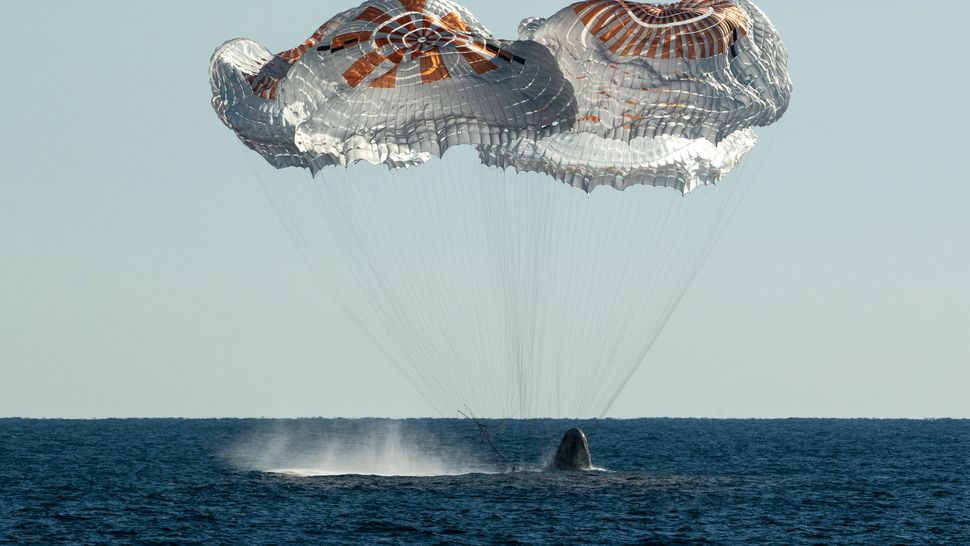
Today's highlights include Crew-8's return amid weather delays, new space tourism announcements by Deep Blue Aerospace, and Europe's efforts to combat space debris. Plus, another successful SpaceX launch and the ESA backed Zero Debris Charter gains international traction.

Today's brief highlights significant developments in space defense, innovation fund challenges, and international defense agreements impacting satellite utilities.
SpaceX delays the launch of 23 Starlink satellites due to geomagnetic storm concerns, adjusting the schedule for an upcoming Falcon 9 mission.
Artemis 2 astronauts completed first crewed lunar flyby since Apollo 17, traveling 690,000 miles aboard Orion. Four crew validated deep-space systems.

Rocket Lab secures $190M Pentagon deal for 20 hypersonic test flights over 4 years using Electron. Five missions annually trackable via Space-Track.