THORAD AGENA D DEB (04244)

COSPAR: 1969-082CU | Alt Name: deb Agena D
DECAYED

Image
THORAD AGENA D DEB Satellite Image
Additional Sources
Launch Details

Launch Date

September 30, 1969

Launch Site

AFWTR

Launch Pad

SLC1W

Launch Vehicle

Thorad SLV-2G Agena D

Orbital Elements

NORAD ID

04244

International Designator

1969-082CU

Decay Date

6/11/1979

Basic Satellite Info

Name

THORAD AGENA D DEB

Alternative Name

deb Agena D

Type

Debris

Status

Space Junk

Owner

SAMSO

Country

United States

Constellation

N/A

Related Satellites

Major Events

N/A

Summary
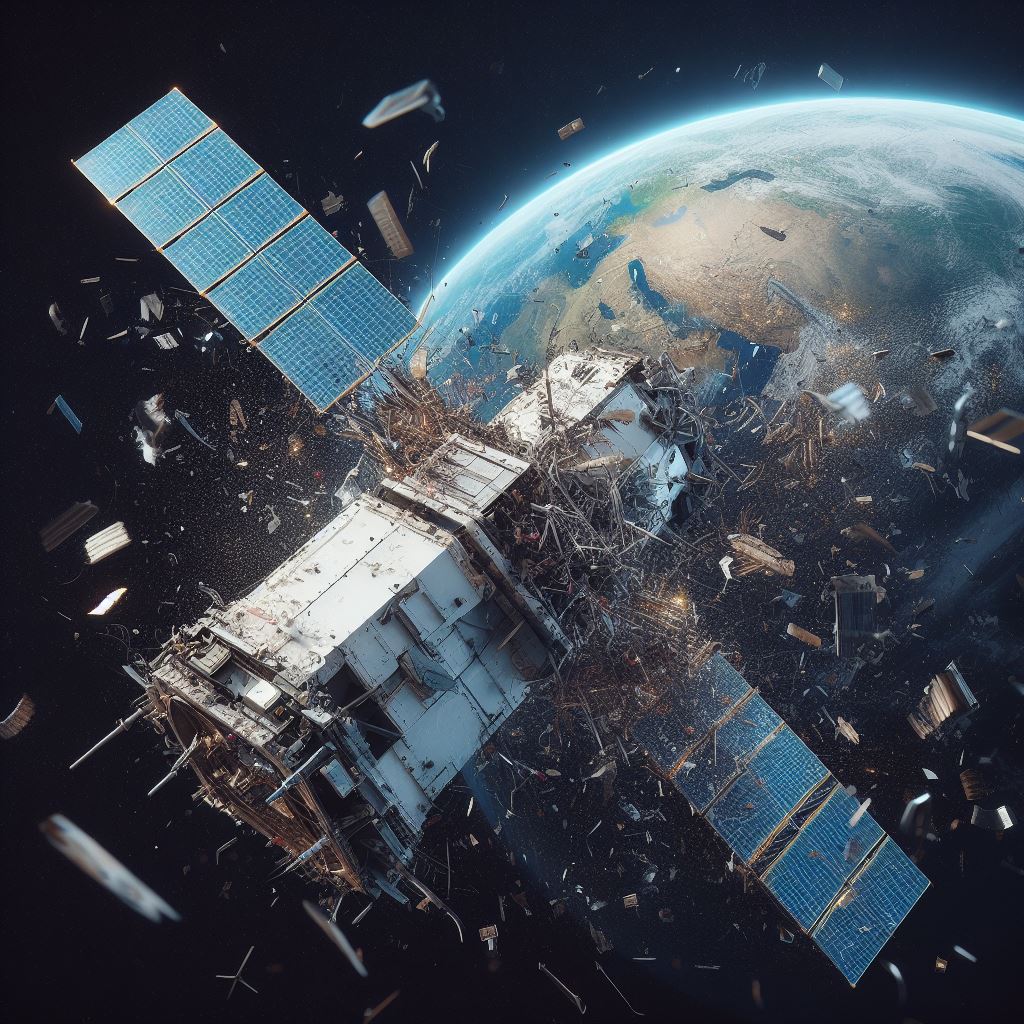
Space debris, also known as space junk, encompasses all non-functional objects orbiting Earth such as defunct satellites, spent rocket stages, and fragments from collisions or disintegrations. Over time, this debris can accumulate and create an increasingly hazardous environment in orbit. Even tiny fragments, traveling at extremely high velocities, can inflict significant damage on operational satellites and spacecraft. If left unmanaged, the density of debris raises the risk of catastrophic collisions and further fragmentation, compounding the problem and threatening the safety and sustainability of space activities.
Physical Characteristics

Length

0

Diameter

0

Span

0

Dry Mass

0

Launch Mass

0

Shape

N/A

Radar Cross Section

0.1282

Visual Magnitude

Unknown

Color

Unknown

Material Composition

Unknown

Technical Details

Payload

Unknown

Purpose

Unknown

Mission

Unknown

Manufacturer

Unknown

Life Expectancy

Unknown

Bus

Unknown

Configuration

Unknown

Motor

Unknown

Equipment

Unknown

Power System

Unknown

ADCS

Unknown

Transmitter Frequency

Unknown

Satellite Articles

View All Posts »

Learn more about satellites and other related topics.

SpaceX Hits 600th Falcon 9 Launch, ISS Crew Restored to Seven | KeepTrack X Report

SpaceX Hits 600th Falcon 9 Launch, ISS Crew Restored to Seven | KeepTrack X Report

SpaceX launches 600th Falcon 9 rocket with Starlink 17-13 mission. Crew Dragon docks at ISS restoring crew to seven. Crew-12 launched on Friday the 13th in a first for NASA.

The Day Soviet Women Reached for the Stars

The Day Soviet Women Reached for the Stars

Sixty-three years ago, the Soviet Union selected the world's first female cosmonaut training group, launching a new era in human spaceflight that would transform our understanding of gender equality in space exploration

Space Brief 11 Jan 2025

Space Brief 11 Jan 2025

Today's brief covers SpaceX's NROL-153 launch, US Space Force activities in Greenland, Starlink's record-breaking flight, and a OneWeb satellite glitch. Plus, our Satellite Spotlight shines on Duchifat-1.

Space Force Awards $1.8B Andromeda Program to 14 Firms | KeepTrack Space Brief

Space Force Awards $1.8B Andromeda Program to 14 Firms | KeepTrack Space Brief

Space Force selects 14 companies for $1.8 billion Andromeda program to replace GSSAP geosynchronous surveillance satellites with commercial alternatives through 2036.

Musk Addresses Orbital Data Center Crowding Fears | KeepTrack X Report

Musk Addresses Orbital Data Center Crowding Fears | KeepTrack X Report

Elon Musk pushed back on orbital crowding concerns as SpaceX eyes data centers in space, with 10,584 Starlink satellites currently operational.

Space Brief 21 Jan 2025

Space Brief 21 Jan 2025

Today's Space Brief highlights a SpaceX launch of Starlink satellites, international efforts to tackle space debris, and innovative lunar power solutions from China.

X Report 12 Jan 2025

X Report 12 Jan 2025

SpaceX concludes a wet dress rehearsal for Starship Flight 7, aiming for the largest rocket launch on January 15 after weather delays.

The Day Two Satellites Hit Each Other at 26,000 MPH

The Day Two Satellites Hit Each Other at 26,000 MPH

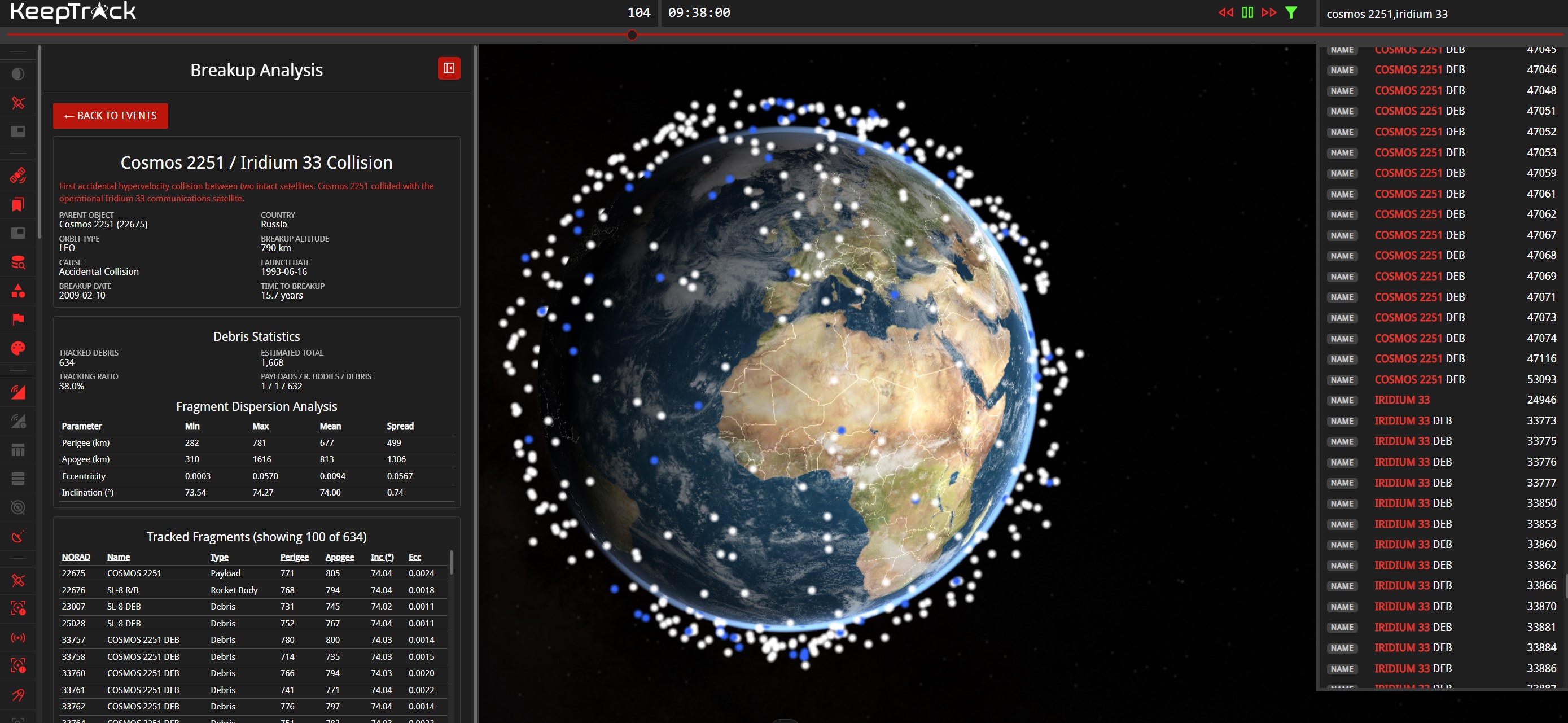
On February 10, 2009, an active Iridium communications satellite and a derelict Soviet military spacecraft slammed into each other 789 kilometers above Siberia. The collision produced more than 2,300 pieces of trackable debris that are still up there. Seventeen years later, the Iridium-Cosmos collision remains the event that made space debris a policy problem the world could no longer ignore.