ATLAS D DEB (02230)

COSPAR: 1966-046G | Alt Name: deb Atlas 5304
DECAYED

Image
ATLAS D DEB Satellite Image
Additional Sources
Launch Details

Launch Date

June 1, 1966

Launch Pad

LC14

Launch Vehicle

Atlas SLV-3

Orbital Elements

NORAD ID

02230

International Designator

1966-046G

Decay Date

6/30/1966

Basic Satellite Info

Name

ATLAS D DEB

Alternative Name

deb Atlas 5304

Type

Debris

Status

Space Junk

Owner

LERC/AFSSD

Country

United States

Constellation

N/A

Related Satellites

Major Events

N/A

Summary
Space debris, also known as space junk, encompasses all non-functional objects orbiting Earth such as defunct satellites, spent rocket stages, and fragments from collisions or disintegrations. Over time, this debris can accumulate and create an increasingly hazardous environment in orbit. Even tiny fragments, traveling at extremely high velocities, can inflict significant damage on operational satellites and spacecraft. If left unmanaged, the density of debris raises the risk of catastrophic collisions and further fragmentation, compounding the problem and threatening the safety and sustainability of space activities.
Physical Characteristics

Length

0

Diameter

0

Span

0

Dry Mass

0

Launch Mass

0

Shape

N/A

Radar Cross Section

Unknown

Visual Magnitude

Unknown

Color

Unknown

Material Composition

Unknown

Technical Details

Payload

Unknown

Purpose

Unknown

Mission

Unknown

Manufacturer

Unknown

Life Expectancy

Unknown

Bus

Unknown

Configuration

Unknown

Motor

Unknown

Equipment

Unknown

Power System

Unknown

ADCS

Unknown

Transmitter Frequency

Unknown

Satellite Articles

View All Posts »

Learn more about satellites and other related topics.

China Plans First One-Year Human Spaceflight Mission | KeepTrack Space Brief

China Plans First One-Year Human Spaceflight Mission | KeepTrack Space Brief

China confirms first one-year human spaceflight and Pakistani astronaut for Tiangong. Air Force develops X-68A missile-launching drone. Poland unveils $51B defense spending plan.

The Day America Gained New Eyes on Mars

The Day America Gained New Eyes on Mars

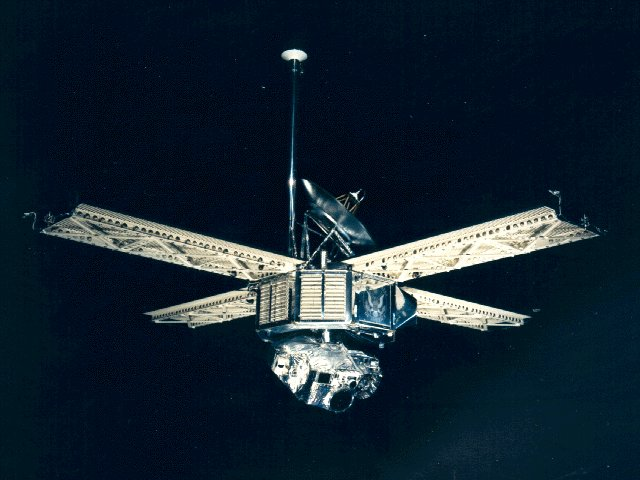
Fifty-six years ago, a revolutionary spacecraft launched toward the Red Planet after being saved from disaster by two quick-thinking technicians who risked their lives to prevent a rocket collapse

81 Payloads Deployed to SSO; Long March 10B & Vikram-I Debut This Week | KeepTrack Space Brief

81 Payloads Deployed to SSO; Long March 10B & Vikram-I Debut This Week | KeepTrack Space Brief

SpaceX rideshare Falcon 9 deployed 81 payloads including military tech demos to sun-synchronous orbit. China's Long March 10B and India's Vikram-I both debut this week among 6 scheduled launches.

Space Brief 1 Apr 2025

Space Brief 1 Apr 2025

Today's brief covers the U.S. Space Force's orbital carrier initiative, ULA Vulcan's approval for military launches, Rocket Lab's new contract with the Space Force, integrated data layers for military command, and advances in tactical surveillance.

Space Brief 8 Aug 2025

Space Brief 8 Aug 2025

Today's brief highlights significant shifts in military space spending due to the Golden Dome program, the U.S. Space Force's advancements in tactical satellite communications, and NASA's race to nuclear power in space.

AI Outperforms Human Planners in Air Force Battle Management Test | KeepTrack Space Brief

AI Outperforms Human Planners in Air Force Battle Management Test | KeepTrack Space Brief

AI tools outperform human planners in Air Force battle management experiment. DARPA pursues quantum computing interoperability. Canada's Atlantic Spaceport Complex gets environmental approval.

NRO Expands Commercial Satellite Role to Military Tracking | KeepTrack Space Brief

NRO Expands Commercial Satellite Role to Military Tracking | KeepTrack Space Brief

NRO awards three commercial satellite contracts, expanding scope to dynamic military target tracking. Former NASA chief Bridenstine joins Quantum Space for cislunar operations.

The Day Earth Became a Pale Blue Dot

The Day Earth Became a Pale Blue Dot

Thirty-five years ago, Voyager 1 captured a revolutionary series of images from the edge of our solar system, forever changing how humanity sees its place in the cosmos