Vanguard 1 (00005)

COSPAR: 1958-002B | Alt Name: Vanguard I

Image
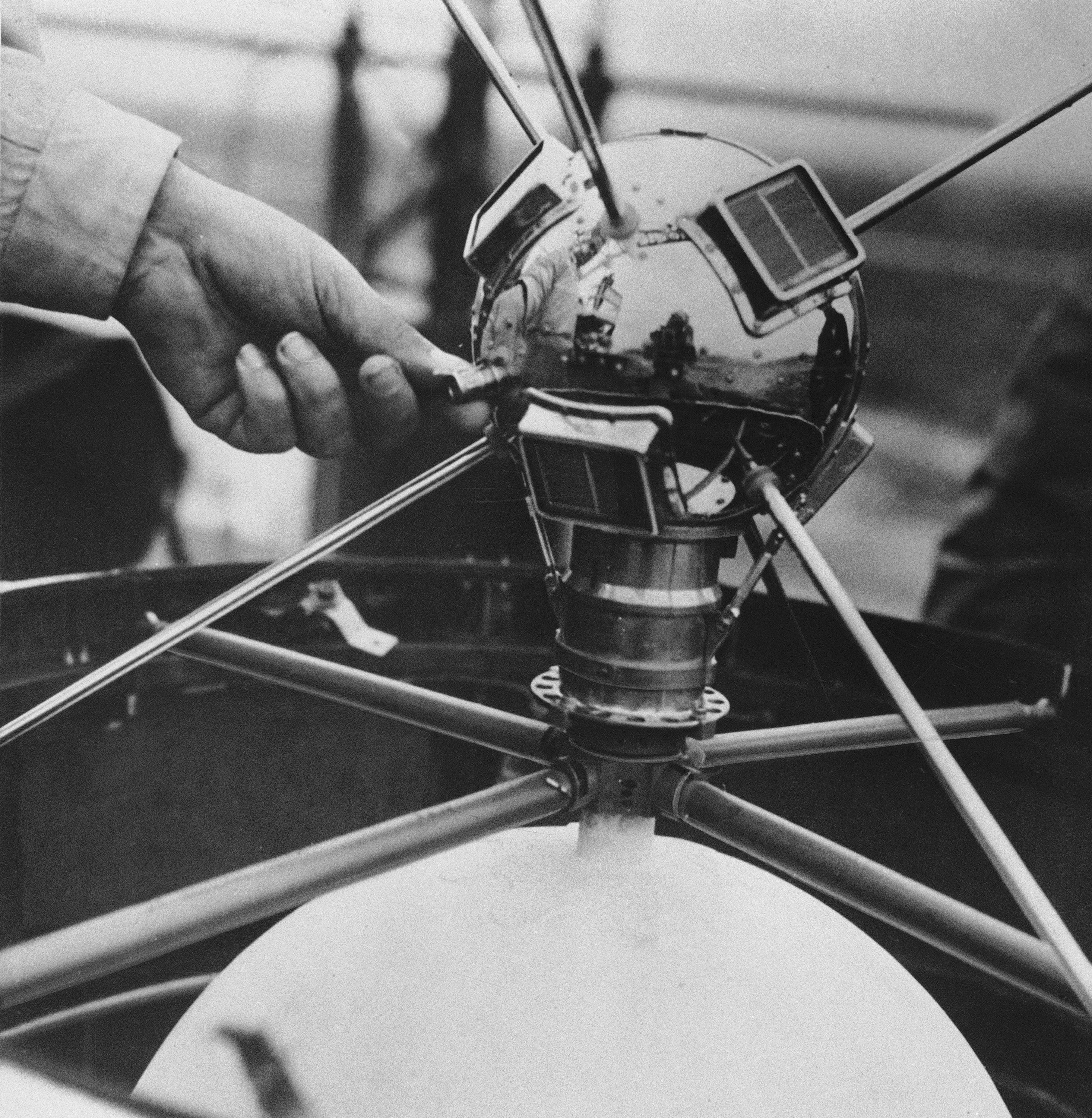
Vanguard 1 Satellite Image
Launch Details

Launch Date

March 17, 1958

Launch Pad

LC-18A

Launch Vehicle

Vanguard TV-4

Orbital Elements

NORAD ID

00005

International Designator

1958-002B

Epoch

Mon, 20 Jul 2026 07:08:27 GMT

Apogee

Calculating...

Perigee

Calculating...

Inclination

34.25°

Right Ascension

212.15°

Eccentricity

Calculating...

Argument of Perigee

287.78°

Period

132.59 min

Mean Motion

10.86 rev/day

Latitude

Calculating...

Longitude

Calculating...

Altitude

Calculating...

Velocity

Calculating...

Polar Plot
3D Visualization
Basic Satellite Info

Name

Vanguard 1

Alternative Name

Vanguard I

Type

Payload

Status

Unknown

Country

United States

Constellation

N/A

Related Satellites

Major Events

First solar-powered satellite; ceased transmission in 1964; remains the oldest human-made object still in orbit.

Latest TLEs
1 00005U 58002B   26201.29754256  .00000153  00000+0  17727-3 0  9996
2 00005  34.2522 212.1525 1837021 287.7762  53.1395 10.86017563446887

Source: Celestrak

Summary
Vanguard 1 was a satellite launched on March 17, 1958, as part of the Vanguard TV-4 launch vehicle test series. It weighed approximately 1.47 kg and had a spherical shape with a diameter of 0.165 meters. The satellite was equipped with two radio transmitters: one powered by mercury batteries for about 20 days, and another powered by six solar cells that functioned for over six years. The primary mission objectives of Vanguard 1 included testing the launch capabilities of the three-stage launch vehicle and studying the effects of space on a satellite's systems. It also aimed to gather geodetic measurements through orbit analysis. The satellite was designed to test the reliability of its systems in the harsh environment of space. Vanguard 1 remains the oldest human-made object still in orbit, with the last signals received in May 1964. Its solar-powered transmitter made it a significant technological achievement at the time, marking the first instance of a solar-powered satellite.
Physical Characteristics

Length

0.165

Diameter

0.165

Span

0.6

Dry Mass

1.47

Launch Mass

1.47

Shape

Spherical

Radar Cross Section

0.122

Visual Magnitude

10.2

Color

Silver

Material Composition

Aluminum

Technical Details

Payload

Vanguard Test Satellite H

Purpose

Science

Mission

Designed to test the launch capabilities of a three-stage launch vehicle and study the effects of the space environment on a satellite and its systems in Earth orbit. It also aimed to obtain geodetic measurements through orbit analysis.

Manufacturer

Naval Research Laboratory

Life Expectancy

The battery-powered transmitter operated for about 20 days, while the solar-powered transmitter functioned for over six years, with the last signals received in May 1964.

Bus

Vanguard

Configuration

Vanguard 1

Motor

None

Equipment

Equipped with two radio transmitters: a 10 mW, 108 MHz telemetry transmitter powered by mercury batteries, and a 5 mW, 108.03 MHz Minitrack beacon transmitter powered by six solar cells.

Power System

Powered by mercury batteries and solar cells.

ADCS

Spin-stabilized

Transmitter Frequency

108 MHz, 108.03 MHz

Map
This tool will help you track the satellite's position and predict its upcoming passes over your location. Simply input the coordinates or click the geolocation button to get started.
Next Pass
Azimuth Elevation Time (Local)
Start Azimuth
Max Elevation
Stop Azimuth
Time Until
Pass Duration

Satellite Articles

View All Posts »

Learn more about satellites and other related topics.

Trump Asks Musk About Starlink for Iran Internet Blackout | KeepTrack X Report

Trump Asks Musk About Starlink for Iran Internet Blackout | KeepTrack X Report

Trump approaches Elon Musk about restoring Iran internet via Starlink during government blackout. SpaceX completes fifth launch of 2026 with 29 Starlink satellites from Cape Canaveral.

Space Force Awards Pulse Space $40M for Laser Power Tech | KeepTrack Space Brief

Space Force Awards Pulse Space $40M for Laser Power Tech | KeepTrack Space Brief

Space Force awards Pulse Space $40 million to develop laser systems for transmitting power and data between spacecraft in orbit. Game-changing on-orbit energy transfer capability.

X Report 11 Jun 2025

X Report 11 Jun 2025

SpaceX successfully launched 23 Starlink satellites while facing delays in launching the Axiom Space mission due to a propellant leak. Additionally, new US broadband rules favor Starlink's expansion into rural markets.

Space Brief 16 Jun 2025

Space Brief 16 Jun 2025

Today's update covers NASA's Ax-4 mission preparations, ESA's satellite imaging program, Ursa Major's military contract, and China's expanding nuclear arsenal.

X Report 8 Nov 2025

X Report 8 Nov 2025

SpaceX prepares for its 560th Falcon 9 launch, aiming to deploy 29 Starlink satellites from Kennedy Space Center, while the Bandwagon-4 mission continues to showcase successful rocket landings.

Space Force Requests $1.6B for New LEO Relay Network | KeepTrack Space Brief

Space Force Requests $1.6B for New LEO Relay Network | KeepTrack Space Brief

Space Force scraps SDA transport layer, requests $1.6 billion for proliferated LEO SATCOM constellation. Roger Mason nominated to lead NRO.

Space Brief 21 Sep 2025

Space Brief 21 Sep 2025

Today's Space Brief covers a significant signals intelligence launch, a record-breaking satellite deployment in China, a glimpse into the newest stealth drone, a potential delay for NASA's lunar lander, and more exciting updates from satellite world.

X Report 22 Nov 2025

X Report 22 Nov 2025

Major challenges emerged with SpaceX's next-generation Starship booster testing, while Starlink deployments continued with successful launches.