· deep dive · 10 min read
Suborbital Tourism Scorecard 2026: The Edge of Space Goes Quiet
Twenty-two years after SpaceShipOne, the two companies that defined suborbital tourism are both sitting on the ground. Blue Origin parked New Shepard in January, Virgin Galactic has not flown a customer since 2024, and the math behind the whole business is finally getting an honest look.
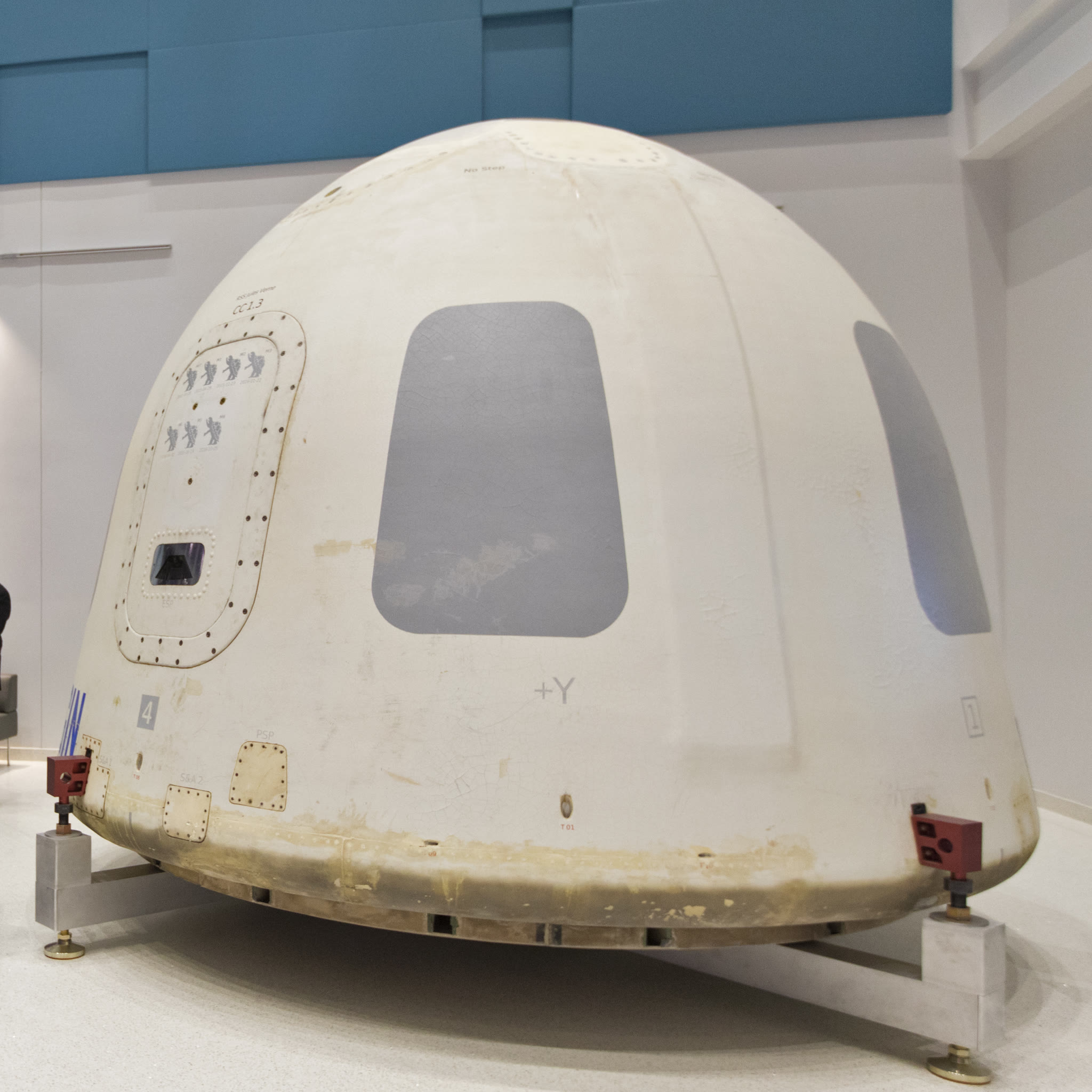
On the morning of January 22, 2026, a New Shepard rocket lifted off from Launch Site One in West Texas, carried six people past the Kármán line, and dropped them back under parachutes about ten minutes later. It was the thirty-eighth flight of the program and looked entirely routine. Eight days later, Blue Origin announced it was parking the whole vehicle for at least two years.
That single decision tells you most of what you need to know about the state of suborbital tourism in 2026. The company that has flown more space tourists than anyone in history looked at its own ledger and concluded the business was not worth the engineering attention. And it was not alone in stepping back. Virgin Galactic, the other half of the suborbital duopoly, has not put a paying customer above the atmosphere since June 2024.
So here is the strange situation two decades after the dream was supposed to arrive. The Ansari X Prize was won in 2004 to prove that private citizens could buy a ride to space. In the summer of 2026, the two flagship operators that grew out of that moment are flying exactly zero tourists between them. One is on a planned hiatus. The other is mid-rebuild. The scorecard is worth reading carefully, because it reveals an industry that proved it could fly people and is still struggling to prove it should.
How we got two grounded giants
Suborbital tourism was always a two-horse race with very different horses. Blue Origin built New Shepard as a fully autonomous, vertically launched and landed rocket. Passengers ride in a capsule that separates near the top of the arc, gives them a few minutes of weightlessness and a window view, then parachutes down while the booster lands itself. Virgin Galactic built something closer to an aircraft. Its SpaceShipTwo is air-launched from a carrier plane at altitude, lights a rocket motor, and glides back to a runway like a spaceplane.
Both worked. Blue Origin flew Jeff Bezos on the first crewed New Shepard flight in July 2021, then sent 90-year-old William Shatner up that October, making the Star Trek actor the oldest person to reach space at the time. Virgin Galactic flew founder Richard Branson nine days ahead of Bezos in a closely watched billionaire race, then settled into a short run of commercial flights in 2023 and 2024. For a moment, the long-promised era looked like it had finally started.
What neither company solved was the economics. A New Shepard flight lasts about ten minutes. A Virgin Galactic flight, gate to gate, is over in roughly an hour. The hardware is expensive, the cadence is slow, and the addressable market of people willing to pay six or seven figures for a brief trip is not infinite. Flying people turned out to be the easy part. Flying them often enough, and cheaply enough, to build a durable business is the problem that has now caught up with both operators at the same time.
Blue Origin hits pause
Blue Origin’s record is genuinely impressive on its own terms. Across 38 flights, 17 of them crewed, New Shepard has carried 98 seats filled by 92 different people, including a handful who flew twice. That is more humans sent to the edge of space by a single commercial vehicle than any competitor has managed. The April 2025 NS-31 mission, an all-female crew that included Katy Perry and Lauren Sánchez, was the most-watched suborbital flight in years and showed the marketing machine was still working.
The problem was never demand for attention. It was demand at the price the rocket needs to charge. Blue Origin has never published a standard ticket price, but the first seat, auctioned for charity ahead of the Bezos flight, went for $28 million, and reported prices since have ranged into the high six figures. With a vehicle that can only fly so often and a capsule that seats six, the revenue ceiling is low relative to what it costs to keep a human-rated rocket program running.
The decision reflects Blue Origin’s commitment to the nation’s goal of returning to the Moon and establishing a permanent, sustained lunar presence.
That is the official framing, and it is not spin invented to cover a retreat. Blue Origin holds a NASA contract to land astronauts on the Moon with its Blue Moon lander, currently targeted for the Artemis 5 mission around 2029, with a robotic pathfinder demonstration planned for later in 2026. Those are hard deadlines with national prestige attached, and the engineering talent that keeps New Shepard flying is the same talent the lunar program needs. Faced with a tourism line that barely pays for itself and a Moon contract that cannot slip, management made the call that any honest accountant would have nudged it toward.
The pause is framed as at least two years, which in practice means New Shepard’s tourism era is on hold with no firm return date. The vehicle is not retired. The pad and the capsules remain. But the message to the market is unmistakable. The company that flew the most tourists decided that flying tourists was not where its scarce attention belonged.
Virgin Galactic bets the company on Delta
Virgin Galactic reached the same conclusion about its first-generation hardware earlier, and far more painfully. VSS Unity flew its final commercial mission, Galactic 07, on June 8, 2024, carrying six people to about 87.5 kilometers before gliding back to Spaceport America. Then the company deliberately grounded itself. Unity was always a hand-built prototype, slow and costly to turn around between flights, and Virgin Galactic decided it could not build a real business on it.
The entire strategy now rests on the Delta class, a next-generation spaceship designed to carry six passengers and, critically, to fly far more often. Virgin Galactic says each Delta vehicle is built to fly up to eight times a month, a roughly twelve-fold improvement over Unity’s painful cadence. The first Delta ship has moved out of the assembly hangar and into the test-and-launch hangar at Spaceport America, which means the hardware exists and is being checked out rather than rendered in a slide deck.
The two suborbital approaches in 2026
| New Shepard (Blue Origin) | Delta Class (Virgin Galactic) | |
|---|---|---|
| Type | Vertical rocket + capsule | Air-launched spaceplane |
| Peak altitude | ~105 km (above Kármán line) | ~80-90 km |
| Seats | 6 | 6 |
| People flown | 92 | 0 (Unity retired) |
| Status mid-2026 | Paused 2+ years | Ground testing, Q4 target |
- Type
- Vertical rocket + capsule
- Peak altitude
- ~105 km (above Kármán line)
- Seats
- 6
- People flown
- 92
- Status mid-2026
- Paused 2+ years
- Type
- Air-launched spaceplane
- Peak altitude
- ~80-90 km
- Seats
- 6
- People flown
- 0 (Unity retired)
- Status mid-2026
- Ground testing, Q4 target
The timeline that management has reaffirmed through 2026 calls for powered test flights of the first Delta ship in the third quarter and a first commercial spaceflight in the fourth. Tickets went back on sale early in the year at $750,000, up sharply from the roughly $450,000 Unity-era price, and the company is sitting on a backlog of about 675 reservation holders, the so-called founding astronauts who bought in years ago at lower prices. To date Virgin Galactic has flown roughly two dozen private customers, a number that has not moved since Unity’s retirement.
The catch is money. Virgin Galactic reported a net loss of $279 million for 2025 and negative free cash flow of $438 million. Developing Delta is a race between the test program and the bank balance, and the company has to start generating ticket revenue before the cash runway runs out. That is a far riskier position than Blue Origin, which can afford a two-year pause because tourism was never its core. For Virgin Galactic, the suborbital business is the whole company.
$438M
Virgin Galactic negative free cash flow in 2025
The Delta program is a race between flight testing and the cash runway. Unlike Blue Origin, suborbital tourism is not a side project here. It is the entire business.
What you are actually buying
Strip away the marketing and a suborbital ticket buys a few minutes above an agreed-upon line in the sky, and even that line is contested. There is no single legal boundary of space. The Fédération Aéronautique Internationale places the Kármán line at 100 kilometers. The U.S. military, the FAA, and NASA use a lower threshold of about 80 kilometers, or 50 miles. New Shepard clears both, arcing to roughly 105 kilometers. Virgin Galactic’s vehicles top out between about 80 and 90 kilometers, which satisfies the American definition but falls short of the international one.
This is not pedantry. It feeds directly into the value proposition each company sells. Blue Origin can tell its passengers, accurately, that they crossed the line nearly everyone agrees on. Virgin Galactic has to lean on the U.S. standard, which is why the question of who gets to be called an astronaut has followed the company since its first flights. When the experience is measured in minutes and the price is measured in hundreds of thousands of dollars, the altitude on the certificate is part of the product.
The challengers are years out
If the established players are stepping back, the obvious question is whether anyone is stepping forward. The most credible answer is in China. Deep Blue Aerospace, a Jiangsu-based startup, has revealed plans for suborbital tourism and sold its first tickets in a 2024 livestream event at about 1.5 million yuan, roughly $210,000 each, less than a third of Virgin Galactic’s new price. The company says it will spend 2026 running dozens of tests of its rocket-and-capsule system, with commercial flights targeted for 2027. A second Chinese firm, CAS Space, is aiming for 2028.
Those timelines deserve the same skepticism that every suborbital schedule has earned over the past twenty years. Deep Blue is attempting vertical takeoff and landing with a crewed capsule, which is the hardest version of the problem, and it has not yet flown people. A 2027 commercial date almost certainly means later. But the pricing is the interesting signal. If a Chinese operator can deliver a credible New Shepard-class experience at a third of the cost, it reframes the whole market, because the thing holding suborbital tourism back has never been the engineering. It has been the price relative to the brevity of the ride.
The verdict
The honest reading of the 2026 scorecard is that suborbital tourism is real, technically mature, and commercially marginal. The vehicles work. Blue Origin proved you can fly nearly a hundred people safely. Virgin Galactic proved a spaceplane can do it on a runway. What neither proved is that the experience supports a business that can stand on its own, and the events of this year are the market admitting it.
My expectation is that Virgin Galactic’s Delta flies on something close to its schedule, slipping into early 2027 rather than holding to a Q4 2026 commercial debut, and that the higher cadence finally tells us whether real demand exists beyond the founding-astronaut backlog. Blue Origin’s pause will likely run longer than two years, because once a profitable program is deprioritized for a national-prestige one, it rarely comes back quickly. The near-term future of new entrants belongs to China, on a slower timeline than its livestreams suggest.
None of that means the dream failed. It means suborbital tourism is settling into what it probably always was. Not the gateway to mass spaceflight that 2004 seemed to promise, but a small, premium, episodic business that a handful of well-funded operators will dip in and out of as their larger ambitions allow. The edge of space is quiet in the summer of 2026. It is worth remembering that quiet is not the same as over.
References(12)
- Blue Origin halts New Shepard flights - SpaceNews, January 2026
- Blue Origin pausing space tourism flights for at least 2 years to focus on moon plans - Space.com
- Blue Origin says it is pausing space tourism trips to focus on moon landing - CNN, January 30, 2026
- New Shepard Mission NS-38 - Blue Origin
- Virgin Galactic conducts final VSS Unity commercial suborbital spaceflight - SpaceNews, June 2024
- Virgin Galactic launches VSS Unity on its final commercial spaceflight - Space.com, June 2024
- Virgin Galactic on track to begin commercial flights in 2026 - SpaceNews
- Virgin Galactic on track to start launching customers again in 2026, but seat prices will rise - Space.com
- Virgin Galactic's new Delta class space plane could fly as soon as fall 2026 - Space.com
- China's Deep Blue Aerospace reveals suborbital tourism plans - SpaceNews
- Chinese company Deep Blue Aerospace plans to start launching space tourists in 2027 - Space.com
- Who gets to be called an astronaut? Private space travel has reignited debate over use of the title - The Conversation

Theodore Kruczek