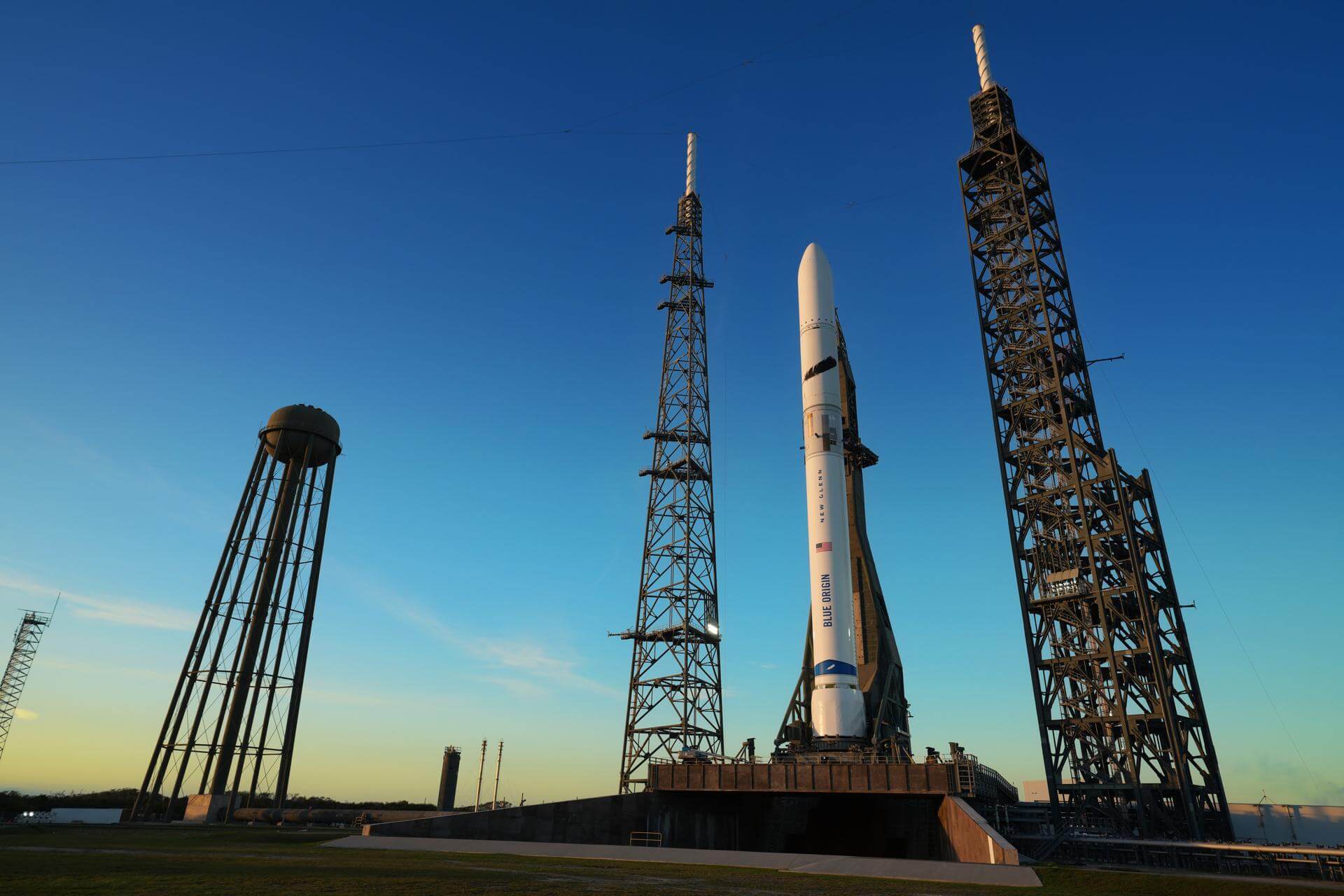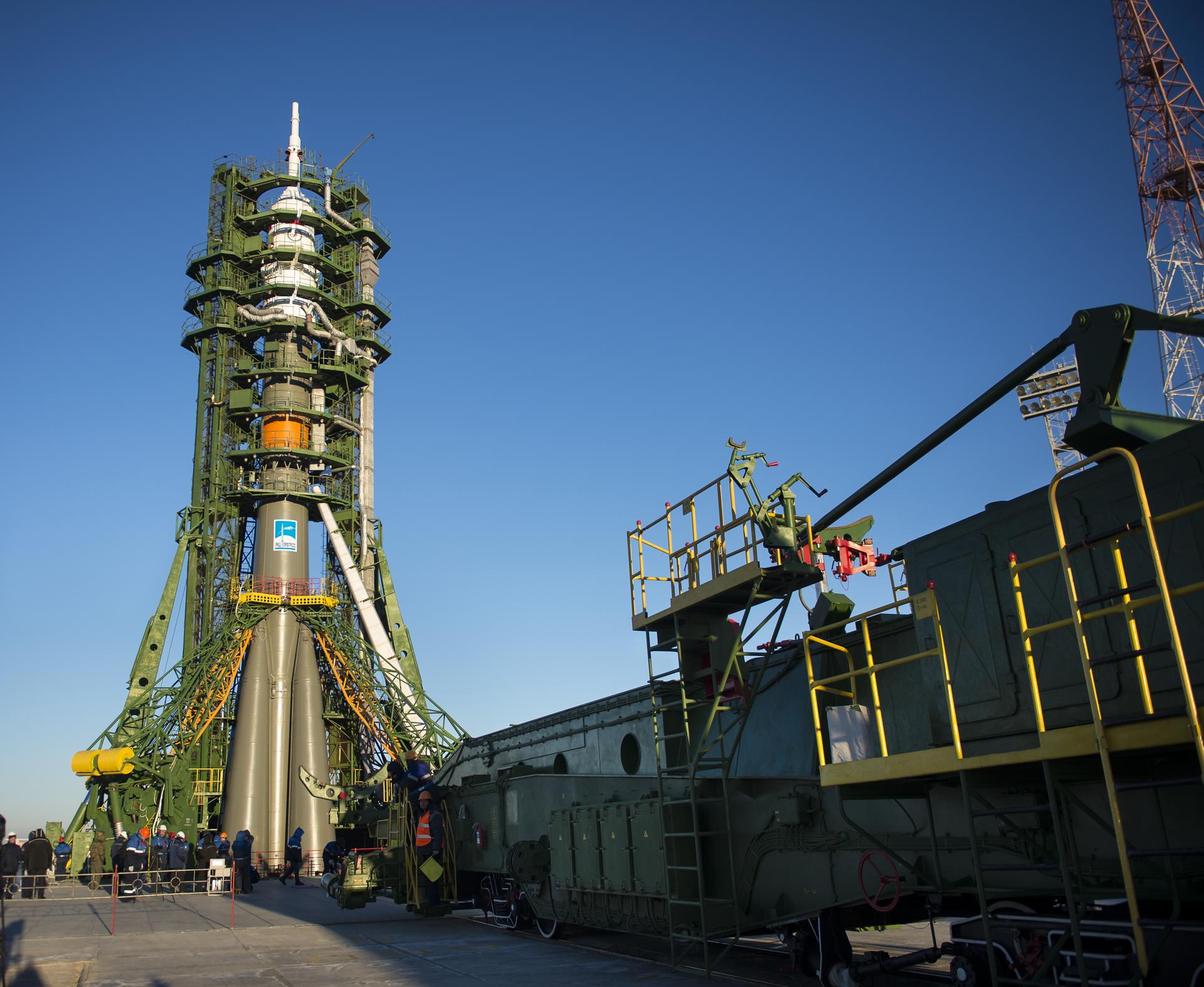
At 16:48 Tehran time on December 28, 2025, a Soyuz-2.1b rose off the pad at Vostochny Cosmodrome in Russia’s Far East and climbed toward a sun-synchronous orbit roughly 500 kilometers up. Bolted into the payload stack alongside the mission’s primary passengers, a pair of Russian dual-purpose Earth-imaging satellites called Aist-2T, and dozens of smaller rideshare payloads, were three Iranian spacecraft. One of them, cataloged by U.S. Space Command as object 67264, carries the name Kowsar 1.5.
Tehran told the story it wanted told. State media described Kowsar 1.5 as a private-sector remote-sensing satellite built to watch Iranian farmland, count crops, spot plant stress in the near-infrared, and flag droughts and wildfires before they spread. The Iranian Space Agency called the triple launch a milestone for a homegrown industry. The word that appeared over and over in the coverage was “sovereign.”
It is a strange kind of sovereignty that depends on someone else’s rocket. Iran did not launch Kowsar 1.5. Russia did, from a Russian spaceport, on a Russian booster, on a mission Iranian officials themselves counted as the country’s seventh satellite delivery aboard Russian launch vehicles. A satellite meant to showcase Iranian independence flew to orbit the same way the six before it did, on a Russian rocket Iran cannot yet replace.
That dependence runs deeper than one launch. The “private farming satellite” label does not survive a close look at the hardware, the company, or the rocket.
Khayyam
Russia orbits Iran's Khayyam remote-sensing satellite from Baikonur. The spacecraft was built in Russia by VNIIEM and images the ground at roughly one meter.
Pars-1
A Soyuz carries Iran's Pars-1 imaging satellite to orbit, another payload Tehran could not launch domestically.
Kowsar-1 and Hodhod
Iran's first 'private-sector' satellites ride a Soyuz to a 500 km orbit. Kowsar-1 is a roughly 30 kg imaging nanosatellite with a 3.45 m camera.
Kowsar 1.5, Zafar-2, Paya
Three more Iranian satellites launch on a Soyuz-2.1b from Vostochny, Iran's seventh satellite mission on a Russian rocket.
What Kowsar 1.5 actually is
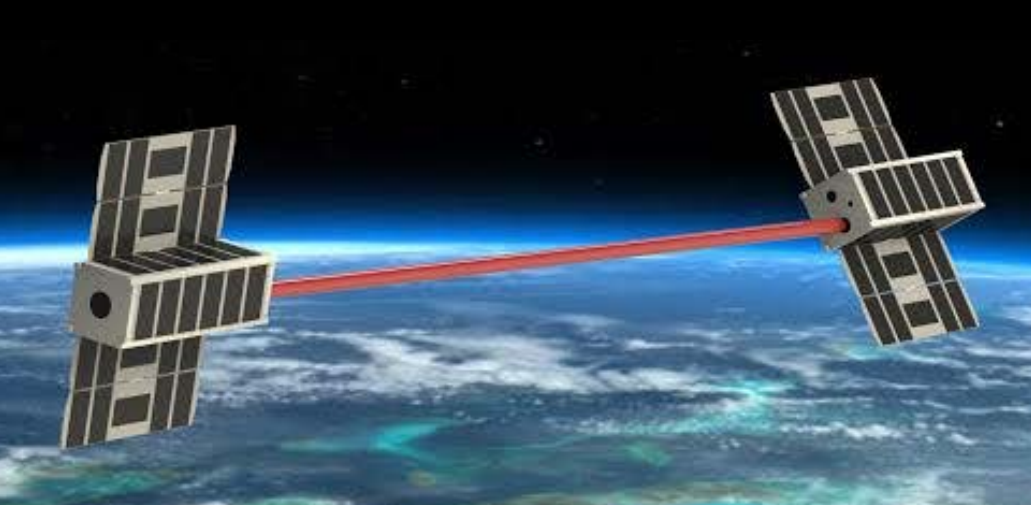
Strip away the framing and the hardware is modest, which is worth saying plainly because the alarmed version of this story oversells it. Kowsar 1.5 is a 24U CubeSat, a shoebox-class spacecraft built up from standardized 10-centimeter cube units. Its imaging payload is a four-band camera covering red, green, blue, and near-infrared, with a ground sample distance of about 3.45 meters. That means each pixel corresponds to a patch of ground a little larger than a parking space. The satellite also carries an Internet-of-Things payload, a store-and-forward radio that collects short data bursts from ground sensors and relays them back to Iran.
For agriculture, that combination is genuinely useful. Near-infrared reflectance is the standard way to measure plant vigor from orbit, and 3.45-meter imagery is fine for tracking field-scale crop health, irrigation, and drought stress. Iran has real water and food-security problems, and a domestic Earth-observation capability aimed at them is a rational thing for the country to want.
It is also not a spy satellite in the sense that phrase usually implies. At 3.45 meters, Kowsar 1.5 cannot read a license plate, count aircraft on a ramp with confidence, or do the precise targeting work that dedicated reconnaissance systems perform. Commercial operators like Maxar sell imagery ten times sharper. The honest technical verdict is that Kowsar 1.5, taken alone, is a low-cost civil remote-sensing satellite with unremarkable specifications.
The problem is that “taken alone” is doing enormous work in that sentence, and the surrounding facts refuse to leave the satellite alone.
Where Kowsar 1.5 sits among Iran's eyes in orbit
| Kowsar 1.5 | Khayyam | Noor-3 | |
|---|---|---|---|
| Operator | Omid Faza (private) | Russia-built, Iran-run | IRGC Aerospace Force |
| Best resolution | 3.45 m (RGB-NIR) | ~1 m | Not disclosed |
| Launch vehicle | Russian Soyuz-2.1b | Russian Soyuz | Iranian Qased |
| Orbit | ~500 km SSO | LEO | ~450 km LEO |
- Operator
- Omid Faza (private)
- Best resolution
- 3.45 m (RGB-NIR)
- Launch vehicle
- Russian Soyuz-2.1b
- Orbit
- ~500 km SSO
- Operator
- Russia-built, Iran-run
- Best resolution
- ~1 m
- Launch vehicle
- Russian Soyuz
- Orbit
- LEO
- Operator
- IRGC Aerospace Force
- Best resolution
- Not disclosed
- Launch vehicle
- Iranian Qased
- Orbit
- ~450 km LEO
The comparison is the argument. Iran’s sharpest eye in orbit, Khayyam, resolves the ground at about a meter, and it was designed and built in Russia. Iran’s openly military satellites, the Noor series operated by the Islamic Revolutionary Guard Corps, fly on Iran’s own Qased rocket but at capabilities Tehran does not publish and that outside analysts assess as considerably coarser. Kowsar 1.5 slots in between. It is better packaged than the Guard’s hardware, nowhere near Khayyam’s resolution, and still dependent on a Russian ride. Read across the rows and a pattern emerges. When Iran wants quality, it buys Russian. When it wants autonomy, it accepts lower performance. Kowsar 1.5 is Tehran trying to have both at once, and papering over the gap with the language of private enterprise.
The private-sector fig leaf
The company behind Kowsar 1.5 is Omid Faza, sometimes rendered SpaceOmid, a knowledge-based firm reportedly founded in 2018 and staffed by veterans of Iran’s earlier state satellite programs. Iranian officials lean hard on the “private sector” label, and for good reason. It does two useful jobs at once. Domestically, it lets the government showcase a maturing commercial space ecosystem. Internationally, it puts distance between the satellite and the Iranian state at exactly the moment that distance is most valuable.
That distance is thinner than it looks. Iran’s knowledge-based space companies are seeded almost entirely from universities and state institutes, and the line between a nominally private firm and the security establishment is often a matter of degrees rather than a wall. Analysts who track Iran’s procurement networks have documented how private-sector branding functions as commercial cover, providing plausible deniability and slowing the pace at which sanctioning authorities can connect a company to the programs it ultimately serves. A firm can operate in the open for years before the paperwork catches up.
None of this proves Omid Faza is a front. It does mean the “private” in “private satellite” carries far less weight in Iran than a Western reader might assume. Ownership can be several steps removed from the Guard and still deliver capability to it. The label is a claim, not a verified fact, and Tehran has every incentive to make the claim loudly. Iran’s ambassador to Russia, Kazem Jalali, described the December launch as three satellites designed and built by Iranian scientists, two belonging to the government and one to the private sector. Kowsar 1.5 is the private one, which is exactly the payload that carries the heaviest load of deniability.
The agriculture story does not quite hold
Then there is what the Kowsar platform has actually been used for. In February 2026, Iran used a Kowsar satellite, the November 2024 sibling of 1.5 built by the same company on the same design, to beam messages marking the 47th anniversary of the Islamic Revolution, relaying them to stations inside Iran and to neighboring countries within its field of view. The builder, SpaceOMID, put out a statement calling the spacecraft a bridge from space to carry the voice of the Iranian people to the world. That is the relay payload doing regime communications work, not counting wheat. It is a small thing, but it is a tell. The platform sold as a crop monitor was pressed into service as an instrument of state messaging.
The imaging side deserves a more careful hand, because this is where alarmist coverage tends to overreach. Iran’s own media has described the Kowsar line in dual-role terms, but the Iranian satellite that has genuinely worried Western defense officials is not Kowsar. It is Khayyam, the one-meter, Russian-built imager launched in 2022. The Washington Post’s coverage of that launch cited Western officials who warned it could monitor Israel and other targets across the region, and reported that Russia planned to task its imagery over Ukraine. Hold onto that pattern. When Iran fields a satellite sharp enough to alarm a defense ministry, the satellite is Russian-built.
Kowsar 1.5 is not that satellite. At 3.45 meters it cannot watch a military base in useful detail or cue a missile. Its dual-use value is quieter and cumulative. Wide-area imagery at that resolution feeds land-use and pattern-of-life analysis, and a growing domestic constellation of such sensors, combined with the Guard’s own Noor imagery and sharper foreign feeds, thickens Iran’s overall picture of its neighborhood. The value of an Earth-observation program is rarely any single satellite. It is the revisit cadence, the home-grown industrial base, and what the imagery can be fused with.
The point is not that Kowsar 1.5 is secretly a reconnaissance satellite. It is that the civil framing asks you to evaluate the satellite in isolation, and Iran’s space program does not operate in isolation. Every capability Tehran builds under a civilian banner also expands the technical base, the trained workforce, and the orbital infrastructure available to a state whose most enthusiastic space customer is its military.
Sovereign in name, Russian by rocket
Here the sovereignty narrative collapses under its own weight. Iran does have domestic launch vehicles. The Simorgh has reached orbit for the civilian program, and the Guard flies its own Qased and Qaem, with the Qased carrying the Noor satellites. But those launchers are exactly what draws international objection, because the technology that puts a satellite into orbit is the technology that delivers a warhead across a continent. The United States, Britain, France, and Germany have repeatedly called Iran’s space-launch activity inconsistent with U.N. Security Council Resolution 2231, on the grounds that a space-launch vehicle is a ballistic-missile testbed wearing a civilian badge. Those missile-related restrictions formally lapsed in October 2023, but the European Union moved to retain its own, and the proliferation concern did not evaporate with the expiration date.
Routing Kowsar 1.5 through a Russian Soyuz sidesteps that specific objection. No Iranian long-range booster was tested on December 28. But the maneuver trades one problem for another, arguably worse one. It deepens a military-technical relationship with Moscow that has already flowed the other direction in the form of Iranian drones over Ukraine. When Russia builds Iran’s sharpest imaging satellite, integrates Iranian payloads onto its rockets, and lofts them from its own cosmodrome, the two programs are not neighbors. They are entangled. “Sovereign space infrastructure,” launched by Roscosmos, is a phrase that argues against itself.
The satellite Iran presents as proof of its independence in space could not have reached orbit without Russia. That is not a footnote to the Kowsar 1.5 story. It is the story.
There is a reason Tehran accepts the dependence. For a payload of this class and orbit, a proven Soyuz is cheaper, more reliable, and available now, while Iran’s own launchers carry a spotty record and a heavy diplomatic cost. Choosing the Russian rocket is the rational move. But rationality is not the same as autonomy, and every rational choice to fly on a Soyuz is another year Iran’s independent heavy-lift ambitions stay on the ground.
What to actually watch
Strip the spin from both directions and a clear-eyed reading is possible. Kowsar 1.5 is not a menacing spy satellite, and the breathless coverage that treats every Iranian launch as an imminent threat gets the hardware wrong. But it is also not the innocent farming tool Tehran advertises, and the coverage that repeats the agriculture line without friction gets the politics wrong.
What Kowsar 1.5 really represents is a data point in a deliberate buildup, an indigenous Earth-observation and small-satellite base, wrapped in private-sector branding that muddies attribution, launched through a partnership with Moscow that both governments have every reason to expand. The individual satellite is modest. The trajectory it belongs to is not. The most likely future is more of exactly this, a steady cadence of “civilian” Iranian smallsats riding Russian rockets, each one incrementally widening the pool of orbital capability that Iran’s security state can draw on when it chooses.
The satellite watching Iran’s farms is real. So is everything standing behind it. The honest way to read Kowsar 1.5 is to hold both facts at once, and to notice which one Tehran keeps trying to hide behind the other.
References(20)
- Iran Says It Launched 3 Satellites Into Space From Russia - The Moscow Times, December 2025
- Iran launches three satellites into space from Russia despite sanctions - The Arab Weekly, December 2025
- Iran launches three satellites from Russia in joint Soyuz mission - Iran International, December 2025
- Russia sends 3 Iranian satellites into orbit, report says - NPR, December 2025
- Iran says it launched 3 satellites to space on Russian rocket - Space.com, December 2025
- Kosar 1.5 - SatNOGS DB
- Kosar - Gunter's Space Page
- Soyuz Rocket to Launch the Aist-2T Pair and Iranian Satellites - RussianSpaceWeb
- Iran launches 3 satellites on Russian rocket amid deepening cooperation - Fox News, December 2025
- Explainer on Kowsar 1.5 and Iran's space push amid sanctions - Press TV, September 2025
- Iran launches satellites from Russia in message to Israel - The Jerusalem Post, December 2025
- Russia launches two Iranian satellites into orbit as ties grow - Al-Monitor, November 2024
- Iran Sends Two 'Private-Sector' Satellites To Russia For Launch - RFE/RL
- Iran's IRGC successfully puts third imaging satellite into orbit - Al Jazeera, September 2023
- Noor 1, 2, 3 - Gunter's Space Page
- Russia successfully launches Iranian satellite - The Washington Post, August 2022
- Iran's Kowsar satellite beams Islamic Revolution anniversary message across region - Press TV, February 2026
- UN Security Council Resolutions on Iran - Arms Control Association
- Iran's Compliance with UNSCR 2231 - Wisconsin Project on Nuclear Arms Control
- Iran - Kowsar observation nano-satellite - GlobalSecurity.org