· deep dive · 2 min read
China's Shenlong Deploys Six Objects
Details on China's current Shenlong spaceplane mission and its recent deployment of six objects.
Overview
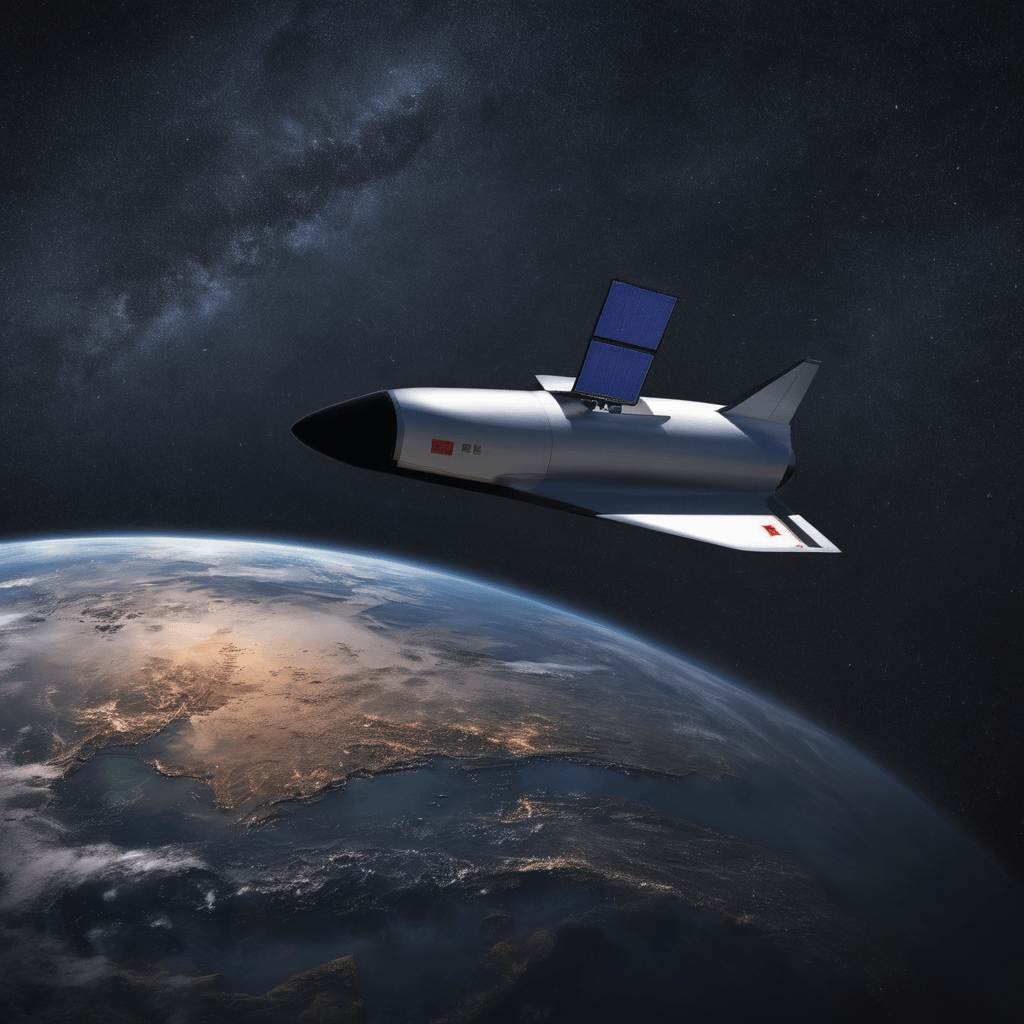
China’s Shenlong spaceplane, in its third mission, deployed six unidentified objects into Earth’s orbit, marked as OBJECT A, B, C, D, E, and F. These objects are tracked by the U.S. Space Force and emit various signals, with frequencies typical of Chinese space plane missions. OBJECT A exhibits “wingman” signal emissions, while OBJECTs D and E emit idle signals. The orbits vary, with OBJECT A in a near-circular orbit and D and E in elliptical ones.
Mission Details
- Spacecraft: Shenlong, meaning “Divine Dragon”
- Mission: Third flight
- Launch Date: December 14
- Objects Deployed: Six, designated OBJECT A, B, C, D, E, and F
- Tracking: U.S. Space Force and amateur observers
- Signals: Emitting various signals, tracked by observers
Analysis of the Objects
- OBJECT A: Emitting signals similar to “wingman” emissions from past missions
- OBJECTs D & E: Emitting idle “placeholder” signals
- Frequency: 2,280 MHz, associated with Chinese space plane missions
- Orbit: OBJECT A in near-circular orbit; OBJECTs D and E in elliptical orbits
- Expected Encounters: Close approaches at perigee
Context and Speculation
- Previous Missions: Shenlong released unknown objects in September 2020 and August 2022
- Possible Functions: Service modules, inspector satellites, or test items for orbital placement
- Comparative Analysis: U.S. operates the Boeing-built X-37B, a similar reusable robotic space plane
FAQs
Q: What is the Shenlong spaceplane?
A: Shenlong, meaning “Divine Dragon,” is a Chinese robotic spaceplane, designed for reusable space missions.
Q: What is unique about the signals emitted by these objects?
A: The signals, especially from OBJECT A, suggest connections to past Chinese space activities, with their specific frequency and modulation patterns.
Q: What are the possible functions of these objects?
A: Speculations include roles as service modules, inspector satellites, or test items for orbital placement.
Q: How does the Shenlong compare to the U.S. X-37B?
A: Both are reusable robotic spaceplanes, but they are operated by different countries (China and the United States, respectively) and may have different mission profiles and objectives.
Q: Will the US be launching its own spaceplane soon?
A: The U.S. X-37B is scheduled to launch December 28 on a SpaceX Falcon Heavy rocket.
Q: Will these two spaceplanes fight in space?
A: Although they are similar, the two spaceplanes are not expected to be in the same orbit.

Theodore Kruczek